
In This Article
It’s 11pm. You’ve spent four hours under fluorescent lights, and someone has just handed you a pair of grey metal sticks and said, “Non-weight-bearing for six weeks.” You nod. Then you hobble to the car park and realise nobody explained how any of this actually works.
That’s the gap this guide fills. Choosing crutches for broken ankle recovery isn’t glamorous, but it decides whether the next few weeks are merely irritating or properly miserable. Hands blister. Shoulders ache. Wet pavements turn into a stunt show. A decent pair, fitted well and used with the right technique, changes all of that.
Here’s what you’ll find below. We compare seven real options available to UK buyers, from basic underarm designs to comfort-grip forearm crutches to a hands-free alternative. We also cover what A&E crutch fitting should involve, how non-weight-bearing crutches work in practice, and why plaster cast mobility is about far more than the walking aid. We’ll also look at the knee scooter alternative question, because for some people crutches simply aren’t the right tool.
One honest note before we start. This is analysis, not a diary of product testing. The reasoning comes from published specifications, NHS patient leaflets and aggregated customer-review themes. Where reviews couldn’t be verified, we say so. Prices are indicative bands only, so always check the current price before buying.
What Are Crutches for Broken Ankle Recovery?
Crutches for broken ankle recovery are paired walking aids that let you carry your weight through your hands and arms instead of your injured leg. They come in underarm and elbow (forearm) designs. They’re usually issued and fitted in A&E or a fracture clinic, and you use them until a clinician confirms the ankle can take weight again.
The term “non-weight-bearing” matters here. According to an NHS patient leaflet from University Hospitals Sussex, it means the injured leg does not touch the ground when standing, walking or getting up from sitting. That’s stricter than most people assume. It rules out “just a little toe-touch” shortcuts, which is why arm strength, grip comfort and a well-fitted pair matter so much.
Your clinician may instead say “partial weight-bearing”, which allows some weight through the injured leg. Know which instruction you’ve been given, because it changes both your technique and how demanding the crutches are on your upper body.
Quick Comparison: Crutches for Broken Ankle at a Glance
Here’s the shortlist before we dig into the detail. Price bands are indicative only and may vary.
| Product | Type | Indicative price band | Best For |
|---|---|---|---|
| Drive DeVilbiss Aluminium Underarm Crutches (Adult, 114cm) | Underarm | Budget | Short-term use on a tight budget |
| AevQuas 2PCS Folding Crutches for Adults | Folding forearm | Budget to mid | Travel, car boots, small flats |
| The Helping Hand Company Double Adjustable Crutches | Forearm, double adjustable | Mid-range | All-rounders and fine-tuned fit |
| Verax Healthcare Elbow Crutches (Medium) | Forearm, soft-touch handles | Mid-range | Anyone prone to hand soreness |
| Flexyfoot Comfort Grip Double Adjustable Crutches | Forearm, shock-absorbing ferrule | Mid to upper | Long recoveries and comfort seekers |
| KneeRover Economy Knee Scooter | Knee scooter | Roughly £100-£150 range | Flat homes and longer non-weight-bearing spells |
| iWALK3.0 Hands Free Knee Crutch | Hands-free knee crutch | Premium | Hands-free tasks and strong balance |
Reading across the table, the Drive DeVilbiss Aluminium Underarm Crutches and AevQuas 2PCS Folding Crutches win on price and portability, but they’re the least forgiving on your hands. The Flexyfoot Comfort Grip Double Adjustable Crutches cost more because the comfort engineering is built in, which matters if you face six weeks or more. The KneeRover Economy Knee Scooter and iWALK3.0 Hands Free Knee Crutch sit in a different category entirely: they only make sense if your injury, home and balance suit them.
💬 Just one click — help others make better buying decisions too!😊
Top 7 Crutches for Broken Ankle Recovery: Expert Analysis
1. Drive DeVilbiss Aluminium Underarm Crutches (Adult, 114cm) — classic, no-frills short-term option
The standout here is simplicity. Underarm crutches are the traditional hospital design, and the Drive DeVilbiss is the familiar, lightweight aluminium take on it.
The listing names a 114cm size, which tells you sizing matters. Crutches that are too tall push into your armpits, and ones that are too short force you to hunch. In practice, the weight should go through your hands and arms, not your underarms. If you use these, ask a clinician or physio to check the fit.
Our analytical take: this pair suits people expecting a short stint, such as a few weeks for a stable break or a bad sprain. Basic grips mean longer recoveries get uncomfortable, and the fixed-style fit has less tuning room than double adjustable designs. I couldn’t verify a robust pool of UK customer reviews for this specific listing, so treat it as a sensible budget-tier choice rather than a proven favourite.
Pros:
- ✅ Familiar, easy-to-learn underarm design
- ✅ Lightweight aluminium frame
- ✅ Budget-friendly entry point
Cons:
- ❌ Basic grips can irritate hands over weeks
- ❌ Less adjustable than double adjustable pairs
Price range: typically at the budget end, well under £50 at the time of research, so check the current price. Value verdict: a solid stopgap, not a six-week companion.
2. AevQuas 2PCS Folding Crutches for Adults — folds away for cars and cramped flats
The standout is portability. These lightweight aluminium crutches fold down, so they’re easier to stash in a car boot, under a desk or behind a bus seat.
Specs worth translating: the listing quotes a height range of 93-119cm, a wide window that covers many adults, and reflective strips that help on dark winter evenings. For a lot of UK recoveries in November, that last detail is quietly useful.
Our analytical take: folding mechanisms add a joint, and joints are potential wear points. NHS leaflets stress checking pins, bolts and ferrules regularly, so inspect the folding joint before every outing. These suit people who travel to work, share cars or live in small spaces. They’re less suited to heavier users or anyone planning intensive daily use over many weeks, though always check the stated weight limit.
Reviews: this particular listing’s review pool couldn’t be verified, so we won’t summarise sentiment we can’t back up. As a category, buyers of folding forearm crutches tend to praise portability and flag durability as the thing to watch.
Pros:
- ✅ Folds for easy transport and storage
- ✅ Reflective strips aid visibility after dark
- ✅ Wide height range suits many adults
Cons:
- ❌ Folding joint is an extra wear point
- ❌ Unverified long-term durability record
Price range: budget to mid-range, so check current price. Value verdict: great for portability-led buyers who inspect them often.
3. The Helping Hand Company Double Adjustable Crutches — fine-tuned fit without the premium price
The standout is “double adjustable”. The cuff and the stem can each be set separately, so you can tune forearm and hand position independently rather than settling for one compromise.
That sounds fussy until you think about arm length. Two people of identical height can have different arm proportions, and a poor match shows up as sore wrists or hunched shoulders. The listing quotes an adjustable range of 53-109cm for the regular size, so confirm your height fits within it.
Our analytical take: this is the sensible middle path for most people with a broken ankle. It’s more adjustable than basic underarm crutches and less expensive than the comfort-engineered premium pairs. Because NHS-fitted pairs are set by clinicians, the smart move is to copy your hospital settings onto your own pair, with a physio checking the result.
Reviews: I couldn’t verify a large pool for this exact listing. The wider theme in retailer reviews of double adjustable comfort-grip crutches is that people value soft grips and tunable fit, particularly after weeks of use.
Pros:
- ✅ Cuff and stem adjust independently
- ✅ Forearm design takes pressure off underarms
- ✅ Reasonable cost for the adjustability
Cons:
- ❌ Needs careful setup to realise the benefit
- ❌ Grips are comfortable, not specialist
Price range: mid-range, so check current price. Value verdict: the best all-rounder for most UK buyers.
4. Verax Healthcare Elbow Crutches (Medium) — soft-touch handles for sore hands
The standout is the soft-touch PVC handle, aimed squarely at the part of your body that takes the beating: your palms.
Hand pain is the most common complaint with crutches because every step puts your bodyweight through a narrow grip. A softer handle spreads that pressure, and the listing also highlights non-slip ferrules for stability. “Medium” sizing is the key detail. If you’re at either end of the height spectrum, check the size chart before ordering.
Our analytical take: these suit anyone who expects to use crutches daily for several weeks and worries about blisters. They’re also a good fit if you’ve found hospital-issue handles unforgiving. On wet UK pavements, the ferrule matters as much as the grip, so replace worn rubber promptly.
Reviews: the review pool for this listing couldn’t be verified. Across comfort-handle crutches generally, customers repeatedly mention fewer blisters and a more comfortable grip over time.
Pros:
- ✅ Soft-touch handles reduce palm pressure
- ✅ Non-slip ferrules for wet surfaces
- ✅ Double adjustable forearm design
Cons:
- ❌ Sizing options need careful checking
- ❌ Soft handles may wear over long use
Price range: mid-range, so check current price. Value verdict: a smart pick if hand comfort is your priority.
5. Flexyfoot Comfort Grip Double Adjustable Crutches — shock-absorbing ferrule and comfort-first design
The standout is the shock-absorbing ferrule. It cushions each impact, which becomes noticeable after the hundredth step of the day.
Per the product listing, they suit users between 5ft and 6ft 8in and support up to 130kg, with soft ergonomic grips. That’s a wide height window and a decent weight capacity. The ferrule’s grip also matters on slippery surfaces, which is a real concern in a UK winter.
Our analytical take: this is where the extra money buys you something measurable. If your non-weight-bearing period is long, the shock absorption and grip comfort reduce the cumulative strain on wrists and shoulders. For a short sprain it’s arguably overkill.
Reviews: customer comments on UK retailer pages repeatedly say these feel more comfortable than NHS-issue crutches, with fewer rattles and less shoulder and hand discomfort. Many also mention the colour options. As ever, these are retailer reviews, not a controlled test.
Pros:
- ✅ Shock-absorbing ferrule softens each step
- ✅ Soft ergonomic grips reduce hand fatigue
- ✅ Wide height range and 130kg capacity
Cons:
- ❌ Pricier than basic pairs
- ❌ Overkill for brief recoveries
Price range: mid to upper-mid, so check current price. Value verdict: best for long recoveries where daily comfort adds up.

6. KneeRover Economy Knee Scooter — the budget route to hands-free-ish mobility
The standout is the knee platform. Instead of hopping, you rest your lower leg on a padded platform and roll along, which is a very different experience from crutches.
According to the product listing, it’s steerable and foldable, with dual rear brakes, an adjustable locking handbrake and a padded knee platform with adjustable height. It’s pitched at indoor and light outdoor use. That last phrase is the key one: this is a flat-floor tool, not a hill tool.
Our analytical take: for a broken ankle with several weeks of non-weight-bearing, a scooter can reduce arm and shoulder strain and let you carry things in your hands. But it needs space, and stairs remain a challenge. Reviewers on listing pages say it helped them get around the house more easily than crutches after fractures and surgery, though one said they needed an extra knee cushion within two days, and a reviewer with knee arthritis found it aggravated their knee. That last point is important: your knee takes the load.
Pros:
- ✅ Reduces hopping and arm fatigue
- ✅ Dual rear brakes plus handbrake
- ✅ Folds for storage and transport
Cons:
- ❌ Poor on stairs and tight spaces
- ❌ Loads your knee, so unsuitable for some
Price range: roughly £100-£150 according to reviewer mentions, so check current price. Value verdict: strong value for flat homes and longer non-weight-bearing spells.
7. iWALK3.0 Hands Free Knee Crutch — hands-free walking, at a cost
The standout is the free hands. This design straps to your leg and lets you walk with your shin supported, leaving both hands available.
Amazon US demand data from a third-party tracking site shows it attracting a noticeable share of clicks but a much lower share of purchases. That’s a telling pattern: lots of curiosity, plenty of hesitation. Availability on amazon.co.uk can vary, so confirm stock and sizing before relying on it.
Our analytical take: it demands decent balance, a comfortable knee and a willingness to learn a new gait. It’s suited to injuries below the knee, and it’s very much a “confirm with your clinician first” product. When it clicks, it frees you to carry a mug, open doors and use a kitchen. When it doesn’t, you’ve bought an expensive learning curve. I couldn’t verify UK-specific review sentiment, so we won’t invent any.
Pros:
- ✅ Frees both hands for daily tasks
- ✅ Alternative where crutches or scooters fail
- ✅ Compact enough to store
Cons:
- ❌ Steep learning curve and balance demands
- ❌ Premium cost with limited UK review data
Price range: premium, above most crutch pairs, so check current price. Value verdict: worthwhile only if hands-free matters and you’re clear it suits your injury.
Your First 30 Days on Crutches: A Practical Usage Guide
Buying the right pair is half the battle. The other half is the unglamorous craft of using them, and that’s where Amazon listings say nothing useful.
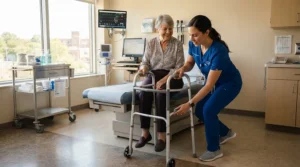
Week one: learn the basics. Non-weight-bearing technique follows a consistent pattern across NHS leaflets. A Kent Community Health NHS leaflet says to hold both crutches in the hand opposite your injured leg, push up from the chair with your other hand, then put both crutches in front and find your balance. Then move the crutches forward, take your weight on your hands and hop to the crutches. Don’t hop beyond them. That last bit stops falls.
Check before every outing. NHS leaflets stress checking ferrule wear, pins that click fully through their holes, and no loose nuts or bolts. Make it a habit, like checking your keys.
Week two: set up your home. Clear loose rugs, improve lighting, keep a chair with arms nearby and move essentials to waist height. A small backpack frees your hands better than any gadget.
Weeks three and four: look after your body. Sore wrists and shoulders are common. Rest your hands, adjust grip position, and tell your clinician if pain or numbness persists.
Common mistakes in the first 30 days: leaning on armpits rather than hands, adjusting height without guidance, using crutches with a mismatched pair, and rushing stairs when tired.

Sore Hands, Slippery Floors and Other Crutch Problems, Solved
Problem: palm blisters and sore wrists. Soft handles help. The Verax Healthcare Elbow Crutches and Flexyfoot Comfort Grip Double Adjustable Crutches target this directly. A cheap trick is padded cycling gloves, which spread pressure.
Problem: slipping on wet pavements. Worn ferrules are the usual culprit. The shock-absorbing ferrule on the Flexyfoot Comfort Grip Double Adjustable Crutches is built to improve grip, and non-slip ferrules on the Verax Healthcare Elbow Crutches serve the same purpose. Replace rubber before it’s smooth.
Problem: carrying anything. A rucksack, a crossbody bag or a lanyard for your phone solves most of it. If you’re constantly trying to carry things, consider the KneeRover Economy Knee Scooter or an iWALK3.0 Hands Free Knee Crutch instead.
Problem: stairs. This is where advice differs. One NHS emergency department leaflet advises against using crutches on stairs at all, while others describe step-by-step technique with a handrail. Follow your own hospital’s guidance, and ask about alternatives such as moving a bed downstairs for the first stretch.
Problem: stiffness and fatigue. Take short, frequent trips rather than rare long ones, and elevate your leg when resting, as your clinician advises.
Real-World Scenarios: Matching Crutches to Your Life
Scenario one: the office commuter. Priya (a composite example) has a stable ankle fracture and takes a train, a bus and a short walk to work. She needs portability and visibility. The AevQuas 2PCS Folding Crutches for Adults fold for crowded carriages, and their reflective strips help on dark mornings. She should check the folding joint weekly.
Scenario two: the long-haul recovery. Tom (also a composite) faces eight weeks non-weight-bearing after surgery at home. Hand comfort and shoulder strain will matter more than portability. The Flexyfoot Comfort Grip Double Adjustable Crutches make sense, with a KneeRover Economy Knee Scooter as a second tool for flat indoor use if his clinician agrees.
Scenario three: the budget-conscious student. Aisha has an ankle sprain that her clinician expects to settle within a couple of weeks. A basic Drive DeVilbiss Aluminium Underarm Crutches pair or a simple The Helping Hand Company Double Adjustable Crutches set is enough. Spending premium money for a short spell rarely pays off.
The pattern is simple: match the tool to the duration, the environment and your clinician’s advice.
✨ Don’t Miss These Exclusive Deals!
🔍 Take your recovery to the next level with these carefully selected options. Click on any highlighted product name to check current pricing and availability. Whether you want portability, comfort or a hands-free alternative, there’s a pair here to help you get moving safely.
How to Choose Crutches for Broken Ankle Recovery
- Follow your clinician’s weight-bearing instruction first. Non-weight-bearing and partial weight-bearing place different demands on your arms, so confirm which applies before buying anything.
- Get the height right. Poor fit causes shoulder strain and wobbly gait. Ask a physio or A&E clinician to check any pair you buy yourself.
- Match the design to the duration. Short recoveries tolerate basic underarm pairs. Longer ones justify forearm designs with soft grips.
- Prioritise grips and ferrules. Palm comfort and slip resistance decide whether you actually use the crutches, particularly on wet UK pavements.
- Check weight capacity and sizing charts. Look for stated limits and confirm your height sits inside the range.
- Consider portability. If you commute or use a car, folding models earn their keep.
- Think about your home. Stairs, narrow doorways and flooring decide whether a knee scooter alternative or hands-free option is realistic.
A&E Crutch Fitting: What to Expect and What to Check
Most people’s first pair comes from A&E, and the process is more structured than it looks. A Northern Care Alliance NHS leaflet explains that crutches are provided and fitted during your visit, and that the clinician advises why you need them, how long to use them and whether you should be partial or non-weight-bearing.
That’s the moment to ask questions. Can you demonstrate the technique with me? What’s the plan for stairs? When do I need to be reviewed? Don’t be shy: you won’t be the first person to look blank at midnight.
A few points that rarely get said aloud. NHS leaflets say crutches should be returned when you no longer need them so they can be reissued. They also warn that if any part is bent or broken, you should return to the department for a replacement. Another leaflet notes that crutches fitted in a podiatric surgery department shouldn’t be adjusted by the patient.
If you buy your own pair, treat the A&E fitting as your reference. Note the height setting, copy it, and have a clinician confirm it. You may well prefer a more comfortable design for longer recoveries, but that doesn’t replace the first fitting.
Non-Weight-Bearing Crutches: Technique, Stairs and Safety
Non-weight-bearing crutches are only as safe as the person using them. The core technique is consistent across NHS leaflets: crutches forward, weight through your hands, hop the good leg up to the crutches, repeat.
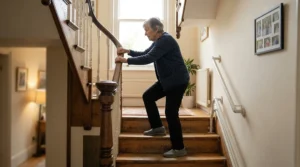
Standing and sitting deserve special attention. Leaflets advise taking your arms out of the crutches before sitting, feeling the chair with the back of your legs, and not swivelling. Many falls happen in those few seconds rather than while walking.
On stairs, leaflets describe a handrail technique: hold both crutches in one hand, use the rail with the other, and step up with your unaffected leg first, then bring the crutches up. Going down, crutches go first. But, as noted earlier, at least one NHS emergency department advises avoiding stairs on crutches altogether. The difference reflects local policy and patient risk, so follow your own team.
Safety checks before each use:
- Ferrules are not worn and are fully pushed on
- Pins click fully through the holes
- No loose nuts or bolts
- Both crutches are set to the same height

Crutches for Fractured Foot vs Crutches for Ankle Sprain: Does It Differ?
The walking aid is often identical, but the duration and weight-bearing instruction usually aren’t.
Crutches for fractured foot. Many foot fractures involve a period of non-weight-bearing, sometimes followed by partial weight-bearing. That makes comfort and arm endurance important, so grips and ferrules matter. If you’ve been told “no weight at all”, the knee scooter or hands-free route may also be on the table with your clinician’s approval.
Crutches for ankle sprain. Sprains are often shorter, and clinicians may allow partial weight-bearing sooner. A Milton Keynes University Hospital NHS leaflet describes partial weight-bearing technique: step the injured leg forward while taking some weight through your arms, keeping the foot in contact with the ground, then step through with your good leg. Because the period can be shorter, a basic pair like the Drive DeVilbiss Aluminium Underarm Crutches or a simple The Helping Hand Company Double Adjustable Crutches set may be enough.
The takeaway: let your diagnosis and your clinician’s instruction decide whether to spend more. A fractured foot with weeks ahead justifies comfort features. A mild sprain usually doesn’t.
Plaster Cast Mobility: Beyond the Crutches
Plaster cast mobility is a whole-body problem, not just a walking aid problem. A cast adds weight, bulk and a different centre of gravity, and it changes how you move through doors, cars, bathrooms and bed.
Think in zones. In the bathroom: a non-slip mat and a stool help, and a waterproof cast cover is worth asking your clinic about. In the kitchen: keep daily items at waist height, and use a rucksack or tray-style carrying method that keeps your hands free. In the car: ask your clinician about driving, because advice depends on which leg is injured and the type of vehicle. At night: keep a clear route to the bathroom and a light within reach.
Footwear matters too. Wear a supportive shoe on your good foot, as NHS crutch leaflets recommend, and avoid slippery socks on hard floors.
If your cast is on a lower leg and your clinician agrees, a KneeRover Economy Knee Scooter can improve flat-floor mobility. It won’t fix stairs, so plan around them. Whatever you choose, tell your clinician about numbness, swelling or pain that worsens. Those aren’t things to tough out.
Knee Scooter Alternative: Crutches vs Scooters vs Hands-Free
If a knee scooter isn’t right for you, a knee scooter alternative needs to match your home and your body. Some people hire scooters for a few weeks. One reviewer on a UK scooter retailer’s Trustpilot page described hiring one for four weeks after ankle surgery, which highlights a useful middle path if buying feels like overkill.
| Option | Strengths | Weaknesses | Best For |
|---|---|---|---|
| Flexyfoot Comfort Grip Double Adjustable Crutches | Stairs-capable, portable, comfort-focused | Arm and shoulder fatigue | Mixed homes with stairs |
| KneeRover Economy Knee Scooter | Less hopping, quicker on flat floors | Poor on stairs, loads the knee | Flat, spacious homes |
| iWALK3.0 Hands Free Knee Crutch | Hands-free movement | Learning curve, balance demands | Confident, balanced users |
| Drive DeVilbiss Aluminium Underarm Crutches | Cheap and familiar | Basic comfort | Short-term injuries |
The table shows why there’s no universal winner. The KneeRover Economy Knee Scooter is best on flat floors but struggles when stairs appear, while the Flexyfoot Comfort Grip Double Adjustable Crutches cope with steps but tire your arms. The iWALK3.0 Hands Free Knee Crutch wins on freedom, if you can master it. For most UK terraces and flats with stairs, crutches remain the default, with a scooter as a second tool on the flat.
Features That Actually Matter (And Those That Don’t)
Matters: grips. You’ll hold them for hours. Soft, ergonomic handles on the Verax Healthcare Elbow Crutches and Flexyfoot Comfort Grip Double Adjustable Crutches make a real difference.
Matters: ferrules. Worn or poorly designed rubber is a slip risk. Check them before every use.
Matters: adjustability. Double adjustable models such as The Helping Hand Company Double Adjustable Crutches let you tune cuff and handle separately.
Matters: weight capacity. Use the stated limit, not a guess.
Matters a little: folding. Handy for travel on the AevQuas 2PCS Folding Crutches for Adults, but it adds a joint to inspect.
Doesn’t matter much: colour and cosmetics. Colours are cheerful, and many reviewers like them, but fit and comfort come first.
Doesn’t matter much: fancy marketing claims. Be sceptical of celebrity-style endorsements. A well-fitted, well-maintained pair beats a glamorous ill-fitting one.
Long-Term Cost & Maintenance
| Option | Indicative cost | Maintenance | Best For |
|---|---|---|---|
| Drive DeVilbiss Aluminium Underarm Crutches | Budget | Replace ferrules, check bolts | Short recoveries |
| The Helping Hand Company Double Adjustable Crutches | Mid-range | Check adjusters and ferrules | Most recoveries |
| Flexyfoot Comfort Grip Double Adjustable Crutches | Mid to upper | Replace ferrules when worn | Long recoveries |
| KneeRover Economy Knee Scooter | Roughly £100-£150 range | Check brakes, wheels, knee pad | Flat homes |
Looking at the cost picture, the cheapest pair isn’t always the cheapest in practice: a pair that causes blisters and slows your recovery has its own cost. The Flexyfoot Comfort Grip Double Adjustable Crutches cost more up front, but if you’re on them for many weeks, the comfort premium is spread over many thousands of steps. Remember too that NHS-issued pairs are free to borrow, so buying your own is an upgrade decision, not a necessity.
Maintenance is cheap. Replace worn ferrules, tighten loose bolts, wipe down handles and check for bends. If anything looks damaged, stop using it.

FAQ
❓ Can I buy my own crutches for broken ankle recovery instead of using A&E ones?
❓ Are folding crutches for fractured foot safe for several weeks?
❓ Do I need premium crutches for ankle sprain recovery?
❓ Is a knee scooter alternative worth it if I live upstairs?
❓ Do I still return A&E crutches if I buy a different pair?
Conclusion
Choosing crutches for broken ankle recovery comes down to three questions: how long will you need them, what does your home look like, and what has your clinician told you about weight? Answer those honestly and the shortlist shrinks quickly.
For short, stable recoveries, the Drive DeVilbiss Aluminium Underarm Crutches or The Helping Hand Company Double Adjustable Crutches do the job without fuss. If you commute, the AevQuas 2PCS Folding Crutches for Adults earn their place. For hand comfort over weeks, the Verax Healthcare Elbow Crutches and Flexyfoot Comfort Grip Double Adjustable Crutches are the stronger bets. And if your home is flat and your clinician agrees, a KneeRover Economy Knee Scooter or iWALK3.0 Hands Free Knee Crutch offer a different way to move.
Whatever you choose, get the fit checked, inspect the ferrules, and respect the weight-bearing instruction. A few boring habits beat the fanciest kit.
✨ Ready to get moving?
🔍 Click any highlighted product name to check current pricing and availability, then pick the pair that fits your recovery. Your future self (and your shoulders) will thank you!
Recommended for You
- Underarm Crutches For Tall Adults: 7 Best Proven Picks (2026)
- Best Elbow Crutches: 7 Top-Rated UK Picks For Comfort (2026)
- Best Lightweight Crutches: 7 Proven Picks For the UK (2026)
Disclaimer: This article contains affiliate links. As an Amazon Associate, I earn from qualifying purchases. If you purchase products through these links, we may earn a small commission at no additional cost to you.
✨ Found this helpful? Share it with your friends! 💬🤗
