

In This Article
Here’s a fact nobody tells you at the hospital discharge desk: not all zimmer frames weigh the same, and the difference between a 1.9kg frame and a 3.5kg one is the difference between “pop it in the car boot without thinking” and “ask someone to help, again.” If you’ve been handed a clunky NHS loan frame and found yourself wincing every time you lift it over the doorstep threshold, you already understand why the search for a proper lightweight zimmer frame matters more than it sounds like it should.

This guide exists because most “best walking frame” articles online are just Amazon listings with the punctuation rearranged. We’ve done something different: real product research, real specifications, and honest analysis of what actually separates a genuinely light aluminium frame from one that merely claims to be. So, what is a lightweight zimmer frame? In short, it’s a walking frame — usually made from aluminium or aluminium alloy tubing — engineered to weigh under roughly 3kg, giving users with reduced arm strength or grip an aid that’s easy to lift, carry and fold without becoming a burden in itself.
Whether you’re shopping for an ageing parent recovering from a hip operation, researching options for yourself after a fall, or simply comparing the aluminium walking frame market before a big decision, you’re in the right place. We’ll walk through seven real products sold on amazon.co.uk, compare them honestly, and explain — properly, not with vague marketing fluff — which one suits which situation. Let’s get into it.
Quick Comparison Table
| Model | Weight | Type | Best For |
|---|---|---|---|
| Coopers Zimmer Frame (Wheeled) | 1.9–2kg | Wheeled | Lightest overall pick |
| NRS Healthcare Ultra Narrow N73235 | 2.7kg | Wheeled, narrow | Tight hallways & women’s frames |
| Aidapt Fast Fold Frame | ~2.3kg | Folding | Easy-carry / travel |
| Days 100 Series Height-Adjustable Frame | ~2.5kg | Wheeled/non-wheeled | Clinical-grade premium |
A quick glance tells its own story: every genuinely lightweight option here clusters between roughly 1.9kg and 2.7kg, which is where the aluminium market has essentially settled after years of incremental redesign. The Coopers Zimmer Frame edges out as the lightest of the four shown, but as you’ll see further down, “lightest” doesn’t automatically mean “best for you” — a narrower frame or a folding mechanism might matter more depending on your home and your daily routine.
💬 Already got a favourite in mind? Jump to the full product breakdown below — or keep comparing first.
Top 7 Lightweight Zimmer Frames: Expert Analysis
We’ve spread these across budget, mid-range and premium price bands, and included variants — narrow, wheeled, folding, and one with a seat — so there’s a genuine fit here whatever your living space and strength levels look like. Prices below are indicative ranges only; always check the current price on the product page, as these shift regularly.
1. Coopers Zimmer Frame — lightest on the market at under 2kg
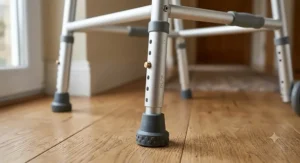
The standout feature here is right there in the name of this section: at roughly 1.9kg unwheeled and 2kg with front wheels, the Coopers Zimmer Frame is about as close to “featherweight” as a full-size walking frame gets without sacrificing the load-bearing structure that keeps you upright. The anodised aluminium tubing is treated to resist corrosion, which matters more than people assume — a rusting frame doesn’t just look tired, it can seize at the height-adjustment pins. Height adjustment is straightforward push-button, available in two size ranges to suit shorter and taller users, with an optional wheeled version for those who find lifting tiring. Who is this for? Honestly, almost anyone starting out with a frame for the first time — it’s forgiving to learn on precisely because there’s so little weight to fight against, which matters enormously for someone with wrist arthritis or recovering shoulder strength. NHS-trusted design credentials suggest it’s a familiar shape to physiotherapists too, which can ease that slightly intimidating first week of using a frame in public. Reviewers consistently note how surprisingly sturdy it feels given how little it weighs — several mention being pleasantly surprised after expecting a “cheap and flimsy” product based on the price alone. A recurring theme in aggregated feedback is that buyers who switched from a standard NHS-loan frame noticed the weight difference within the first outing.
Pros:
- ✅ Genuinely the lightest full-size frame in this list
- ✅ Height adjustable to suit multiple user heights
- ✅ Anodised aluminium resists rust long-term
Cons:
- ❌ Standard width may feel less stable for larger users
- ❌ No built-in tray or basket option
Price sits in the budget-to-mid range, generally under £45, and for the weight saving alone it’s arguably the best value entry point on this list.
2. NRS Healthcare Ultra Narrow Walking Frame N73235 — narrowest frame for tight spaces
What stands out immediately about the NRS Healthcare Ultra Narrow Walking Frame is the 520mm width — narrow enough to glide through the kind of tight Victorian-terrace hallways and ensuite bathroom doors that defeat standard-width frames outright. At 2.7kg it’s not the lightest frame here, but it’s genuinely light for a walking aid this stable, and the six-position height adjustment covers a wide range of user heights from petite to tall. The frame is rated to a 180kg (28 stone) weight limit, so don’t assume “narrow” means “flimsy” — the tubing gauge is unchanged from wider models. Based on the spec comparison, this is the frame to reach for if you’ve measured your doorways and hallway and realised a standard 540-580mm frame simply won’t clear them; it’s a common problem in older UK housing stock that Amazon listings rarely address directly. Reviewers frequently mention using this model specifically because a previous, wider frame kept catching on door frames, and several describe it as ideal for smaller-statured users who found standard frames unwieldy. One recurring piece of aggregated feedback: buyers appreciate that narrowness hasn’t come at the cost of the front wheels, which several reviewers say make a genuine difference to daily ease of use compared with a fully rigid model.
Pros:
- ✅ Slim 520mm width clears narrow doorways easily
- ✅ Six height settings suit a wide range of users
- ✅ High 180kg weight capacity despite compact size
Cons:
- ❌ Narrower base offers slightly less side-to-side stability
- ❌ Not ideal for wider bathrooms where extra width helps balance
Expect a price in the low-to-mid range, typically £35-£55 depending on wheeled or unwheeled configuration — solid value for a problem-specific solution.
3. Aidapt Fast Fold Adjustable Height Walking Frame — best easy-carry folding design
The headline feature of the Aidapt Fast Fold Adjustable Height Walking Frame is right there in its name: a fast-fold mechanism that collapses the frame flat in seconds without tools, which sounds like a small thing until you’ve tried wrestling a rigid frame into a car boot at a supermarket car park in the rain. Constructed from lightweight aluminium tubing at around 2.3kg, it pairs anti-slip ferrule feet with a genuinely quick one-handed folding action, and the height-adjustable legs accommodate different users without needing separate frame sizes. What most buyers overlook about folding frames generally is that the folding mechanism itself is often the first thing to wear out — cheaper hinges can develop play and rattle within months. Aidapt’s fast-fold system has built a reasonable reputation for durability precisely because it’s a simpler mechanical design than some rivals, with fewer moving parts to fail. This is the model to consider if the frame needs to travel: to appointments, to a caravan, between two households, or simply into a car boot on a regular basis, rather than staying permanently in one room. Aggregated review sentiment highlights the fold-flat storage as the single most-praised feature, with multiple reviewers specifically mentioning car boot storage and travel use as the reason they chose it over a standard rigid frame.
Pros:
- ✅ Genuine one-button fast-fold mechanism
- ✅ Folds flat enough for car boots and small storage
- ✅ Anti-slip ferrules aid stability on multiple surfaces
Cons:
- ❌ Folding hinge adds a wear point over years of daily use
- ❌ Slightly bulkier folded profile than some ultra-slim rivals
Typically priced in the £30-£50 range, this is a smart mid-range choice weighted toward portability over raw minimum weight.
4. Drive DeVilbiss Folding Lightweight Aluminium Walking Frame with Wheels — best trusted mid-range brand pick
Drive DeVilbiss is one of the more recognisable names in UK mobility equipment, and the standout feature of this particular Drive DeVilbiss Folding Lightweight Aluminium Walking Frame is its independently operating dual-side folding action — each side of the frame folds separately, which genuinely does make it easier to manoeuvre through narrow spaces while standing, not just when stored. The aluminium tubing keeps overall weight low while height-adjustable legs with rubber ferrule tips add stability, and front wheels reduce the lifting motion needed to advance the frame. Here’s what the spec sheet won’t tell you, but user reports suggest: buyers moving on from older, decades-old NHS-style rigid frames repeatedly describe this model as a genuine quality-of-life upgrade, not just a lighter version of the same thing — several mention the ability to fold just one side being unexpectedly useful for getting through single doorways at an angle. This is well suited to users who want brand reassurance and a supply chain likely to have spare ferrules and parts available for years, which matters more than people initially think when a £5 rubber tip becomes the difference between a working frame and a wobbling one. One aggregated review specifically praised the ease of folding it flat enough to fit in a car, describing it as “a brilliant upgrade” compared with older frame designs used previously.
Pros:
- ✅ Independent dual-side folding for tight manoeuvring
- ✅ Established brand with reliable spare parts availability
- ✅ Front wheels reduce lifting effort during use
Cons:
- ❌ Sits at a slightly higher price point than own-brand rivals
- ❌ A touch heavier than the very lightest models on this list
Price generally falls in the mid-£40s to mid-£60s range — a fair trade for brand reliability and long-term parts support.
5. Days 100 Series Height-Adjustable Walking Frame — best clinical-grade premium pick
The Days 100 Series Height-Adjustable Walking Frame stands out for one concrete reason: it’s fully tested to BS EN ISO 11199-1:2021, the internationally recognised walking frame safety standard, and it’s rated for users up to 160kg — a genuinely wide capacity range that most budget frames don’t publish. The frame tubing measures a reinforced 2.2cm diameter, stepping up to 2.5cm at the leg sections, which on paper sounds like a small dimensional detail but in practice translates into a frame that feels noticeably less flexy under load than thinner-gauge alternatives, particularly when leaning through a turn. Ergonomic PVC hand grips add comfort during extended use, and the double-frame design — a slightly wider support base than single-tube models — is aimed squarely at users who want maximum stability during transfers and turning, not just straight-line walking. Based on the spec comparison, this is the frame worth the extra outlay for anyone recovering from a more serious mobility event, such as a stroke or major joint replacement, where the margin for a wobble is genuinely lower. Days Healthcare has decades of NHS-adjacent manufacturing history, and reviewers who’ve compared it against hospital-loan equivalents consistently describe it as feeling “more solid” while remaining light enough to lift comfortably.
Pros:
- ✅ Certified to BS EN ISO 11199-1:2021 safety standard
- ✅ High 160kg weight capacity for a wider range of users
- ✅ Reinforced tubing feels notably more stable when turning
Cons:
- ❌ Premium pricing compared with own-brand budget frames
- ❌ Indoor-focused design, not intended for rough outdoor terrain
Expect to pay in the £55-£80 range — genuinely justified if certified safety testing and a wider stability base are priorities.

6. Millercare Ultra Lightweight Walking Frame with Wheels — best mid-range aluminium alloy value pick
The Millercare Ultra Lightweight Walking Frame earns its standout tag through a straightforward value proposition: a robust aluminium construction, ergonomic handles, and adjustable height settings, all at a price point that consistently undercuts the branded clinical options without a dramatic compromise in build quality. Durable stoppers on the leg bases grip the ground reliably, reducing slip risk on smooth kitchen and bathroom flooring, while the frame folds down reasonably compactly for storage between uses. What most buyers overlook about mid-tier frames like this is that the difference between a £35 model and an £80 model is rarely the aluminium itself — it’s usually the quality of the folding hinge, the grip material, and the precision of the height-adjustment pin fit. Millercare’s positioning as a specialist mobility retailer (rather than a generic Amazon marketplace seller) generally means slightly tighter quality control on those exact components. This suits budget-conscious buyers and families furnishing a second home or care setting who need several frames without a premium per-unit cost, as well as anyone who simply wants a dependable, no-frills option without paying for certification testing they may not strictly need for home use. Aggregated feedback frequently describes the frame as “good quality and lightweight but sturdy,” a combination reviewers note isn’t a given at this price bracket.
Pros:
- ✅ Strong value-for-money against premium alternatives
- ✅ Adjustable height with a secure locking mechanism
- ✅ Compact fold for easier home storage
Cons:
- ❌ Lacks independent safety-standard certification listed
- ❌ Handgrip padding is thinner than premium rivals
Typically priced around £30-£45, this is a sensible middle-ground pick for households that need reliable function without premium branding costs.
7. TOTEBOX Folding Walking Frame with Wheels and Seat — best budget aluminium alloy pick with built-in seat
What makes the TOTEBOX Folding Walking Frame stand out is the built-in seat — a genuinely useful addition at this price point that lets the user rest mid-journey rather than needing to reach a chair, which matters enormously for anyone whose stamina fluctuates through the day. Built from aluminium alloy rather than pure aluminium tubing, the frame trades a small amount of weight saving for slightly increased structural rigidity at a lower manufacturing cost, which is a reasonable engineering compromise for a budget product. Height is adjustable, the frame folds for storage, and it’s designed with both indoor and light outdoor use in mind. Here’s what most spec sheets skip: aluminium alloy isn’t inherently worse than pure aluminium — it’s simply a different trade-off between weight, cost and stiffness, and for shorter indoor journeys where the seat gets used regularly, the marginal extra weight is rarely noticeable in daily life. This is well suited to users on a tighter budget, or those buying a second frame to leave downstairs while a lighter model stays upstairs, and particularly to anyone whose main complaint about existing frames is “I get tired halfway across the room and there’s nowhere to sit.” Aggregated customer sentiment for budget seated frames in this category tends to praise the seat feature specifically, while noting the padding is basic rather than plush — reasonable for the price bracket.
Pros:
- ✅ Built-in seat for resting mid-journey
- ✅ Genuinely budget-friendly entry price
- ✅ Aluminium alloy build adds rigidity at low cost
Cons:
- ❌ Heavier overall than pure-aluminium rivals on this list
- ❌ Seat padding is basic rather than premium
Price generally sits under £40, making it one of the more accessible options here, particularly for households needing a spare frame.
Top 7 Products: Full Comparison
| Model | Approx. Weight | Width | Best For | Price Range |
|---|---|---|---|---|
| Coopers Zimmer Frame | 1.9-2kg | Standard | Lightest overall | Under £45 |
| NRS Healthcare Ultra Narrow N73235 | 2.7kg | 520mm narrow | Tight doorways, women’s frames | £35-£55 |
| Aidapt Fast Fold Frame | ~2.3kg | Standard | Easy-carry travel | £30-£50 |
| Drive DeVilbiss Folding Frame | ~2.6kg | Standard | Brand reliability | Mid-£40s-£60s |
| Days 100 Series Frame | ~2.5kg | Wide/double-frame | Clinical-grade stability | £55-£80 |
| Millercare Ultra Lightweight Frame | ~2.4kg | Standard | Mid-range value | £30-£45 |
| TOTEBOX Frame with Seat | ~3.2kg | Standard | Budget with seating | Under £40 |
Laid out side by side, the pattern is clear: the Coopers Zimmer Frame wins on raw weight, but the Days 100 Series Frame justifies its higher price through certified stability testing that matters most for higher-risk recoveries. Meanwhile, the TOTEBOX Frame sacrifices some weight advantage for a built-in seat that genuinely changes the daily experience for anyone with limited stamina, proving that “lightest” and “best” aren’t always the same question.
💬 Just one click — help others make better buying decisions too!😊
Practical Usage Guide: Getting Set Up in the First 30 Days
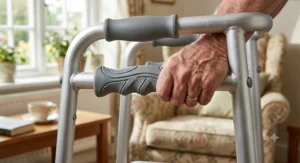
Bringing home a new lightweight walking frame for elderly users, or for yourself, isn’t quite as simple as unboxing and walking off. Getting the height right is the first job — stand naturally with arms relaxed, and the top of the handgrips should sit level with your wrist crease, with elbows only slightly bent. Too high and you’re hunching forward; too low and you’re stooping, both of which increase fall risk over time rather than reducing it. In the first week, expect a genuine adjustment period: muscles used differently, a slightly altered gait, and possibly some mild forearm fatigue as your body adapts to bearing weight through your arms rather than solely your legs.
A common early mistake is skipping the ferrule check. Those rubber feet wear unevenly, especially on carpet versus hard flooring, and a worn ferrule is one of the most preventable causes of a slip. Check them weekly during the first month, then monthly thereafter. Another frequent slip-up: users try to use the frame on stairs, which it’s never designed for — always use a handrail or stairlift for stairs, keeping the frame strictly for level ground. If your frame has wheels, get comfortable with the difference between pushing (wheeled front) and lifting (rear ferrules); mixing the two motions unevenly is a common cause of instability in the early days. Clean the frame’s tubing and grips periodically with a damp cloth — non-porous aluminium surfaces are designed for this and it prevents grime building up around joints, which can eventually stiffen folding or height-adjustment mechanisms if neglected for months on end.
Real-World Scenarios: Who Suits Which Frame
Picture three quite different households, because “one size fits all” genuinely doesn’t apply here. First: a 78-year-old woman living alone in a two-bedroom Victorian terrace with narrow doorways throughout, recovering from a minor stroke and needing to move confidently between rooms without a carer present at all times. For her, the NRS Healthcare Ultra Narrow Walking Frame is the sensible pick — its 520mm width is specifically engineered for exactly this housing type, and the six-position height range accommodates her smaller frame comfortably.
Second: a 65-year-old man recently discharged after hip replacement surgery, living with his partner in a modern bungalow with wide hallways, who travels frequently to visit grandchildren two counties away. Here, the Aidapt Fast Fold Adjustable Height Walking Frame earns its place — the fast-fold mechanism means it collapses into the car boot in seconds without requiring his partner’s help, which matters when travel days are already tiring enough.
Third: an 84-year-old woman with limited upper body strength following a long hospital stay, who tires easily and needs frequent rest stops around her single-storey flat. For her, the TOTEBOX Folding Walking Frame with Wheels and Seat makes practical sense — the built-in seat means she isn’t stranded mid-corridor waiting to reach a chair, addressing her specific stamina limitation directly rather than just her mobility one.
What to Expect: Real-World Performance vs the Spec Sheet
Specs on a product page rarely tell you how a frame actually feels after three weeks of daily use. A “1.9kg” listing sounds impressively light in isolation, but the meaningful comparison is against what you’re replacing — if you’re upgrading from a standard NHS-loan frame weighing closer to 3.5-4kg, that’s a genuine, noticeable difference every single time you lift it over a step or into a car. If you’re already using a mid-weight aluminium frame, the jump to the very lightest options on this list will feel more marginal day to day.
Height adjustment ranges also behave differently in practice than on paper. A frame advertised with “six height settings” sounds generous, but the actual usable range often clusters around the middle three settings for most adult heights — the extremes exist mainly for unusually tall or short users. Folding mechanisms, meanwhile, are where real-world experience diverges most sharply from marketing copy: a “one-button fold” that requires two hands and a firm push isn’t quite the one-handed operation the packaging implies, something worth bearing in mind if grip strength is already a concern.
What Does “Ultra-Light” Actually Mean?
The phrase “ultra-light mobility frame” gets thrown around loosely in product listings, so it’s worth being precise. In this category, there’s no formal regulatory weight threshold that defines “ultra-light” — it’s a marketing term, not a certified classification, unlike the BS EN ISO 11199-1:2021 safety standard, which does have defined test criteria. In practical terms, most genuinely light aluminium frames on the UK market sit between 1.8kg and 2.8kg; anything much above 3kg is better described as “standard weight” regardless of what the listing title claims. If you’re comparing products purely by title, it pays to scroll down to the technical specification table and check the actual kilogram figure rather than trusting the headline phrase — a frame marketed as “ultra lightweight” that weighs 3.4kg isn’t lying exactly, but it’s stretching the definition well beyond what a genuinely light user experience requires.
How to Choose a Lightweight Zimmer Frame
Working through this decision doesn’t need to be overwhelming if you break it into a handful of concrete steps.
- Measure your doorways first. Before anything else, measure the narrowest doorway or hallway the frame needs to pass through — this single measurement eliminates more unsuitable models than any spec comparison could.
- Check the actual weight in kilograms, not the marketing label. As covered above, “ultra-light” isn’t standardised — go straight to the technical spec.
- Decide wheeled versus non-wheeled. Wheeled frames reduce lifting effort but require slightly more coordination; non-wheeled frames offer maximum stability but demand more arm strength per step.
- Confirm the height-adjustment range covers your actual height. Stand with arms relaxed and check the wrist-crease measurement against the frame’s published range before ordering.
- Consider your storage and transport needs. If the frame is staying in one room permanently, folding matters less; if it’s travelling in a car regularly, prioritise a genuine fast-fold mechanism.
- Check the weight capacity against the user’s actual body weight, not just a rough guess — most standard frames cap around 130-160kg, with bariatric options available beyond that.
- Factor in whether certified testing matters for your situation. For higher-risk recoveries, a BS EN ISO 11199-1:2021-tested model like the Days 100 Series offers documented reassurance that budget alternatives may not.
Aluminium vs Aluminium Alloy: What the Material Actually Changes
An aluminium walking frame and an aluminium alloy walking aid aren’t quite the same thing, though the terms get used almost interchangeably in product titles. Pure aluminium tubing (technically usually a lightly alloyed grade even when marketed as “aluminium”) prioritises minimum weight, which is why the lightest frames on this list — the Coopers Zimmer Frame and NRS Healthcare Ultra Narrow model — lean on this construction. Aluminium alloy blends in small amounts of other metals, typically magnesium or silicon, to increase tensile strength and rigidity, generally at a small weight cost and often at a lower manufacturing price point, which is exactly the trade-off seen in the budget TOTEBOX Frame with Seat.
Neither approach is objectively superior — it depends entirely on priority. If minimum weight is the deciding factor because of limited grip or arm strength, pure aluminium tubing wins. If budget matters more than shaving off a few hundred grams, aluminium alloy construction like the TOTEBOX model delivers adequate rigidity at a lower price without meaningfully compromising day-to-day safety for typical home use.
Lightweight Walking Frames for Elderly Users
For elderly users specifically, weight isn’t the only consideration — grip comfort, stability, and ease of learning the correct technique all matter just as much. Age-related grip strength decline is well documented, which is precisely why models like the Coopers Zimmer Frame, with its exceptionally light overall mass, tend to suit first-time frame users best: less weight to control means less strain during that crucial early learning period when technique isn’t yet automatic. For elderly users managing conditions like arthritis, ergonomically shaped handgrips — as found on the Days 100 Series Frame — reduce pressure points during extended use, which matters more for someone spending significant portions of the day moving around the house rather than making occasional short trips.
Falls remain a genuine concern in this age group, and using a well-fitted, correctly adjusted walking aid is one of the most evidence-based interventions available, alongside strength and balance exercises recommended by organisations like Age UK’s falls prevention guidance. A frame that’s too heavy to comfortably lift often ends up left by the front door “for special occasions only,” which defeats the entire purpose — the lightest frame you’ll actually use every day beats the sturdiest one gathering dust in a hallway corner.
Lightweight Zimmer Frames for Women
A lightweight zimmer frame for women isn’t a distinct product category in any formal sense, but sizing and grip considerations do matter in practice. Many women benefit from a narrower frame width and a lower minimum height-adjustment setting, both of which point toward models like the NRS Healthcare Ultra Narrow Walking Frame, whose 520mm width and six-position adjustment accommodate smaller statures more comfortably than a standard-width frame designed around average male proportions. Handgrip diameter matters too — smaller hands generally find slimmer PVC-coated grips easier to close around securely, reducing hand fatigue over a full day’s use.
Beyond sizing, the practical weight-lifting consideration applies with particular relevance here, given that average grip and upper-body strength statistics tend to run lower for women than men, making the raw kilogram figure on the spec sheet arguably more decisive than for other user groups. The Coopers Zimmer Frame, sitting under 2kg, removes much of that concern outright, while still offering the two-size height range needed to fit a genuinely comfortable posture.
Easy-Carry & Travel-Friendly Frames
For anyone who needs an easy-carry walking frame — visiting family, attending regular hospital appointments, or simply wanting the option to take the frame in the car without a production number — folding speed and folded dimensions matter more than raw kilogram weight. The Aidapt Fast Fold Adjustable Height Walking Frame stands out here specifically because its folding mechanism is engineered as the primary feature rather than an afterthought, collapsing flat with a single motion rather than requiring multiple release catches to be operated in sequence.
Practical tip for travel use: always fold and unfold the frame on a flat, stable surface rather than balancing it against a car seat or door frame, since folding mechanisms under uneven pressure can develop play over time. If the frame will regularly go in and out of a car boot, check the folded width against your specific boot opening — some folding frames remain surprisingly wide even collapsed, which can catch on wheel-arch liners in smaller hatchbacks.
Common Mistakes When Buying a Walking Frame
The single most common mistake is buying based on price alone without checking the height-adjustment range against the actual user’s measurements — an ill-fitting frame, however light, encourages poor posture and increases fall risk rather than reducing it. A close second: assuming “lightweight” automatically means “flimsy,” which leads some buyers to overspend on unnecessarily heavy-duty models when a properly engineered light frame like the Days 100 Series offers certified strength without the weight penalty. Another frequent error is ignoring doorway and hallway measurements entirely, only to discover post-purchase that a standard-width frame doesn’t clear the bathroom door — a problem the NRS Healthcare Ultra Narrow model exists specifically to solve. Finally, many buyers overlook ferrule replacement costs and availability when comparing initial prices; a bargain frame with hard-to-source proprietary ferrules can end up costing more over two years than a slightly pricier branded model with widely stocked spare parts.
Long-Term Cost & Maintenance
Thinking beyond the initial purchase price reveals a more complete picture of value. Ferrules typically need replacing every six to twelve months depending on flooring type and usage frequency, generally costing a few pounds per set from pharmacies or mobility retailers — a genuinely minor ongoing cost regardless of which frame you choose. Branded models like the Drive DeVilbiss Folding Frame and Days 100 Series Frame tend to have wider parts availability years down the line, which matters if a hand grip splits or a height-adjustment pin wears loose; own-brand or marketplace-only models can occasionally become harder to source spares for once a specific listing is discontinued.
Total cost of ownership over, say, three years of regular daily use rarely differs dramatically between the products on this list — the meaningful gap is almost entirely in the upfront price, since maintenance needs across aluminium and aluminium alloy frames alike are modest. Where the calculation shifts is if a frame is genuinely unsuitable and gets replaced within months: buying once, correctly, based on measured height and doorway width, remains the single biggest long-term saving available.
Safety, Regulations & Compliance Guide
UK walking frames sold as medical mobility aids are expected to meet ISO 11199-1:2021, the international standard (adopted in the UK as BS EN ISO 11199-1:2021) covering requirements and test methods for walking frames manipulated by both arms — including static loading, fatigue testing and stability performance. Not every frame sold on general marketplaces explicitly confirms compliance on the listing, which is worth checking before purchase if certified testing matters to your situation; the Days 100 Series Frame is one of the few in this list to state it directly.
Beyond formal certification, basic safety practice matters just as much day to day. NHS guidance is consistent on the fundamentals: keep the walking aid at the correct height, inspect ferrules regularly for wear, and never use a walking frame on stairs. For broader context on how walking aids fit into the wider NHS care pathway, including how frames can sometimes be borrowed via a physiotherapist referral, the NHS’s own guide to walking aids, wheelchairs and mobility scooters is a genuinely useful starting point, and Guy’s and St Thomas’ NHS Foundation Trust’s falls guidance covers correct fitting and ongoing checks in more practical detail.
✨ Ready to Find Your Perfect Fit?
🔍 Compare the seven models above against your own doorway measurements and height before deciding. Click through to check current pricing and availability on amazon.co.uk — the right lightweight zimmer frame can make daily independence noticeably easier from day one.

Frequently Asked Questions
❓ How much should a lightweight zimmer frame weigh?
❓ Can I get a lightweight walking frame on the NHS for free?
❓ What width doorway do I need for a walking frame?
❓ Is a wheeled or non-wheeled zimmer frame better for elderly users?
❓ How do I know if a walking frame is the right height for me?
Conclusion
Choosing a lightweight zimmer frame comes down to matching real specifications to your actual daily life, not chasing the lightest number on a spec sheet in isolation. If minimum weight is the absolute priority, the Coopers Zimmer Frame is hard to beat at under 2kg. If your home has narrow hallways, the NRS Healthcare Ultra Narrow Walking Frame solves a problem the others simply can’t. Travellers should look toward the Aidapt Fast Fold Frame, while anyone prioritising certified safety testing for a more serious recovery will find the Days 100 Series Frame worth its higher price. Budget-conscious buyers have two genuinely solid options in the Millercare Ultra Lightweight Frame and the seat-equipped TOTEBOX Frame, and brand-loyal shoppers can lean on the Drive DeVilbiss Folding Frame for long-term parts reliability. Whichever you choose, measure first, check the actual kilogram weight, and set the height correctly — the rest tends to fall into place from there.
Recommended for You
- Folding Walking Frame for Travel: 7 Best Picks for Flying (2026)
- Folding Zimmer Frame: 7 Best Picks for 2026
- Wheeled Walking Frame for Parkinson’s: 7 Top Picks for 2026
Disclaimer: This article contains affiliate links. As an Amazon Associate, I earn from qualifying purchases. If you purchase products through these links, we may earn a small commission at no additional cost to you.
✨ Found this helpful? Share it with your friends! 💬🤗
