
In This Article
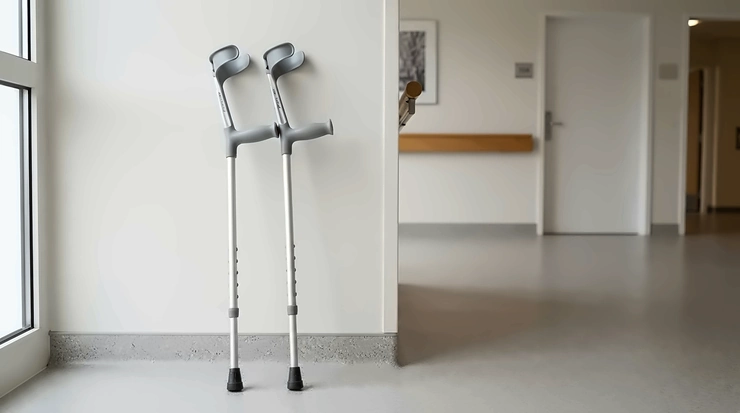
Nobody gives a second thought to the little cone of rubber at the bottom of a crutch. That lasts right up until it skids across a wet kitchen floor. Crutch tips replacement is the cheapest, quickest safety job in the whole world of mobility aids, and it’s also the one people put off until a near-miss forces the issue. Your wrists, shoulders and (if you’re recovering) a healing joint all depend on that scrap of rubber behaving itself.

Why does it get ignored? Because wear is sneaky. A tip doesn’t fail like a snapped strap. It goes smooth, then glassy, then treacherous, a little more each day. By the time it feels wrong, the grip has been fading for weeks.
NHS physiotherapy teams across the UK repeat the same message in their patient leaflets: look at your rubber ferrules regularly and replace them when the tread has gone. NHS Scotland’s NHS inform guide to using crutches is a sensible starting point for technique and safety basics.
This guide covers seven real products, from budget workhorses to cushioned premium options. It also explains rubber crutch feet, sizing, tread wear signs, and how to avoid the classic mistake of buying the wrong diameter. 🦯
Please note: much of the product data below comes from manufacturer and retailer listings. Stock, pack sizes and sellers on amazon.co.uk change often, so confirm the details on the listing before you buy.
Quick Comparison Table: Crutch Tips Replacement at a Glance
| Product | Tip style | Fits (diameter) | Best For |
|---|---|---|---|
| Cool Shock Absorbing Ferrules | Cushioned | 19mm | Daily heavy users with sore wrists |
| Flexyfoot Crutch Ferrule | Flexing, replaceable foot | Several sizes (16mm listed; check range) | Long-term users wanting repairable tips |
| Drive Medical 19mm Grey Rubber Ferrules | Metal-insert rubber | 19mm | Everyday value for most elbow crutches |
| Vital Parts Crutch Style Rubber Ferrules | Heavy duty, metal washer | 19mm | Tubes that chew through cheap rubber |
| Pivoflex Ferrule | Flexing natural rubber | 19mm | Cold-weather and uneven-ground use |
| Aidapt Replacement Crutch Ferrule | Standard non-slip | 19mm | Owners of Aidapt patterned crutches |
| Lifeswonderful 22mm Ferrules | Standard rubber | 22mm | Larger-tube crutches and sticks |
Looking at the table, the Drive Medical 19mm Grey Rubber Ferrules are the sensible default for most people with standard 19mm elbow crutches. If your arms take the punishment, the Cool Shock Absorbing Ferrules justify their higher cost. Anyone with 22mm tubes should skip straight to the Lifeswonderful 22mm Ferrules, because no amount of clever design fixes a wrong-sized tip.
💬 Just one click — help others make better buying decisions too!😊
Top 7 Crutch Tips Replacement Picks: Expert Analysis
Quick note on method: the sentiment notes below summarise what reviewers on retailer pages have reported, and I flag where the review pool is too small to trust. Prices are ranges only. Check current prices on amazon.co.uk before you decide.
1. Cool Shock Absorbing Ferrules — cushioning for jarred wrists and shoulders
Most ferrules are built to grip. This one is also built to forgive. The 19mm replacement tips are sold as a pair, and the maker describes them as cushioned to reduce the jolt travelling up through the wrist, elbow and shoulder.
The listing cites a high-durability rubber compound and a 19mm fit. That matches the common elbow crutch tube, but measure yours first. Based on the spec sheet, the cushioning matters most for people who load their arms daily: long-term users, bilateral crutch users, anyone with arthritic or sensitive joints. A short-term ankle sprain probably won’t repay the premium.
The manufacturer’s own advice is to inspect and replace regularly, especially for heavily weight-bearing users. That’s honest, because cushioned rubber still wears. I couldn’t verify a sizeable pool of buyer reviews for this exact product, so treat comfort claims as the maker’s rather than proven by customers.
Pros:
- ✅ Cushioning aimed at reducing arm and shoulder jolt
- ✅ Sold as a pair, ready for both crutches
- ✅ Suits heavy daily weight-bearing use
Cons:
- ❌ Costs noticeably more than basic ferrules
- ❌ Little verified customer feedback to lean on
Price: roughly the mid-teens to mid-£20s per pair depending on seller, so check current price. Worth it only if arm comfort is your problem.
2. Flexyfoot Crutch Ferrule — flexing base with a replaceable foot
Flexyfoot is the name most NHS-adjacent suppliers reach for. Its flexing design is meant to keep more rubber on the floor as the crutch tilts, which matters because we rarely plant a crutch perfectly vertical.
Trade material says Flexyfoot ferrules are verified by independent ISO testing for grip, durability and comfort. That’s a manufacturer claim, though a more testable one than most. The clever bit is practical: a separate replacement foot screws into the ferrule’s collar. You can renew just the worn rubber instead of the whole assembly.
On paper, that suits someone expecting months of use, such as a long recovery or a permanent crutch user. Retailers list several diameters, so confirm yours; one listing I found was 16mm and sold singly, which means buying two. Reviewer evidence is thin, with one retailer review I found being positive, so I’d call the sentiment encouraging but unproven.
Pros:
- ✅ Replaceable foot lowers long-term waste
- ✅ Flexing base keeps contact at angles
- ✅ Trade-cited ISO testing behind the design
Cons:
- ❌ Higher upfront cost than plain rubber tips
- ❌ Often sold singly, so buy two
Price: around the £5-£9 range per ferrule on specialist sites, so check current price. Strong value if you’ll be on crutches for a long time.
3. Drive Medical 19mm Grey Rubber Ferrules — metal-insert durability in a pair
This is the dependable all-rounder. Drive Medical supplies these as a pack of two, each with a metal insert inside the rubber. They’re latex-free, which matters if you have an allergy.
Two specs deserve translation. The 19mm tube diameter fits most standard UK elbow crutches. The roughly 41mm base gives a wider footprint than the skinny tips some crutches ship with. The metal insert stops the aluminium tube from slowly punching through the rubber, which is one of the commonest ways cheap ferrules die early.
The honest take: these won’t win awards for innovation, and that’s the point. For someone wanting a straightforward swap, they cover the essentials without gimmicks. Reviews for this exact listing were sparse when I looked, though a buyer of the 22mm sibling called the quality good. Read that as mildly positive rather than conclusive.
Pros:
- ✅ Metal insert resists tube punch-through
- ✅ Latex-free rubber
- ✅ Wide base for stable footing
Cons:
- ❌ No cushioning or flex technology
- ❌ Sparse reviews on some listings
Price: about £6-£8 per pair, so check current price. Excellent value for everyday use.
4. Vital Parts Crutch Style Rubber Ferrules — reinforced base for tough wear
If your last ferrules wore through within weeks, this is the one to try. Vital Parts describes heavy-duty rubber reinforced with a metal washer in the base, designed to stop the crutch or stick cutting into the rubber.
The listed dimensions are a 19mm internal diameter, a 41mm base, 35mm length and a 4mm wall thickness, in black rubber. That 4mm wall is chunky, so the ferrule resists splitting at the collar, a classic failure point. The wide base helps on hard floors, though I’d want to confirm a black rubber tip won’t mark pale flooring.
This suits users who walk long distances on rough pavements, or anyone whose crutches see daily outdoor abuse. On the retailer’s review page, the product showed a high average rating from only four reviews, with comments along the lines of “just the job” and “a life changer”. That’s encouraging, but four reviews is a nudge, not proof.
Pros:
- ✅ Metal washer protects against punch-through
- ✅ Thick 4mm wall resists splitting
- ✅ Wide 41mm base improves footing
Cons:
- ❌ Black rubber may mark light floors
- ❌ Small review pool
Price: typically low single-digit pounds per ferrule, so check current price. Great value for rough use.
5. Pivoflex Ferrule — flexes to keep rubber on the ground
The Pivoflex Ferrule is built around one idea: stay flat on the floor when the crutch doesn’t. Its design is described as flexing to maximise ground contact under load.
It fits any crutch or stick with a 19mm shaft, and it’s made from natural rubber. That second detail is the interesting one. Natural rubber is said to hold its flexibility in cold conditions, so winter pavements shouldn’t turn it into a hard plastic puck. If you walk outside through British winters, that’s a meaningful advantage over stiffer compounds.
The flexing action should help most on uneven ground such as kerbs, cobbles and gravel paths. Reviews on the retailer listing were few: three ratings, all positive, with one reviewer calling them “brilliant”. That’s too small a sample to bank on, so consider it a promising sign rather than a verdict.
Pros:
- ✅ Natural rubber stays flexible in cold weather
- ✅ Flexing design maintains ground contact
- ✅ Fits any 19mm shaft
Cons:
- ❌ Natural rubber may wear faster on rough surfaces
- ❌ Very few reviews to verify
Price: under £5 range, so check current price. A bargain for winter walkers.
6. Aidapt Replacement Crutch Ferrule — colour-matched swaps for patterned crutches
Where the Aidapt Replacement Crutch Ferrule shines is simplicity. It’s the manufacturer’s own 19mm ferrule for its range of colourful patterned forearm crutches, and it’s easy to fit with non-slip rubber.
Colours include grey, blue and pink, so your crutches don’t end up looking like a mismatched pair. That’s a vanity point, but also a practical one: NHS leaflets stress using a matching pair, and keeping tips consistent helps both crutches behave alike.
If you own Aidapt crutches, buying the maker’s part removes any fit guesswork. If you don’t, the 19mm size may still suit, though the listing only promises compatibility with Aidapt’s own range, so measure first. I couldn’t find enough verified reviews to summarise buyer sentiment, so I won’t pretend otherwise.
Pros:
- ✅ Maker-matched fit for Aidapt crutches
- ✅ Colour options keep a matching pair
- ✅ Easy push-fit installation
Cons:
- ❌ Compatibility promised only for Aidapt range
- ❌ No verified review data found
Price: under £3 per ferrule on specialist sites, so check current price. Ideal if you own the matching crutches.
7. Lifeswonderful 22mm Ferrules — the larger-diameter option
The Lifeswonderful 22mm Ferrules (listed under reference 9766CPER4) answer a question that catches many buyers out: what if your tube isn’t 19mm? These are 22mm Coopers-style ferrules for crutches and walking sticks.
Diameter is everything with rubber crutch feet. A 19mm tip on a 22mm tube won’t go on. A 22mm tip on a 19mm tube will slide off at the worst moment. Larger tubes are common on sturdier crutches and some underarm models.
One marketplace reviewer said the tips gripped better at awkward angles and that their tube no longer chewed through the rubber, adding they wouldn’t buy anything else. That’s a single buyer’s experience, so take it as one data point. Check the metal-insert detail on the exact listing, since I couldn’t confirm it.
Pros:
- ✅ Rare 22mm size for larger tubes
- ✅ Reviewer praised grip at awkward angles
- ✅ Suits crutches and walking sticks
Cons:
- ❌ Wrong choice if your tube is 19mm
- ❌ Limited review evidence
Price: commonly in the £3-£8 range for ferrules this size, so check current price. Essential if you measure 22mm.
Top 7 Comparison Table
| Product | Diameter | Standout feature | Price range | Review sentiment |
|---|---|---|---|---|
| Cool Shock Absorbing Ferrules | 19mm | Cushioning | Mid-teens to mid-£20s | No sizeable pool verified |
| Flexyfoot Crutch Ferrule | Several | Replaceable foot | £5-£9 each | Very few, positive |
| Drive Medical 19mm Grey Rubber Ferrules | 19mm | Metal insert, latex-free | £6-£8 a pair | Sparse, mildly positive |
| Vital Parts Crutch Style Rubber Ferrules | 19mm | Metal washer | Low single digits | Four reviews, positive |
| Pivoflex Ferrule | 19mm | Flexing natural rubber | Under £5 | Three reviews, positive |
| Aidapt Replacement Crutch Ferrule | 19mm | Colour-matched | Under £3 each | Not verified |
| Lifeswonderful 22mm Ferrules | 22mm | Larger size | £3-£8 | One reviewer, positive |
Reading across, the cheapest products here aren’t the worst. Durability features like metal inserts and washers add little to the price. The honest gap is evidence: almost every product has a tiny review pool, so spec reasoning does most of the heavy lifting. Best For summary: the Drive Medical 19mm Grey Rubber Ferrules for general use, the Vital Parts Crutch Style Rubber Ferrules for rough wear, and the Pivoflex Ferrule for cold and uneven ground.
Practical Usage Guide: Fitting Your New Tips
Swapping a ferrule takes under two minutes, but a few habits make it safer.
- Measure first. Use a ruler or calipers across the outside of the tube’s bottom end. This is your crutch tip diameter, and it must match the ferrule’s inner diameter.
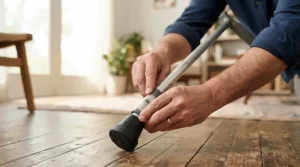
- Remove the old tip. Twist and pull. If it’s stubborn, grip the base firmly and rock it side to side rather than yanking at the collar.
- Clean the tube end. Wipe away grit and moisture. Debris under a new tip can stop it seating fully.
- Push on firmly. NHS leaflets stress that ferrules must be fully pushed on. Press the crutch tip down against a hard floor until the tube sits snugly inside.
- Test both crutches. Check each by leaning your weight gently through it before walking.
For maintenance, check tips weekly, wipe off dirt and stones, and replace both ferrules at the same time so grip stays matched. A tip that’s been worn unevenly makes the crutch lean. In the first 30 days, the common mistakes are overlooking tread wear on the heel side and ignoring a ferrule that’s slowly creeping off.
✨ Don’t Miss These Exclusive Deals!
🔍 Take your crutch tips replacement to the next level with these carefully selected products. Click on any highlighted item to check current pricing and availability. These ferrules will help you create safer, steadier steps your whole recovery will thank you for!

Real-World Scenarios: Matching Tips to Real Lives
Specs mean little until they meet a real routine. Here are three profiles with reasoning.
The weekend footballer with a six-week fracture recovery. Budget is modest, use is indoors and short outdoor hops. The Drive Medical 19mm Grey Rubber Ferrules make sense: cheap, durable enough for six weeks, with no reason to overspend.
The long-term user with arthritic wrists. Crutches daily, months or years, probably both hands loaded. Here the Cool Shock Absorbing Ferrules or the Flexyfoot Crutch Ferrule are worth the higher cost. With cushioning, or a replaceable foot, cost per day falls over time.
The all-weather commuter. Pavements, kerbs, damp station floors and cold mornings. The Pivoflex Ferrule suits the cold-flexibility argument, while the Vital Parts Crutch Style Rubber Ferrules suit someone whose tips are shredding fast. Carry a spare pair either way.
In all three cases, the common thread is simple: match the tip to the surface and the load, then check it weekly. A £4 ferrule on a worn tube won’t rescue you, so inspect the whole crutch too.
Problem and Solution Guide: Common Tip Troubles
Problem: the tip slides off. Usually a diameter mismatch or incomplete fit. Re-measure the tube and push the ferrule on firmly. If it still loosens, you probably need the next size up.
Problem: the tube cuts through the rubber. The cure is a metal insert or washer, as in the Drive Medical 19mm Grey Rubber Ferrules or the Vital Parts Crutch Style Rubber Ferrules.
Problem: slipping on wet floors. This is the one that can lead to falls. Inspect for smooth rubber, then replace. NHS Fife’s elbow crutch leaflet advises replacing a stopper that is smooth, worn or split, and it also warns about wet floors and leaves.
Problem: arms ache after long walks. Consider cushioned or flexing options such as the Cool Shock Absorbing Ferrules, and have your crutch height checked by a physiotherapist.
Problem: the crutch tilts or wobbles. Check for uneven wear between the two tips. Replace both together so they behave alike.
What Is Crutch Tips Replacement?
Crutch tips replacement means swapping the worn rubber ferrule at the bottom of a crutch for a new one of matching diameter, so the crutch grips the floor and absorbs impact safely. It covers elbow, underarm and forearm crutches, and is usually a simple push-fit job needing no tools.
Why does it matter so much? The ferrule is your only contact with the ground. A crutch, as Wikipedia’s overview of crutches explains, is a walking aid that transfers weight from the legs to the upper body, so every step passes through that single patch of rubber. When it fails, there’s nothing else to catch you.
Think of it like tyre tread on a car. You wouldn’t drive on bald tyres in the rain, and the same logic applies here. The difference is that crutch users have far less margin for error, because falling while recovering from an injury can set the injury back.
How to Choose Crutch Tips Replacement: 7 Steps
- Measure your tube. Wrong diameter is the number one mistake. Common sizes include 16mm, 19mm and 22mm.
- Identify your crutch type. Elbow and underarm crutches can use different sizes, so don’t assume.
- Pick the compound for your surface. Soft rubber grips wet floors better; harder rubber lasts longer on pavements.
- Check the base width. A broader base steadies you, though it can feel clumsier on stairs.
- Look for a metal insert. It extends life by stopping the tube cutting through.
- Consider cushioning if you load your arms heavily. Daily users benefit most.
- Buy a spare pair. Worn tips don’t wait for convenient moments to fail.
For standard elbow crutches, the Drive Medical 19mm Grey Rubber Ferrules are the safest starting point. For specific weaknesses, the Pivoflex Ferrule, Flexyfoot Crutch Ferrule and Cool Shock Absorbing Ferrules each solve a different problem.
Crutch Tip Diameter and Replacement Underarm Crutch Tips
Crutch tip diameter is the measurement that decides everything. It’s the width of the tube end, and the ferrule’s inner diameter must match it. Measure the outside of the tube, not the old ferrule, because worn ferrules stretch.
UK suppliers commonly list 16mm, 19mm and 22mm. Most elbow (forearm) crutches use 19mm, while 22mm (7/8 inch) turns up on sturdier tubes. If you see imperial sizes, remember 3/4 inch is roughly 19mm and 7/8 inch roughly 22mm.
Replacement underarm crutch tips deserve extra care. Underarm (axillary) crutches often use a larger leg tube and a bigger base to cope with heavier loads, so they’re not automatically interchangeable with elbow crutch parts. If yours are NHS-issued, check with the issuing department if you’re unsure of the size, since the hospital physiotherapists can usually advise.
A practical trick: photograph a ruler against the tube end, then compare the number to the product listing before ordering. It takes ten seconds and spares you a return. The Lifeswonderful 22mm Ferrules exist precisely for the larger-tube case.
Tread Wear Signs: When to Replace
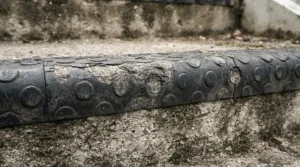
Tread wear signs are easy to spot once you know them. The York Teaching Hospital NHS leaflet Using Crutches advises replacing rubber tips once the tread has disappeared. Other NHS leaflets add smooth, split, or worn-through ferrules to the list.
Watch for these:
- Smooth, shiny rubber where the tread pattern used to be.
- Uneven wear on one side, which makes the crutch lean.
- Cracks or splits, particularly around the collar.
- Hardened rubber that has lost its give.
- Embedded grit or stones that act like tiny skates.
- A loose fit, where the ferrule has crept off the tube end.
The wet test is useful: if a tip skids on a damp bathroom tile when you gently load it, it’s done. A good habit is a 10-second glance each morning, much like checking your tyre pressure monthly.
Non-Slip Rubber Compounds: What Actually Matters
Non-slip rubber compounds sound technical, but the practical differences are simple. Softer compounds deform slightly under load, gripping wet and smooth floors better, though they wear faster. Harder compounds last longer but can feel skittery on tile.
Natural rubber, as used in the Pivoflex Ferrule, is said to stay flexible in the cold, which matters in a British January. Synthetic blends are often more resistant to oils and abrasion, though that varies by manufacturer.
Other features worth weighing: metal inserts, as in the Drive Medical 19mm Grey Rubber Ferrules, prevent punch-through. Latex-free formulations matter for allergy sufferers. Tread pattern also counts, since grooves channel away water. Colour is partly cosmetic, but dark rubber can leave scuff marks on pale floors, so check non-marking claims if that concerns you.
The honest limit: manufacturers rarely publish friction data, so independent comparisons are scarce. Reviewer feedback and the spec sheet are the best evidence you’ll get.
Rubber Crutch Feet vs Alternatives
| Option | Grip on wet floors | Durability | Arm comfort | Best For |
|---|---|---|---|---|
| Standard rubber ferrule (e.g. Drive Medical 19mm Grey Rubber Ferrules) | Good | Good with metal insert | Basic | Everyday users |
| Flexing ferrule (e.g. Pivoflex Ferrule, Flexyfoot Crutch Ferrule) | Very good at angles | Good | Better | Uneven ground |
| Cushioned ferrule (Cool Shock Absorbing Ferrules) | Good | Moderate | Best | Heavy daily users |
| Worn or bare tube | Poor | None | Poor | Nobody |
Standard rubber crutch feet are cheap and effective, and for most people they’re enough. Flexing designs earn their keep on kerbs and slopes, while cushioned versions target arm strain rather than traction. The bottom row is the one to avoid at all costs, since a bare or half-worn tube is the single most dangerous setup.
Common Mistakes When Buying Crutch Tips Replacement
Buying by colour or price alone. A £3 ferrule in the wrong diameter is worth nothing.
Replacing one tip only. Mismatched wear tilts the crutch. NHS leaflets also stress using a matching pair.
Ignoring the tube. Bent, cracked or oval-holed crutches need replacing through the issuing service, not a new ferrule.
Skipping the push-fit check. Hospital guidance stresses ferrules must be pushed on fully.
Assuming all rubber is equal. Compound, base width and inserts differ sharply.
Waiting for a slip. By then, the damage is done.
NHS Sandwell and West Birmingham advice also notes that worn ferrules can be replaced from large chemists or the hospital physiotherapy department, so you aren’t stuck waiting for a delivery if tips fail suddenly. Keep a spare pair at home and check your tips regularly.
Long-Term Cost and Maintenance
Ferrules are among the cheapest parts of any mobility aid, so the real cost is the risk of not replacing them. A fall can mean a setback in recovery, so the arithmetic favours replacing early.
| Product | Price band | Value angle | Best For |
|---|---|---|---|
| Aidapt Replacement Crutch Ferrule | Under £3 each | Cheapest OEM match | Aidapt owners |
| Pivoflex Ferrule | Under £5 | Cold-weather flex | Winter walkers |
| Drive Medical 19mm Grey Rubber Ferrules | £6-£8 a pair | Insert durability | General use |
| Flexyfoot Crutch Ferrule | £5-£9 each | Replaceable foot | Long-term users |
| Cool Shock Absorbing Ferrules | Mid-teens to mid-£20s | Comfort | Heavy daily users |
As a purely illustrative calculation: if a £7 pair lasts three months, that’s roughly £2 to £3 a month, a trivial sum for safety. Your replacement cycle will vary with weight, surfaces and mileage, so treat that as reasoning rather than a promise.
Maintenance costs nothing: wipe the tips clean, remove embedded grit, and store crutches away from extreme heat or freezing temperatures. For long-term users, the replaceable-foot idea in the Flexyfoot Crutch Ferrule can reduce waste over time.

Frequently Asked Questions
❓ How often should I do crutch tips replacement?
❓ Can I use any ferrule on my underarm crutches?
❓ Are cheap replacement crutch ferrules safe?
❓ Do rubber tips wear out faster in winter?
❓ Where can I get new tips quickly if mine fail?
Conclusion
Crutch tips replacement isn’t glamorous, but it’s one of the most valuable five-minute jobs you can do for your safety. The rubber is your only contact with the floor, and tread wear signs like smooth rubber, splits and uneven wear are easy to catch if you look.
To recap the picks: the Drive Medical 19mm Grey Rubber Ferrules are the dependable default; the Vital Parts Crutch Style Rubber Ferrules handle punishing wear; the Pivoflex Ferrule and Flexyfoot Crutch Ferrule earn their place on uneven or cold ground; the Cool Shock Absorbing Ferrules target arm comfort; the Aidapt Replacement Crutch Ferrule keeps matched crutches matched; and the Lifeswonderful 22mm Ferrules solve the larger-diameter problem.
Before anything else, measure your tube, check both tips, and replace them as a pair. Be aware that review evidence for most of these products is thin, so lean on spec reasoning and the NHS guidance, and check current prices and availability on amazon.co.uk.
✨ Ready to step out with confidence?
Check the current price and availability of your chosen ferrules today, and keep a spare pair in the hall cupboard! 🦯
Recommended for You
- Crutch Ice Grips: 7 Best Picks For Safer UK Winters (2026)
- Walking Stick Holder Clip For Tables: 7 Proven Picks (2026)
- Rollator Tray Vs Basket: 7 Best Picks Compared For UK (2026)
Disclaimer: This article contains affiliate links. As an Amazon Associate, I earn from qualifying purchases. If you purchase products through these links, we may earn a small commission at no additional cost to you.
✨ Found this helpful? Share it with your friends! 💬🤗
