

In This Article
Replacement walking stick ferrules are the rubber tips, sometimes with a flexible bellows or wider base, that slide onto the bottom of a walking stick or cane once the original has worn out. They restore grip, soften each footfall and protect your floors. Choosing the right pair comes down to shaft diameter, tread condition, terrain and the weight the stick must carry.

Here’s the odd thing about a walking stick. You’ll agonise over the handle, the colour and the height adjustment, yet the part that actually touches the ground gets about as much attention as the soles of an old pair of slippers. Until the day it skids on a wet kitchen floor.
The assistive cane entry on Wikipedia describes the ferrule as the point where the load travelling down the shaft finally meets the ground, and notes that it provides traction. In other words, everything the stick does for you passes through a lump of rubber that’s often only a few pounds’ worth. When that lump is smooth, cracked or tilted, the whole stick is compromised.
This guide covers seven real, widely stocked options, from budget pairs to shock-absorbing designs. It also covers walking stick ferrule sizes, how to measure the shaft diameter in mm, and what worn tread safety looks like in practice. You’ll find honest guidance on tip replacement frequency, and on when heavy duty cane ferrules are worth paying for.
One note on method: I haven’t tested these products myself. Everything below is built from manufacturer and retailer specifications and the limited public review information I could verify. Where review evidence is thin, I say so rather than dress it up. Availability and listings on amazon.co.uk change, so always check the current listing before ordering.
Quick Comparison: The Best Replacement Walking Stick Ferrules at a Glance
| Product | Sizes (shaft diameter) | Standout feature | Best For | Price range |
|---|---|---|---|---|
| Flexyfoot Walking Stick Ferrule | 16, 19, 22, 25mm | Shock-absorbing bellows | Uneven paths and wrist comfort | Around £6-£9 each |
| Able2 Rubber Walking Stick Ferrule 16mm | 16mm | Simple pair, black or grey | Slim shafts and crutches on a budget | Around £5-£8 per pair |
| Days Heavy Duty Bell Shaped Ferrules | 16, 19, 22, 25mm | Harder-wearing bell shape | Daily, heavy use | Around £12-£16 |
| Millercare Heavy Duty Walking Stick Ferrules (Pack of 10) | 16, 19, 22, 25mm | Ten-pack, low cost per tip | Carers, families, multiple aids | Around £10-£14 per pack |
| Tri-Support Rubber Walking Stick Ferrule | Typically 16 or 19mm | Wide three-pronged base | Extra self-standing steadiness | Check current price |
| Flexyfoot Walking Stick Ice Boot | Fits Flexyfoot ferrules | Slip-on winter grip | Icy pavements | Around £6-£8 |
| Aidapt Replacement 19mm Walking Stick Ferrule | 19mm | Soft, anti-slip standard tip | Cheap like-for-like swap | Under £5 |
Looking at the comparison above, the Aidapt Replacement 19mm Walking Stick Ferrule and the Able2 Rubber Walking Stick Ferrule 16mm are the cheapest like-for-like replacements, but only if the diameter matches your stick exactly. If your daily route includes cracked paving, gravel or park paths, the Flexyfoot Walking Stick Ferrule is the one that justifies paying a few pounds more. Heavier or high-mileage users should look at the Days Heavy Duty Bell Shaped Ferrules or the Millercare Heavy Duty Walking Stick Ferrules (Pack of 10). Prices vary by seller and change often, so check the current price before you buy.
💬 Just one click — help others make better buying decisions too!😊
Top 7 Replacement Walking Stick Ferrules: Expert Analysis
1. Flexyfoot Walking Stick Ferrule — bellows that flex with every step
The bellows section is the whole point of the Flexyfoot Walking Stick Ferrule. It works like a small concertina above the tread, so the foot can tilt and stay flat on the ground even when the stick lands at an angle.
It comes in 16, 19, 22 and 25mm, in black or grey, and each ferrule ships with two spare O-rings that stiffen the bellows for steeper or rougher walks. The manufacturer says the tread gives up to 50% more grip than a traditional rubber tip. I couldn’t find independent testing for that figure, so treat it as a marketing claim. Supplier listings also cite a 130kg (20.5 stone) user limit, which is worth confirming on the pack if you’re a heavier user.
Based on the spec comparison, this suits people who lean on the stick at an angle, walk on uneven ground, or feel the jolt travelling up the wrist. The trade-off is a slightly springier feel. If you want a rock-solid stop on smooth indoor floors, a plain bell tip may feel more predictable.
Reviewer evidence is thin. The retailer pages I checked showed only a handful of reviews, so I can’t report a meaningful consensus.
Pros:
- ✅ Bellows absorb impact and keep the tread flat
- ✅ Four sizes cover most standard shafts
- ✅ Spare O-rings let you tune the stiffness
Cons:
- ❌ Springier feel isn’t for everyone
- ❌ Costs more than a plain rubber tip
Around £6-£9 each; good value if your routes are uneven, optional if you only cross smooth floors.
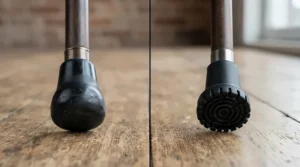
2. Able2 Rubber Walking Stick Ferrule 16mm — the no-fuss pair for slim shafts
Sometimes the best feature is that there’s nothing to learn. The Able2 Rubber Walking Stick Ferrule 16mm (MPN PR30037-BK) is a plain rubber tip, supplied as a pair, in black or grey.
The 16mm size matters. It sits at the slimmer end of walking stick ferrule sizes and is a common fit for lightweight adjustable sticks and many crutches. One UK retailer notes that its 16mm ferrule suits standard NHS crutches, for example. The flip side is that it will not go onto a 19mm shaft, however hard you push, so measure first.
My analytical take is that this is the sensible choice for people who just want to restore a worn stick to factory condition without paying for extras. It’s also a smart spare to keep in a drawer. A pair means you can swap both tips on a crutch pair in one go, which keeps the two sides wearing evenly.
I couldn’t verify enough public reviews for this specific listing to summarise sentiment. Given how simple the product is, the main risk is buying the wrong diameter rather than poor quality.
Pros:
- ✅ Sold as a pair for easy swaps
- ✅ Black or grey to suit your floors
- ✅ Simple, familiar fit and feel
Cons:
- ❌ Plain tread with no shock absorption
- ❌ Only fits 16mm shafts
Around £5-£8 per pair; solid value provided you’ve measured the shaft diameter in mm.
3. Days Heavy Duty Bell Shaped Ferrules — tougher rubber in four sizes
The standout feature of the Days Heavy Duty Bell Shaped Ferrules is simply that they’re built to last. The bell shape flares towards the ground, giving a broader contact patch than a straight-sided tip, and the heavy duty rubber is aimed at hard daily wear.
They come in 16, 19, 22 and 25mm, so they work across sticks, crutches and walking frames. One detail most buyers overlook is on the retailer’s listing. The product is flagged as containing natural rubber latex, which can cause allergic reactions. If you or the stick’s user has a latex allergy, check this before buying, and ask the seller if the listing isn’t clear.
On paper, this is a good fit for people who walk daily, spend long periods on their feet, or wear tips out faster than average. Tougher rubber should mean a longer interval between replacements, which can offset the higher up-front cost. That is reasoning from the product positioning, not a measured lifespan.
Review data was limited on the pages I could verify, so I can’t characterise customer sentiment either way.
Pros:
- ✅ Hardwearing rubber aimed at daily use
- ✅ Flared bell shape widens the footprint
- ✅ Four sizes including 22mm and 25mm
Cons:
- ❌ Listed as containing natural rubber latex
- ❌ Pricier than basic replacement tips
Around £12-£16; worthwhile if standard tips wear out quickly for you, otherwise overkill.
4. Millercare Heavy Duty Walking Stick Ferrules (Pack of 10) — stock up and stop worrying
Buying in bulk is the whole story with the Millercare Heavy Duty Walking Stick Ferrules (Pack of 10). Ten hardwearing rubber tips in one go works out at roughly £1-£1.50 each, far cheaper per tip than buying singles.
The range runs across 16, 19, 22 and 25mm, and the manufacturer positions them for sticks, crutches and walking frames. Millercare’s own shop also offers VAT relief to eligible buyers with a long-term condition or disability. That is a feature of their site, so check whether any VAT relief applies on the platform you actually buy from.
My view is that a pack of ten makes sense for families managing several aids, carers, or anyone doing regular inspection and swaps. For a single stick used lightly, it’s more than you need. The real catch is the size lottery: if you guess the diameter wrong, you have ten tips in the wrong size.
I couldn’t verify enough public reviews to summarise customer experience for this pack.
Pros:
- ✅ Very low cost per tip
- ✅ Four sizes for sticks, crutches and frames
- ✅ Plenty of spares for regular swaps
Cons:
- ❌ Far more than a single-stick user needs
- ❌ Wrong size means ten wasted tips
Around £10-£14 per pack; excellent value for multi-aid households, poor value for one stick.
5. Tri-Support Rubber Walking Stick Ferrule — wide three-pronged base
What sets the Tri-Support Rubber Walking Stick Ferrule apart is its extra-wide, three-pronged base. Retailers describe it as very stable and as helping to absorb impact, which spares the hand and wrist.
UK retailers list it for 19mm shafts, and some also stock a 16mm version, so confirm which you need. Think of it as a halfway house between a standard tip and a quad-base cane: broader footprint, but still a single stick.
Here’s what to weigh. A wider base can give a stick a little more self-standing steadiness, which helps if you’re forever propping it against a table or worktop. However, a broader footprint behaves differently from a standard tip. The NHS advises that people at risk of falls should seek proper assessment rather than self-selecting a walking aid, so mention any change of tip type to your physiotherapist or GP, especially if you have balance problems.
Review evidence was too thin for me to report a consensus, and I’d rather say that than invent one.
Pros:
- ✅ Broad three-pronged base for steadier standing
- ✅ Designed to cushion impact through the stick
- ✅ Fits common 19mm shafts
Cons:
- ❌ Different handling from a standard tip
- ❌ Limited public reviews to check
Check current price, as listings vary; sensible value if you want steadier standing, but get professional advice first if balance is a concern.

6. Flexyfoot Walking Stick Ice Boot — slip-on winter grip
Winter is when a smooth pavement turns into a skating rink, and the Flexyfoot Walking Stick Ice Boot exists for exactly that. It’s a slip-on accessory designed to go over the base of a Flexyfoot ferrule, so you only deploy it when it’s needed.
It is made to complement Flexyfoot ferrules, so it won’t suit a plain bell tip. That limits its audience to people who already have, or are willing to buy, the Flexyfoot Walking Stick Ferrule as well. Metal and ice-grip attachments are a recognised answer to icy conditions, as the MS-UK guide to slipping walking sticks explains. A removable boot is a tidy way of getting that without permanently fitting a metal tip.
Practical caution: many ice-grip accessories are not designed for hard indoor floors, so check the instructions and take it off before entering shops or your hallway.
I couldn’t verify enough public reviews for this accessory to describe customer sentiment.
Pros:
- ✅ Removable, so winter-only use is possible
- ✅ Designed to pair with Flexyfoot ferrules
- ✅ Quick to fit over the ferrule base
Cons:
- ❌ Only works with Flexyfoot ferrules
- ❌ Needs removing indoors on hard floors
Around £6-£8; good value if you’re already on Flexyfoot, pointless if you’re not.
7. Aidapt Replacement 19mm Walking Stick Ferrule — the cheap standard swap
The Aidapt Replacement 19mm Walking Stick Ferrule (product code VS101B) is the budget end of the market. 19mm is the classic standard diameter, and the supplier describes it as soft, durable, shock absorbing and anti-slip.
It’s designed to be easy to fit to Aidapt walking sticks, though 19mm is common enough that it should suit many other makes too, provided your shaft measures 19mm. The listing I found showed a pink version, so colour options may vary by seller.
My take is that this is the right choice when your existing tip is simply worn out and you want an inexpensive, like-for-like replacement with no frills. It won’t do anything clever on gravel or ice, but it will restore fresh tread for very little money.
Public review data was limited for this specific listing, so I can’t characterise sentiment.
Pros:
- ✅ Very low price per ferrule
- ✅ Standard 19mm fit for many sticks
- ✅ Soft, anti-slip rubber tread
Cons:
- ❌ No shock-absorbing bellows or wide base
- ❌ Colour choice may be limited
Under £5; unbeatable value for a straightforward replacement.
How to Choose Replacement Walking Stick Ferrules
Choosing replacement walking stick ferrules isn’t hard once you work through the decision in the right order. Here are the steps I’d follow.
- Measure the shaft first. The outside diameter of the shaft decides everything. Get this wrong and no other feature matters.
- Check the user’s weight against the stick and ferrule. Both the stick and the ferrule have limits, so confirm them on the pack and don’t assume the tip is the weaker link.
- Match the tip to your terrain. Smooth pavements and indoor floors are well served by plain rubber; gravel, grass and uneven paths favour a flexible design such as the Flexyfoot Walking Stick Ferrule.
- Look at the tread, not just the shape. A clearly patterned, non-slip base grips wet tiles better than a smooth, polished one.
- Check the material for allergies. Some listings flag natural rubber latex, as the Days Heavy Duty Bell Shaped Ferrules listing does.
- Think about pack size. Singles suit one stick, pairs suit crutches, and a ten-pack such as the Millercare Heavy Duty Walking Stick Ferrules (Pack of 10) suits households with several aids.
- Ask a professional if you’re unsure. A physiotherapist or occupational therapist can advise on any change that affects your balance.
✨ Ready to Restore Your Grip?
🔍 Take your walking stick from slippery to steady with a fresh, correctly sized tip. Click on any highlighted product above to check current pricing and availability. A few pounds spent today could save you a nasty slip tomorrow!
How to Fit and Care for Replacement Walking Stick Ferrules (Step by Step)
Fitting a new tip takes under five minutes, but the details matter. Here’s a straightforward routine.
Step 1: Remove the old ferrule. Lay the stick on a flat surface, grip the shaft firmly, and twist and pull the worn tip off. Never use a knife or pliers on an aluminium shaft, as you could mark or deform the end.
Step 2: Inspect the shaft end. Check for burrs, splits, dents or corrosion. A damaged shaft end will stop a new ferrule seating properly, and it’s worth knowing before you fit one.
Step 3: Clean and dry. Wipe away grit and moisture so the new rubber can grip the shaft cleanly.
Step 4: Push on with a twist. Press the new ferrule onto the shaft with a gentle twisting motion until it sits fully against the end. A half-seated tip can wobble or work loose.
Step 5: Test it. Press down firmly on a hard floor and check for movement. The ferrule should not rotate, wobble or slide.
Monthly maintenance: Look at the tread, check for cracks, and wipe off dirt. Rotate the habit into your routine, such as the first of each month.
Common mistakes in the first 30 days:
- Guessing the diameter instead of measuring.
- Forgetting to re-check stick height. A new ferrule is thicker than a worn one, so the stick may sit slightly taller.
- Ignoring a slight wobble. If a new tip moves, it’s the wrong size or not fully seated.
Real-World Scenarios: Matching Replacement Walking Stick Ferrules to Your Life
These are illustrative profiles, not real customer stories, designed to show how the reasoning works.
The park-path walker. Imagine a retiree covering around four miles most mornings on a mix of tarmac, gravel and grass, with a 19mm shaft. Terrain is the main issue, so the flex of the Flexyfoot Walking Stick Ferrule is a logical choice. The budget is modest at around £6-£9, and frequent use suggests checking the tread monthly.
The crutch user on a budget. Picture someone on a pair of 16mm crutches, indoors and out, who needs low-cost replacements. The Able2 Rubber Walking Stick Ferrule 16mm, supplied as a pair, covers both sides for roughly £5-£8, and it’s easy to keep a spare pair at home.
The family carer. Consider a household with a stick, a walking frame and a pair of crutches in the house, all needing periodic new tips. A ten-pack such as the Millercare Heavy Duty Walking Stick Ferrules (Pack of 10) keeps the cost per tip low, provided the right sizes are confirmed first.
The high-mileage heavy user. A person who walks daily with a heavy-duty 22mm stick may wear tips out faster than most. The Days Heavy Duty Bell Shaped Ferrules are positioned for that use and may reduce how often tips need swapping, although the exact lifespan depends on weight, gait and surfaces.
Problem and Solution Guide: Fixing Common Ferrule Headaches
Problem: the stick slips on wet tiles. Check the tread first. If it’s smooth, replace the tip. If it’s fine but still slips, consider a tread-heavy option or ask a professional whether the tip type suits you.
Problem: the ferrule keeps falling off. It’s almost certainly too large. Re-measure the shaft diameter in mm and choose the next size down.
Problem: your wrist aches after a long walk. A shock-absorbing design such as the Flexyfoot Walking Stick Ferrule is designed to take some of the sting out of each footfall. Also check that the stick is the correct height.
Problem: icy pavements. The Flexyfoot Walking Stick Ice Boot adds a winter option for existing Flexyfoot users. Whatever you use, take extra care and avoid walking on ice where you can.
Problem: black marks on your floors. Some tips scuff vinyl and laminate. Choose a grey option where available, such as the grey version of the Able2 Rubber Walking Stick Ferrule 16mm, and check the listing for a non-marking claim.
Walking Stick Ferrule Sizes: Getting the Shaft Diameter in Mm Right
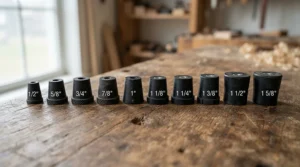
Walking stick ferrule sizes are the single biggest cause of wasted money and returns. A ferrule is a sleeve, so it only works if its internal diameter matches the outside of the shaft.
The most common sizes are 16mm, 19mm, 22mm and 25mm. Smaller and larger sizes also exist, including 12mm, 13mm, 18mm, 21mm and 27mm at some UK retailers, so never assume that “standard” means the same thing everywhere. As a rough guide, 16mm is common on lighter sticks and crutches, 19mm is the classic standard, and 22mm often appears on heavy duty and bariatric sticks. One heavy-duty bariatric stick I found lists a 22mm ferrule.
How to measure the shaft diameter in mm:
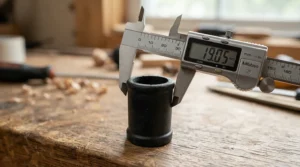
- Use digital or vernier callipers across the end of the shaft, if you have them.
- Otherwise, wrap a piece of string around the shaft, mark the length, and measure it against a ruler. Divide that circumference by 3.14 to get the diameter.
- Measure the bare shaft end, not the old ferrule, because a worn ferrule can mislead you.
A snug fit is the goal. Too loose and the tip twists or drops off. Too tight and you risk splitting the rubber or failing to seat it. If your measurement falls between sizes, check the stick manufacturer’s specification rather than guessing.
Worn Tread Safety: When a Tired Tip Becomes a Hazard
Think of worn tread safety the way you’d think about car tyres. Tread exists to channel water and grip the surface. Once it’s gone, you’re relying on friction that may no longer be there.
The NHS Inform guide to using a walking stick says to make sure the rubber stopper has sufficient grip and to beware of slippery surfaces. It also states that a smooth, worn or split ferrule needs replacing. That is about as authoritative as practical advice gets.
Warning signs to watch for:
- Tread pattern worn smooth or flat.
- Cracks, splits or chunks missing from the rubber.
- Rubber that feels hard and glassy rather than slightly tacky.
- Any metal visible beneath the rubber.
- A tip that wears down on one side, which can suggest your stick angle or height needs checking.
- A ferrule that wobbles or twists on the shaft.
Wet floors, polished tiles and smooth pavements are where a worn tip is most dangerous. If you use your stick in these conditions regularly, check it more often. Keep in mind that the ferrule is only part of safe walking-aid use. The NHS also advises never exceeding the weight limit of the stick and wearing flat, supportive shoes.
Tip Replacement Frequency and Long-Term Cost
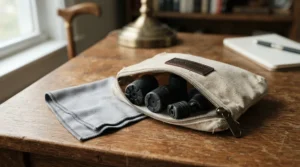
There is no universal calendar answer to tip replacement frequency. How often you need to swap depends on how many miles you cover, your weight, your gait, and the surfaces you walk on. A light indoor user may go a long time between changes, while a daily outdoor walker on rough ground may need new tips far sooner.
The practical rule is to inspect, not to guess. A good habit is a monthly check, replacing the tip when the tread is smooth, the rubber is cracked or hard, or grip on smooth floors has noticeably dropped. Check immediately after any unexpected slip.
| Option | Typical cost | Replacement logic | Best For |
|---|---|---|---|
| Aidapt Replacement 19mm Walking Stick Ferrule | Under £5 | Cheap and easy to swap more often | Light users on a budget |
| Able2 Rubber Walking Stick Ferrule 16mm | Around £5-£8 per pair | Two tips at once | Crutch users |
| Millercare Heavy Duty Walking Stick Ferrules (Pack of 10) | Around £10-£14 per pack | Roughly £1-£1.50 per tip | Multi-aid households |
| Days Heavy Duty Bell Shaped Ferrules | Around £12-£16 | Harder-wearing, possibly fewer swaps | Heavy daily use |
Looking at the table, the cheapest option per tip is not always the cheapest over a year. If heavy duty rubber lasts noticeably longer for you, the higher price can work out equal or better, but that depends on your own wear rate. For most people, the total cost of keeping safe tips on a stick is tiny compared with the cost of a fall.
Rubber Walking Stick Tips vs Alternatives
Rubber walking stick tips are the default for good reason. They’re quiet, cheap, grippy on most dry surfaces and kind to floors. But they aren’t the only answer.
The MS-UK guide explains that standard bell-shaped rubber ferrules come on many sticks, that flexible, shock-absorbing designs help on uneven ground, and that metal or ice-grip ferrules can help on soft ground, snow and ice.
| Tip type | Strength | Weakness | Best For |
|---|---|---|---|
| Standard rubber bell (e.g. Aidapt Replacement 19mm Walking Stick Ferrule) | Cheap, quiet, floor-friendly | No shock absorption | Everyday indoor and pavement use |
| Shock-absorbing (Flexyfoot Walking Stick Ferrule) | Flexes, keeps tread flat | Springier feel | Uneven paths and sore wrists |
| Wide-base (Tri-Support Rubber Walking Stick Ferrule) | Broader footprint | Different handling | Extra standing steadiness |
| Ice add-on (Flexyfoot Walking Stick Ice Boot) | Winter grip | Flexyfoot only, indoor care needed | Icy pavements |
Each tip type solves a different problem, so there’s no single winner. For most people, a good standard rubber tip is enough, and a specialist design earns its place only where your routes demand it. If you’re unsure whether a different tip type is safe for you, a physiotherapist can advise.
Heavy Duty Cane Ferrules: When Standard Rubber Isn’t Enough
Heavy duty cane ferrules are aimed at people who put more load on the stick, walk more miles, or both. The label is a marketing term rather than a regulated standard, so look at the actual size, material and weight information on the listing.
Bariatric and heavy-duty sticks commonly use a 22mm ferrule, and some are rated to around 50 stone (317kg), which shows how much larger the demands can be. The key point is that the stick and ferrule have separate limits. The Flexyfoot Walking Stick Ferrule, for example, is listed by suppliers with a 130kg (20.5 stone) user limit, so it would not suit someone near the top of a bariatric stick’s capacity. Always check the weight guidance for both parts.
Options include the Days Heavy Duty Bell Shaped Ferrules and the Millercare Heavy Duty Walking Stick Ferrules (Pack of 10), both available across 16 to 25mm. In practice, heavier users should inspect tips more frequently, because higher loads and longer distances can accelerate wear. Check latex status on the listing if allergies are a concern.
Features That Actually Matter (And Those That Don’t)
What matters: correct diameter, a visible, non-slip tread, material you aren’t allergic to, and a weight rating that suits you. These are the features that decide whether a tip is safe.
What matters sometimes: shock absorption and wide bases. They’re useful for specific problems, such as uneven ground, sore wrists or extra stability, but not essential for everyone.
What doesn’t matter much: colour, unless floor marking bothers you, and marketing adjectives such as “premium”. Percentage grip claims are worth treating cautiously unless backed by independent testing. The “50% more grip” claim for Flexyfoot, for instance, comes from the manufacturer’s description.
The simple rule is to fix the problem you actually have rather than buying features you don’t need.
Frequently Asked Questions
❓ Can I fit heavy duty cane ferrules to any walking stick?
❓ Are rubber walking stick tips safe on wet pavements?
❓ Where can I buy replacement walking stick ferrules in the UK?
❓ Can I get VAT relief on replacement walking stick ferrules?
❓ Is a shock-absorbing ferrule worth the extra money?
Conclusion
Replacement walking stick ferrules are about the cheapest safety upgrade in mobility. The decision rests on three things: measure the shaft diameter in mm, inspect the tread honestly, and match the tip to the way you walk.
If you want a simple like-for-like swap, the Aidapt Replacement 19mm Walking Stick Ferrule or the Able2 Rubber Walking Stick Ferrule 16mm do the job for very little. If your routes are rough or your wrist protests, the Flexyfoot Walking Stick Ferrule is the most interesting design here, and the Flexyfoot Walking Stick Ice Boot adds a winter option. For daily heavy use, the Days Heavy Duty Bell Shaped Ferrules are worth a look, while the Millercare Heavy Duty Walking Stick Ferrules (Pack of 10) suit households with many aids. If you like the idea of a broader base, the Tri-Support Rubber Walking Stick Ferrule is worth discussing with a professional first.
Whichever you choose, build the monthly check into your routine. As the NHS Fife patient guidance on using a walking stick says, a smooth, worn or split ferrule needs replacing. Don’t wait for the slip to tell you.
✨ Don’t Miss Out on a Safer Step!
🚶 Check the current price and availability of your chosen tip today, because a few pounds now is a very small price for steadier steps. Click any highlighted product above to see the latest listings. 🛒
Recommended for You
- Ice Tips For Walking Sticks: 7 Proven Picks For Icy UK Paths (2026)
- Forearm Crutches Vs Elbow Crutches: 7 Best Picks Compared 2026
- Heavy Duty Crutches For Larger Adults: 7 Proven Picks (2026)
Disclaimer: This article contains affiliate links. As an Amazon Associate, I earn from qualifying purchases. If you purchase products through these links, we may earn a small commission at no additional cost to you.
✨ Found this helpful? Share it with your friends! 💬🤗
