In This Article
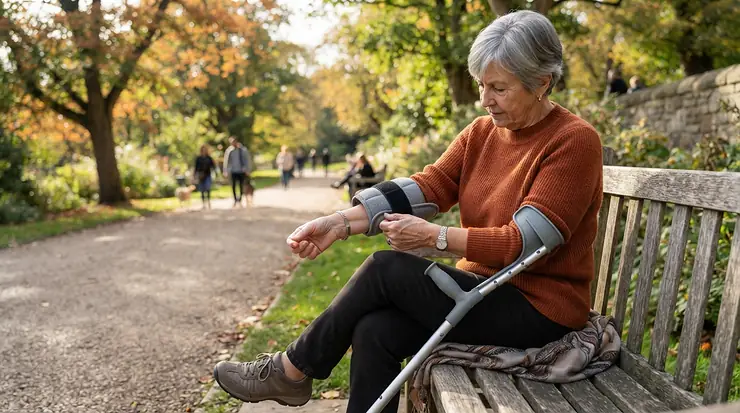
In the UK, forearm crutches vs elbow crutches is mostly a naming quarrel. Both terms describe the same Lofstrand-style crutch: a cuff round the forearm and a horizontal handgrip. The choice that matters is the cuff style, the grip shape and any ergonomic extras, especially if you lean on them every day.
The confusion is real, though. Wikipedia’s overview of crutches lists “elbow”, “Canadian” and “Lofstrand” as alternative names for the forearm crutch, and notes that this design dominates in Europe. Some retailers, however, use “elbow crutches” to mean underarm models. Others reserve “forearm crutches” for newer designs that cradle the forearm. Read the product page, not just the title.
This guide cuts through that muddle. I’ll compare seven real models available to UK buyers, from sturdy NHS-style classics to cushioned forearm-support designs. Along the way I’ll cover cuff design, wrist and shoulder strain, long-term crutch use and what to do when crutches become one of your permanent mobility aids. Where I can’t verify something, I’ll say so.
This article is general information, not medical advice. Your physiotherapist or occupational therapist should always have the final word on fit and weight-bearing.
Quick Comparison Table: 7 Crutches at a Glance
| Product | Cuff Style | Reported Max User Weight | Price Range (check current price) | Best For |
|---|---|---|---|---|
| Ossenberg Soft Grip Classic Crutches | Closed, glass-fibre reinforced | 140kg (22st) | Around £40–£70 a pair | Everyday all-rounder |
| Ossenberg Open Cuff Comfort Grip Crutches | Open | Check listing | Around £50 range | Palm comfort, easy arm release |
| Drive Medical Adjustable Forearm Crutches | Cuffed, aligned tip | 127kg (20st) | Around £50 | Short-term recovery on a budget |
| Drive Forearm Platform Trough Crutches | Forearm platform, Velcro strap | Check listing | Around £50 | Arthritic or painful hands |
| KMINA PRO | Open, forearm-support | Varies by variant (approx. 100–136kg) | Mid-range; check | Wrist and shoulder relief |
| Ergobaum 7G | Cushioned forearm strap | 163kg (360 lb) | Premium; comfortably above £100 | Daily users wanting every feature |
| Days Forearm Crutches | Adjustable cuff | Check listing | Budget; check | Straightforward spare pair |
The table makes one thing clear. Price tracks features, not “forearm vs elbow” labels. The two Ossenberg models and the Drive Medical Adjustable Forearm Crutches all use the same basic cuff-and-handle layout. The KMINA PRO and Ergobaum 7G change how weight is shared between hand and forearm, and you pay for that. If you only need crutches for a few weeks, the cheaper trio will do the job. For daily use over months, the extra spend on load-spreading design deserves serious thought.
💬 Just one click — help others make better buying decisions too!😊
Top 7 Forearm Crutches vs Elbow Crutches: Expert Analysis
1. Ossenberg Soft Grip Classic Crutches — best proven closed-cuff all-rounder
This is the textbook elbow crutch, done well. Each crutch weighs about 600g, so the pair feels light when you swing them through. The closed cuff is glass-fibre reinforced, and the powder coating resists rust.
Key specs, translated: the handle-to-ferrule range of roughly 76–96cm covers a fair spread of adult heights. A 110mm grip length suits average hands, though large hands may want something longer. The 140kg (22st) limit gives sensible headroom for most adults. The closed cuff keeps the crutch attached to your arm when you open your hand to grab a door handle. The trade-off is that it won’t release as readily in a fall.
Based on the spec comparison, this is the crutch to choose if you want the NHS-style experience with better grips and a wider colour choice. Reviewer commentary in UK mobility forums is positive about cuffs that “stay on” and fit smaller hands well. One commenter found the ferrules slippery in rain, so budget for replacement tips.
Pros:
- ✅ Light at roughly 600g per crutch
- ✅ Reinforced cuff and rust-resistant coating
- ✅ Generous 140kg user weight limit
Cons:
- ❌ Closed cuff releases less readily in a fall
- ❌ Standard ferrules can feel slippery when wet
Price sits around the £40–£70 range for a pair; check current price. Verdict: strong value for anyone starting out, short-term or long.
2. Ossenberg Open Cuff Comfort Grip Crutches — best for easing palm pressure
The headline feature is the anatomically shaped handle. It spreads load across the palm rather than concentrating it at the heel of the hand. That matters because the palm bears most of the weight on a classic elbow crutch.
The push-button adjustment makes height changes quick, which is handy if you share the crutches or change shoes. The open cuff is the real change from the Classic. It lets your forearm slip out sideways, so you can free a hand without removing the crutch from your arm. Open cuffs suit people who move between standing, sitting and using door handles all day.
On paper, this is a thoughtful choice for anyone whose complaint is hand or wrist soreness rather than needing maximum security. I couldn’t find enough verified review data for this exact model to summarise customer sentiment. Treat my assessment as spec-based and read recent reviews before buying.
Pros:
- ✅ Handle designed to spread weight across the palm
- ✅ Open cuff for quick arm release
- ✅ Tool-free push-button height adjustment
Cons:
- ❌ Open cuffs offer less retention if you lose grip
- ❌ Maximum user weight needs checking on the listing
Expect to pay in the region of £50 for a pair; check current price. Verdict: a sensible step up if hand comfort is your priority.
3. Drive Medical Adjustable Forearm Crutches — best budget pick for recovery
Adjustability is the selling point. The push-button system changes both sections independently without tools, from 65cm to 91cm. Together with the aligned tip design, which Drive says spreads load along the forearm, that is useful for a growing or recovering body.
The listed weight of about 1.5kg for the pair is light enough that arm fatigue shouldn’t dominate a short walk. The 127kg (20st) limit is reassuring for the price. Rubber tips are described as slip-resistant on tile, carpet and pavement. Still, think of the tips as consumables and replace them when worn smooth.
This is a “bridge” crutch: ideal for recovery from a break or sprain, but I’d hesitate before recommending it as a daily driver for years. I couldn’t verify a robust pool of UK customer reviews, so judge it on specification and your own fitting.
Pros:
- ✅ Independent push-button height adjustment
- ✅ Lightweight at about 1.5kg per pair
- ✅ Good 127kg user weight limit for the price
Cons:
- ❌ Basic grips may tire hands over long days
- ❌ Limited verified review data available
Price sits around £50; check current price. Verdict: solid value for short-term use.
4. Drive Forearm Platform Trough Crutches — best when hands can’t take the load
Here the forearm rests on a padded platform rather than hanging from a cuff, and a Velcro strap holds it in place. Weight goes through the forearm, not the hand. Drive designs these for arthritis, limited grip or painful hands.
The height range is about 98–123cm. That suggests they suit taller users or higher-set platforms, so check measurements against your own. The Velcro strap releases quickly, which helps if you need to put them down fast.
Honest warning: trough designs trade manoeuvrability for load-sharing. One long-term forum user described gutter crutches as spreading the load nicely but being hard to walk with. On one eBay listing, 19 ratings averaged around 4.5. Reviewers praised sturdiness and value, and one found the top section heavy and the guide handle narrow.
Pros:
- ✅ Weight carried by the forearm, not the hand
- ✅ Easy Velcro strap fastening
- ✅ Suits arthritic or painful hands
Cons:
- ❌ Less agile than standard cuff designs
- ❌ Top section reported as heavy by one reviewer
Price sits around £50; check current price. Verdict: a specialist tool; get your therapist’s agreement first.
5. KMINA PRO — best for taking weight off wrists and shoulders
The KMINA PRO is built around one idea: shift weight from hands to forearms. A forearm-support system with a neoprene-style inset cradles the arm, and hands mostly steer and swing the crutch.
That matters if you’re asking whether forearm crutches vs elbow crutches really differ in comfort. Aggregated reviewer themes say yes, with caveats. Users describe less pain in the hands, wrists and back, and a more upright posture. The same reviews flag an adaptation period and say the crutches take up more storage space than NHS-style models. A few users of the folding carbon-fibre variant criticised the forearm holder for being non-adjustable and slippery with sweat.
Listings differ by variant: roughly 100kg for one version and about 136kg (300 lb) for the folding carbon one. Check which you’re buying.
Pros:
- ✅ Forearm support eases hand and wrist load
- ✅ Encourages a more upright posture
- ✅ Several variants, including a folding model
Cons:
- ❌ Needs a learning period to master
- ❌ Bulkier to store than standard crutches
Pricing is mid-range; check current price. Verdict: worth considering seriously if strain is your problem.

6. Ergobaum 7G — best feature-packed premium option
The Ergobaum 7G is the “everything” crutch. Manufacturer details list integrated shock absorption in the base, three points of height and position adjustment, a soft grip and a cushioned forearm strap and pad. It also has a built-in LED torch, horn and reflectors, a foldable knee-rest platform and a folding design for travel.
Translated: shock absorption softens each step, which may reduce jarring through wrists and shoulders over a day. The adjustable handle angle is notable; a disability guidebook highlights it as useful for people with fixed arm positions. The 163kg (360 lb) limit and 1-year warranty add confidence.
Aggregated reviewer commentary is positive on grip comfort, with one user saying they replaced a folding KMINA with it. Another reviewer advises taking time to learn them. One practical snag from the manufacturer’s FAQ: the rubber grip can’t be replaced separately, only as a whole handgrip assembly.
Pros:
- ✅ Shock absorption and multi-point adjustment
- ✅ Built-in torch, horn and reflectors
- ✅ High 163kg weight limit and folding design
Cons:
- ❌ Premium price, comfortably above £100
- ❌ Grip rubber needs a full handgrip replacement
Check current price. Verdict: pricey, but the most complete package for daily users.
7. Days Forearm Crutches — best simple spare pair
These are lightweight aluminium crutches with adjustable cuff and handgrip heights. They come in two sizes: Medium for users about 1.6–1.8m tall, and Large for 1.8–2m. The sizing guidance is useful, because it is clearer than the “one size, adjust it” approach some budget crutches take.
The supplier’s own notes make a fair point: forearm crutches demand more strength and coordination than underarm ones, but encourage better posture. That is consistent with clinical guidance. This is a no-frills option and I’d treat it as a spare or short-term pair.
I couldn’t verify enough UK customer reviews to summarise sentiment, and the weight limit isn’t clear from the sources I found. Confirm both on the listing before buying.
Pros:
- ✅ Lightweight aluminium construction
- ✅ Two clear size bands for fit
- ✅ Adjustable cuff and handgrip heights
Cons:
- ❌ Limited verifiable review data
- ❌ Weight limit needs confirming on the listing
Positioned at the budget end; check current price. Verdict: fine as a spare, less convincing for heavy daily use.
How to Choose Between Forearm Crutches vs Elbow Crutches
Since the names overlap, use these steps to decide what you actually need:
- Confirm the terminology. Check the product photo. A cuff round the forearm plus a horizontal grip is the design most UK buyers mean by both terms.
- Decide how long you’ll use them. A few weeks suits basic adjustable models. Months or years justify ergonomic grips and forearm support.
- Pick a cuff style. Closed cuffs stay put; open cuffs release more easily. Section below covers this in depth.
- Look at the grip. A wider, shaped handle spreads load across the palm and eases wrist stress.
- Check the weight limit with margin. Choose a limit comfortably above your weight, as clinical guidance on fit and safety applies to everyone.
- Check adjustability. Independent adjustment of handle and cuff lets you fine-tune posture.
- Ask your therapist. The Merck Manual’s fitting guidance describes a 15–30° elbow bend when holding the grip, and notes that forearm crutches are usually used later in healing for people who need prolonged use.

Cuff Design: Closed, Open and Comfort Cuff Forearm Crutches
Cuff design is where forearm crutches vs elbow crutches really diverge. The cuff is the plastic or metal band that wraps your forearm. According to Wikipedia, it can be a half or full circle, sometimes with a V-shaped opening that lets the arm slip out in a fall.
| Cuff Type | Strength | Weakness | Best For |
|---|---|---|---|
| Closed (e.g. Ossenberg Soft Grip Classic Crutches) | Stays on the arm, secure | Slower release in a fall | Everyday walking, stability |
| Open (e.g. Ossenberg Open Cuff Comfort Grip Crutches, KMINA PRO) | Easy to slip out | Less retention if grip fails | Frequent hand-free tasks |
| Trough/platform (e.g. Drive Forearm Platform Trough Crutches) | Forearm carries the load | Less agile | Painful or weak hands |
| Cushioned forearm support (e.g. Ergobaum 7G) | Padded and shared load | Bulky, costly | Daily heavy use |
Closed cuffs are common on NHS-issued crutches and are the style most readers will recognise. Comfort cuff forearm crutches add padding or neoprene-style inserts to reduce rubbing and pressure over long days. If skin soreness or numbness is your issue, padding matters more than the label. If you worry about falling with a closed cuff, ask your clinician. I’d treat open cuffs as a convenience feature, not a safety upgrade.
Wrist and Shoulder Strain: Where It Really Comes From
Wrist and shoulder strain is the main complaint from daily users, and the cause is simple. Classic forearm crutches pass most of your weight through the hands, which means wrists and shoulders absorb repeated loading.
The Merck Manual points out that forearm crutches require most weight to be supported by the hands, though they avoid axilla pressure and its nerve risk. That explains why ergonomic models focus on handles and forearm support.
Common culprits include:
- ✅ Handles set too high, forcing shoulders upward
- ✅ Narrow grips that concentrate pressure on the palm
- ✅ Cuffs set too close to the elbow
- ✅ Gripping too tightly out of anxiety
Fixes cost less than you’d think. Change the height until your elbow sits at a gentle bend. Add padded grips; Essential Aids sells pads that widen and soften elbow-crutch handles. Consider forearm-support designs like the KMINA PRO or Ergobaum 7G if hand pain persists. If numbness or tingling continues, speak to your GP or physiotherapist rather than pushing on.
Long-Term Crutch Use: What to Plan For
Long-term crutch use changes the maths. A product that is fine for six weeks can be a poor choice over six months.
The case for investing grows with usage. A basic pair like the Drive Medical Adjustable Forearm Crutches suits short-term use, but long-term crutch use rewards better grips, cushioned cuffs and sturdier materials. In my view, the biggest hidden cost is the wear on you, not the product.
Practical planning points:
- ✅ Keep a second pair as a backup. A bent or cracked crutch is a safety issue.
- ✅ Replace ferrules before they smooth out. Worn tips slip on wet floors.
- ✅ Reassess fit as your condition changes.
- ✅ Review your setup with a therapist at least annually.
If you rely on crutches for most of the day, ask whether the overall plan is right. A rollator, wheelchair for longer distances or a mobility scooter can reduce total strain, as discussed next.
Permanent Mobility Aids: When Crutches Aren’t Enough
Permanent mobility aids are a different category of decision. Crutches suit people who can bear weight on at least one leg and have enough upper-body strength. They are less suited to anyone with progressive weakness or fatigue.
Think in layers rather than “crutches or nothing”. Many long-term users combine crutches for short trips with a wheelchair or scooter for longer outings. That split protects wrists and shoulders for the situations where you truly need them.
If you’re considering permanent mobility aids, your GP, physiotherapist or occupational therapist can assess you. They can advise on NHS-supplied equipment and on privately purchased options. Think of a good clinician’s assessment as a map, and your crutches as one road on it. If your crutches are making daily life harder, take that as a signal to ask for a review, not a failure on your part.
Forearm Crutches Review UK: What Buyers Keep Saying
A forearm crutches review UK search turns up plenty of retailer copy and little neutral testing. Here are the genuine themes I could verify across reviewer comments and listings.
Comfort grips win praise. Users of the Ergobaum 7G talk about comfortable grips, and one who replaced a folding KMINA says they’ve been very happy.
Forearm support helps strain, with a learning curve. Reviewers of the KMINA PRO report less pain in hands, wrists and back, but also an adaptation period.
Cuffs that stay put matter. UK forum users describe the Ossenberg Soft Grip Classic Crutches style of cuff as staying on reliably.
Heavier tops and narrow grips get criticised. One reviewer of the Drive Forearm Platform Trough Crutches flagged both.
Gaps remain. I couldn’t verify review pools for the Ossenberg Open Cuff Comfort Grip Crutches, the Drive Medical Adjustable Forearm Crutches or the Days Forearm Crutches. If those are on your shortlist, read recent buyer feedback on the retailer page and look for comments on fit, noise and cuff comfort.
✨ Don’t Miss These Exclusive Deals!
🔍 Take your search for the right crutches to the next level with these carefully selected products. Click on any highlighted item to check current pricing and availability. These crutches will help you stay mobile and comfortable day after day!
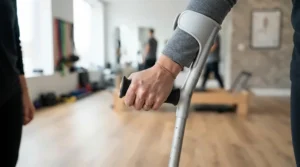
Forearm Crutches vs Elbow Crutches vs Underarm Crutches
Because “elbow crutches” sometimes means underarm models, a three-way comparison clears things up.
| Feature | Forearm/Elbow (e.g. Ossenberg Soft Grip Classic Crutches) | Underarm (axilla) | Trough/Platform (e.g. Drive Forearm Platform Trough Crutches) |
|---|---|---|---|
| Weight carried by | Hands and forearms | Hands and upper body | Forearms |
| Stability | Moderate | Higher, per NHS-style guidance | Moderate |
| Learning curve | Moderate | Easier to learn | Steeper |
| Nerve risk under arm | Avoided | Possible if used incorrectly | Avoided |
| Best For | Long-term daily use | Short-term, one-leg walking | Painful hands |
An Australian health leaflet notes that underarm crutches are more stable and therefore safer for people who can only bear weight on one leg. The Merck guidance notes that forearm designs avoid the nerve risk of leaning on the armpit. Essential Aids points out that forearm models tend to be lighter and most people find them easy to control.
The takeaway: forearm crutches vs elbow crutches isn’t a contest. They’re the same family. The real trade-off is between that family and underarm designs. For most UK users, especially those using crutches long-term, the forearm design wins on comfort and manoeuvrability.
Practical Guide: Fitting and Your First 30 Days
This is the setup Amazon listings rarely explain.
Step 1: Set the height. Stand upright in flat shoes with arms relaxed. Guidance varies from two to three finger widths between the elbow and the top of the cuff, so follow your clinician’s fitting. When you hold the grip, your elbow should have a gentle bend of roughly 15–30°.
Step 2: Learn the “H” position. Many NHS leaflets, such as the Whittington Health patient guide, teach holding both crutches in one hand in an “H” shape to stand and sit.
Step 3: Take your arms out of the cuffs to sit and stand. NHS guidance says to remove your arms from the cuffs before sitting or standing, to avoid injuring your elbow or shoulder.
Step 4: Practise stairs with a handrail. Hold both crutches in the other hand when there’s a rail.
Step 5: Inspect weekly. Check for bends, loose handles and worn ferrules.
Common first-month mistakes:
- ✅ Setting crutches too high
- ✅ Wearing slippery shoes
- ✅ Placing crutches too far forward
- ✅ Skipping rug and clutter checks
If something hurts persistently, adjust one thing at a time, then speak to your therapist.
Problem → Solution Guide
Problem: sore palms.
Solution: swap to a wider, shaped grip like the Ossenberg Open Cuff Comfort Grip Crutches, or add grip pads. If it persists, consider forearm-support designs.
Problem: cuff rubbing your arm.
Solution: check the cuff height and consider padded designs such as the Ergobaum 7G.
Problem: crutches feel unstable.
Solution: check your tips and your fit. Replace worn ferrules, and keep crutches close to your feet. If it continues, ask your therapist whether an underarm or other aid is safer.
Problem: crutches are awkward to store or travel with.
Solution: consider folding models like the KMINA PRO folding version or the Ergobaum 7G. Note that some forearm-support models are bulkier.
Problem: you’re dropping a crutch when freeing a hand.
Solution: try an open cuff or a closed cuff, depending on whether you prefer easy release or stronger retention. NHS guidance in NHS Lanarkshire’s elbow crutch advice is to check regularly for bends, loose handles and worn rubber ferrules.
Long-Term Cost and Maintenance
Cost per use favours better crutches the longer you rely on them. Here’s a simple view.
| Tier | Example | Price Range (check current price) | Likely Use |
|---|---|---|---|
| Budget | Days Forearm Crutches, Drive Medical Adjustable Forearm Crutches | Around £50 or less | Short-term recovery |
| Mid | Ossenberg Soft Grip Classic Crutches, Ossenberg Open Cuff Comfort Grip Crutches | Around £40–£70 | Regular use |
| Premium | KMINA PRO, Ergobaum 7G | Mid to premium | Daily, long-term |
If you use crutches daily for a year, even a premium pair costs only a few pence per use. Spending more on comfort starts to look sensible. Ongoing costs are modest: replacement ferrules, grip pads and, eventually, a new pair. The Ergobaum 7G‘s 1-year warranty is worth noting, as is the fact that its grip rubber needs a full handgrip replacement.
Maintenance is simple. Wipe metal crutches with mild detergent and warm water, as NHS leaflets advise. Check for wear, and always use a matching pair. Look for UKCA or CE marking when buying, as crutches are classed as medical devices.

FAQ
❓ Can I get forearm crutches on the NHS for long-term use?
❓ Are comfort cuff forearm crutches worth paying extra for?
❓ Is the KMINA PRO suitable for a first-time user?
❓ How often should I replace my crutch tips?
❓ Where can I buy Ossenberg crutches in the UK?
Conclusion
Forearm crutches vs elbow crutches turns out to be a vocabulary question, not a showdown. In the UK both names point to the same cuff-and-handgrip design. What really separates one pair from another is the cuff design, the grip, the adjustability and how well the load is spread between hand and forearm.
For most people, the Ossenberg Soft Grip Classic Crutches are the dependable starting point. If palm comfort is your issue, look at the Ossenberg Open Cuff Comfort Grip Crutches. For short-term recovery on a budget, the Drive Medical Adjustable Forearm Crutches and Days Forearm Crutches are sensible. If your hands struggle, the Drive Forearm Platform Trough Crutches are worth discussing with your therapist. Daily users fighting wrist and shoulder strain should look hard at the KMINA PRO or the Ergobaum 7G.
Whatever you pick, get the fit checked and replace worn parts promptly. If your needs are long-term, treat crutches as one tool among several permanent mobility aids, not the only one.
Recommended for You
- Heavy Duty Crutches For Larger Adults: 7 Proven Picks (2026)
- Adjustable Paediatric Crutches For Children: 7 Best Picks 2026
- Folding Crutches For Travel: 7 Best Hassle-Free Picks (2026)
Disclaimer: This article contains affiliate links. As an Amazon Associate, I earn from qualifying purchases. If you purchase products through these links, we may earn a small commission at no additional cost to you.
✨ Found this helpful? Share it with your friends! 💬🤗
