In This Article
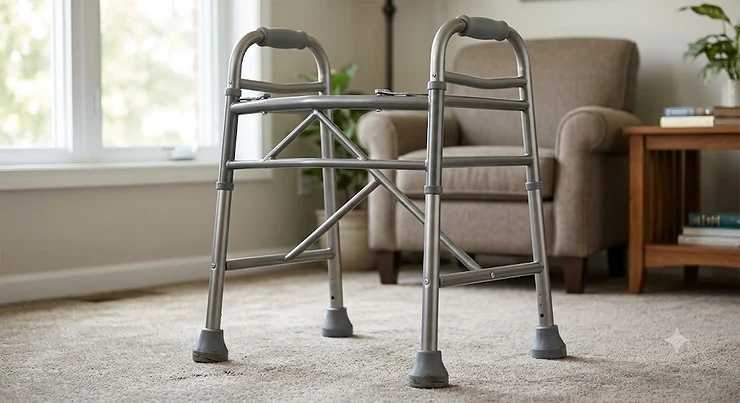
Standard walking frames were never built with bariatric users in mind. Most were designed around a 100kg ceiling and a base width that suits an average-sized adult — which is exactly the problem when you, or someone you’re caring for, needs something sturdier. A bariatric zimmer frame closes that gap. It’s built with reinforced tubing, a wider stance, and a weight rating that can stretch well past 300kg, so the frame stops being the weak link in someone’s mobility plan.
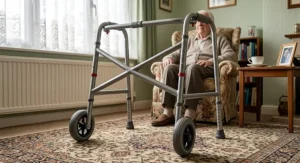
This guide walks through seven real, currently available heavy duty walking frames sold in the UK, from simple folding designs under £70 to reinforced clinical-grade frames built for hospital and home care alike. We’ll look at genuine specifications, what those numbers actually mean day to day, and where each frame falls short — because a frame that’s wrong for your doorway width or your bathroom layout is no bargain at any price. Whether you’re searching for a bariatric walking frame 200kg and above, an extra wide zimmer frame for a wider gait, or simply a walking frame for large person use that won’t wobble on carpet, you’ll find a genuine comparison here rather than a repackaged spec sheet. Let’s get into it.
What Is a Bariatric Zimmer Frame?
A bariatric zimmer frame is a walking frame reinforced with heavier-gauge tubing, wider legs, and stronger joints so it can safely support users typically between 25 and 50 stone (159–318kg) — roughly double or triple the capacity of a standard aluminium walking frame, while still folding or adjusting for home use.
Quick Comparison Table
| Frame | Max Weight | Frame Type | Best For |
|---|---|---|---|
| NRS Healthcare Bariatric Folding Frame | Bariatric-rated (see below) | Folding, non-wheeled | All-round daily use |
| Drive DeVilbiss WA009 Folding Frame | 180kg | Folding, 2-wheel | Budget wheeled option |
| Days Healthcare Heavy Duty Wheeled Frame (Tall) | 223kg | Fixed-fold, 2-wheel | Taller bariatric users |
| John Preston Heavy Duty Zimmer Frame | 318kg | Rigid steel, chrome | Maximum weight capacity |
| Fenetic Wellbeing Bariatric Folding Frame | 222kg | Folding, non-wheeled | Lightest for its rating |
| Trulife Heavy Duty Frame | 220kg | Wheeled or non-wheeled | Clinical/British-made build |
| Mobility Smart Extra Wide Bariatric Frame | 223kg | Fixed, non-wheeled | Widest stability base |
Look closely at that table and a pattern emerges: weight capacity and portability tend to trade off against each other. The John Preston Heavy Duty Zimmer Frame carries the highest rated load in this lineup, but that comes from steel construction rather than aluminium, which changes how it feels to lift. Meanwhile, the Fenetic Wellbeing Bariatric Folding Frame proves you don’t have to sacrifice much portability to get a genuinely high weight rating — it’s proof that “bariatric” doesn’t automatically mean “heavy to handle.”
Found a frame that looks right so far? Scroll down for the full breakdown before you decide — the details matter more than the headline weight rating.
Top 7 Bariatric Zimmer Frames: Expert Analysis
Coverage below spans budget, mid-range, and premium options, plus wheeled and non-wheeled variants, so you can match the frame to the person rather than the other way round.
1. NRS Healthcare Bariatric Lightweight Heavy Duty Folding Walking Frame — best all-round folding pick for daily use
The NRS Healthcare Bariatric Lightweight Heavy Duty Folding Walking Frame (product code P01626) is one of the most widely stocked bariatric frames on Amazon UK, and its standout feature is the independent folding mechanism on each side. In practice, that means you can operate the push-button release with your fingers, your palm, or even the side of your hand — genuinely useful if arthritis or reduced grip strength makes a standard pinch-release button a struggle. The aluminium construction keeps the frame manageable to lift despite its reinforced build, and the non-slip, non-marking ferrules on all four legs add grip without scuffing laminate or vinyl flooring. Based on the spec comparison with standard frames in this category, the wider stance and independently operating sides give noticeably more side-to-side stability when standing up from a low chair — a moment that’s often the riskiest part of a bariatric user’s day. This frame suits someone who needs a genuine daily-use folding frame rather than a wheeled rollator, particularly for indoor mobility and quick transport between rooms or into a car boot. Independent customer review volume specific to this exact model is mixed across retailer sites, though the wider “bariatric lightweight” range from this manufacturer consistently earns praise for its button mechanism being usable by people with limited hand strength — check the current Amazon Q&A section for the latest buyer feedback before ordering.
Pros:
- ✅ Independent-folding sides operate with minimal hand strength
- ✅ Non-slip, non-marking ferrules protect indoor flooring
- ✅ Height adjustable to suit a range of user heights
Cons:
- ❌ Non-wheeled design means lifting, not pushing
- ❌ Exact maximum weight rating isn’t always clearly stated by resellers
Prices for the NRS Healthcare Bariatric Lightweight Heavy Duty Folding Walking Frame sit in the £45-£65 range at the time of research. For the price, it’s a sensible mid-budget entry point if you don’t need wheels.
2. Drive DeVilbiss WA009 Folding Lightweight Aluminium Walking Frame with Wheels — best budget wheeled entry option
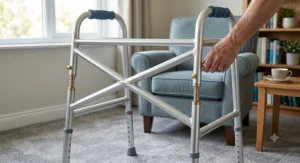
The Drive DeVilbiss WA009 Folding Lightweight Aluminium Walking Frame with Wheels is rated for users up to 180kg (roughly 28 stone), which places it at the lower end of what most suppliers class as bariatric, but it’s a genuine step up from a standard domestic frame. Two front wheels let the user push rather than lift-and-place the frame with every step, which matters enormously for anyone with limited shoulder or wrist strength — lifting a frame dozens of times an hour adds up fast. The aluminium tubing keeps the frame at a manageable weight despite the reinforced build, and two rubber ferrules on the rear legs provide braking resistance so it doesn’t roll away mid-transfer. What most buyers overlook about wheeled frames at this end of the market is that the wheels only help forward movement — turning in a tight hallway still needs the same care as a non-wheeled frame. On Amazon UK, one verified purchaser review specifically contrasted this design favourably against older NHS-issue frames, noting how much easier the folding mechanism made loading it into a car. That’s a useful data point: this is a frame that seems to genuinely improve on the standard-issue equipment many people already have experience with, rather than reinventing the format. It suits users near the lower bariatric weight threshold who want the ease of wheels without paying for the highest-capacity steel frames further down this list.
Pros:
- ✅ Front wheels reduce lifting effort with every step
- ✅ Folds flat for easy car transport
- ✅ Genuinely budget-friendly for a wheeled bariatric-adjacent frame
Cons:
- ❌ 180kg capacity is modest compared to true bariatric frames
- ❌ Rear ferrules need regular wear checks on hard flooring
The Drive DeVilbiss WA009 typically sells under £50, sometimes with VAT relief pricing for eligible buyers. It’s the frame to consider if the user’s weight sits closer to 180kg than 250kg+ and budget is the priority.
3. Days Healthcare Heavy Duty Wheeled Walking Frame — Tall — best for taller bariatric users
Height gets overlooked constantly in mobility aid buying guides, and it shouldn’t — a frame that’s too short forces a stoop that undoes half the stability benefit. The Days Healthcare Heavy Duty Wheeled Walking Frame (Tall) addresses this directly with an extended height-adjustable range built specifically for taller bariatric users, while still carrying a safe maximum user weight of 223kg (35 stone). Reinforced aluminium tubing keeps the overall weight down to around 3.2kg despite the strengthened frame — light enough that a carer can lift and reposition it without strain. Two front wheels aid manoeuvrability, and the very wide base — a deliberate design choice for bariatric stability — resists the tipping risk that narrower frames can pose when a heavier user leans to one side while standing. Here’s what to weigh if you’re considering this model: the wide base that makes it so stable also makes it wider than a standard doorway frame path, so measuring your home’s tightest corridor or bathroom entrance before buying is not optional. This model earns particular praise from occupational therapy teams for combining a genuinely tall height range with bariatric-rated capacity, a combination that’s surprisingly rare in this category — most tall frames aren’t bariatric-rated, and most bariatric frames aren’t built tall.
Pros:
- ✅ Extended height range suited to taller users
- ✅ Wide, stable base reduces tipping risk
- ✅ Lightweight aluminium despite reinforced construction
Cons:
- ❌ Wide footprint may not suit narrow doorways
- ❌ Non-folding design takes more storage space
Expect to pay in the £90-£130 range for the Days Healthcare Heavy Duty Wheeled Walking Frame (Tall), reflecting its reinforced build and taller frame geometry.
4. John Preston Heavy Duty Zimmer Walking Frame — highest weight capacity on this list
If raw capacity is the priority, the John Preston Heavy Duty Zimmer Walking Frame tops this list at a rated 318kg (50 stone), achieved through heavy duty steel construction with a chrome-plated finish rather than the aluminium used across most of this list. That’s a meaningful trade-off worth understanding: steel gives you a genuinely higher weight ceiling and a frame that feels virtually indestructible, but it’s a specialist choice rather than a default one. The manufacturer lists the frame at a notably light weight for its steel build, height adjustable between 84-92cm and 77cm wide — dimensions that suit most standard doorways despite the reinforced construction. Moulded hand grips and non-slip rubber feet round out the safety features. On paper, this means the John Preston Heavy Duty Zimmer Walking Frame is the frame to reach for when other bariatric frames simply aren’t rated highly enough — for users at the very top end of the bariatric weight range, this isn’t an upgrade, it’s often the only genuinely suitable option on the domestic market. Reviewers researching heavy duty steel frames consistently flag the chrome finish as easier to wipe clean than powder-coated aluminium, a small but real advantage in care settings where hygiene protocols matter daily.
Pros:
- ✅ Highest weight rating in this comparison at 318kg
- ✅ Steel and chrome construction resists wear
- ✅ Standard 77cm width fits most doorways
Cons:
- ❌ Non-folding, rigid steel design
- ❌ Heavier to lift than aluminium alternatives despite manufacturer figures
Pricing for the John Preston Heavy Duty Zimmer Walking Frame sits in the £110-£150 range, which is reasonable for a steel-built frame rated at this level.
5. Fenetic Wellbeing Bariatric Folding Walking Frame — lightest frame for its weight rating
The Fenetic Wellbeing Bariatric Folding Walking Frame is the outlier in the best possible way: it’s rated for users up to 35 stone (222kg) yet weighs just 5kg — genuinely light for a bariatric-rated aluminium frame, and noticeably easier for a carer or the user themselves to lift in and out of a car boot compared to some of the steel or reinforced options elsewhere on this list. Reviewers consistently note that the folding mechanism on this frame feels closer to a standard domestic zimmer frame in terms of effort required, despite the much higher weight rating underneath. That’s the whole appeal here — buyers don’t have to accept a bulky, unwieldy frame just because they need bariatric-level support. Based on the spec comparison against similarly rated frames, the 5kg figure stands out as meaningfully lighter than average for this weight category, likely down to careful tubing gauge selection rather than cutting structural corners. It suits anyone who needs to transport the frame regularly — between a car and a GP surgery, or up and down stairs in a home without a stairlift — where every kilogram genuinely matters. The retailer notes a portion of proceeds supports the MS Society, which won’t sway a buying decision on its own but is a pleasant footnote for anyone choosing between similarly specified options.
Pros:
- ✅ Just 5kg despite a 222kg weight rating
- ✅ Folds down for easy transport and storage
- ✅ VAT-relief pricing available for eligible buyers
Cons:
- ❌ Non-wheeled, so requires lifting to move
- ❌ Sometimes runs low on stock given demand
The Fenetic Wellbeing Bariatric Folding Walking Frame typically sells in the £55-£65 range, or lower still with VAT relief applied at checkout for eligible buyers — genuinely strong value for the weight-to-capacity ratio on offer.

6. Trulife Heavy Duty Frame — best British-made clinical-grade option
The Trulife Heavy Duty Frame is manufactured in Britain and supplied in both wheeled and non-wheeled variants, with a rated maximum weight of 35 stone (220kg) and a soft-grip handle designed to reduce pressure on arthritic or weakened hands. What most buyers overlook about frames sold primarily through clinical and NHS supply channels is that they’re often engineered to a stricter tolerance than consumer-market equivalents, simply because hospitals and community equipment stores demand it — this is a frame built to survive repeated use across multiple patients, not just one household. The reinforced structure is available across four height-and-wheel configurations, from a 79-89cm non-wheeled frame through to a 88-98cm wheeled version, so it’s genuinely adaptable to a wide range of user heights rather than a one-size compromise. Tip size is a generous 25mm, giving a broader, more stable rubber contact point on tiled or laminate flooring than the narrower ferrules found on some budget frames. Here’s what the spec sheet won’t tell you outright: because this frame is distributed through professional mobility and clinical suppliers as much as retail, buyers sometimes find it easier to arrange an occupational therapy assessment alongside purchase, which can be genuinely valuable for anyone unsure which height and wheel configuration actually suits them.
Pros:
- ✅ Made in Britain to clinical-grade tolerances
- ✅ Four height and wheel configurations available
- ✅ Wide 25mm tips for stable floor contact
Cons:
- ❌ Primarily sold through clinical suppliers, less common on Amazon
- ❌ Premium pricing versus consumer-market equivalents
Expect the Trulife Heavy Duty Frame to sit in the £130-£180 range depending on the wheeled or non-wheeled configuration chosen — a premium price justified by its clinical-grade build and British manufacturing.
7. Mobility Smart Extra Wide Bariatric Walking Frame — widest base for maximum stability
Closing out this list is the Mobility Smart Extra Wide Bariatric Walking Frame, rated to 223kg (35 stone) with dimensions specifically engineered for stability rather than compactness: a 700mm width and 420mm depth that give it a noticeably larger footprint than every other frame here. That extra width isn’t wasted space — it directly widens the base of support beneath the user, which is the single biggest factor in preventing a tip-over when a heavier user shifts their weight unevenly while standing. Despite the reinforced, wider construction, it still weighs a manageable 3.2kg thanks to aluminium tubing, and it’s available in both wheeled and non-wheeled builds depending on whether the user needs to push or lift. On paper, this means it’s the frame to choose specifically when balance and lateral stability are the primary concern, rather than portability or transport. Reviewers researching extra wide zimmer frame options for users with a wider gait or leg swelling consistently flag standard-width frames as uncomfortably narrow, and this is a direct, purpose-built answer to that specific complaint. It’s not the frame for a small flat with narrow hallways, but for anyone whose main daily risk is losing balance rather than needing to transport the frame frequently, the trade-off is worth it.
Pros:
- ✅ Widest base of support in this comparison
- ✅ Available wheeled or non-wheeled
- ✅ Reinforced yet still under 3.5kg
Cons:
- ❌ Large footprint unsuitable for narrow hallways
- ❌ Wheeled and non-wheeled sold as separate SKUs, so check before ordering
The Mobility Smart Extra Wide Bariatric Walking Frame generally falls in the £90-£130 range, in line with other mid-range bariatric frames offering a genuine stability upgrade.
Top 7 Frames: Full Specification Comparison
| Frame | Weight | Max User Weight | Width | Best For |
|---|---|---|---|---|
| NRS Healthcare Bariatric Folding Frame | ~4kg | Bariatric-rated | 640mm | Daily indoor use |
| Drive DeVilbiss WA009 | ~4kg | 180kg | Standard | Budget wheeled option |
| Days Healthcare Tall Wheeled Frame | 3.2kg | 223kg | Wide | Taller users |
| John Preston Heavy Duty Zimmer | ~2kg (mfr. figure) | 318kg | 770mm | Highest capacity |
| Fenetic Wellbeing Bariatric Frame | 5kg | 222kg | Standard-wide | Portability + capacity |
| Trulife Heavy Duty Frame | 2.9-3.1kg | 220kg | Standard-wide | Clinical-grade build |
| Mobility Smart Extra Wide Frame | 3.2kg | 223kg | 700mm | Maximum lateral stability |
The clearest takeaway from this table is that manufacturer weight figures don’t track neatly with user capacity — the John Preston Heavy Duty Zimmer Walking Frame carries the highest rated load at a surprisingly low listed frame weight, which is worth double-checking directly with the supplier before you commit. If portability is your main filter, the Fenetic Wellbeing Bariatric Folding Walking Frame and Days Healthcare Heavy Duty Wheeled Walking Frame both stand out for staying light despite strong capacity ratings.
Practical Usage Guide: Setting Up and Living With Your Frame
Getting a bariatric zimmer frame right on day one saves weeks of frustration. Start with height: stand naturally with arms relaxed by your sides, and the frame’s handles should sit level with the crease of your wrist — too high forces hunched shoulders, too low causes stooping, and both undermine stability. Most reinforced frames adjust in 20mm increments via push-button pins on each leg; always adjust and lock all four legs to the exact same setting, since even a small mismatch creates a wobble that’s disproportionately noticeable on a wider bariatric base. Check ferrules or wheels weekly during the first month, since a new frame settles in and hardware can loosen slightly with regular use. A common first-30-days mistake is placing the frame too far ahead when walking — you should step into the middle of the frame’s footprint, not chase it forward, and your torso shouldn’t touch the front crossbar. For wheeled models, test the resistance on the rear ferrules on your actual home flooring; carpet and hard flooring behave very differently, and what glides smoothly in a shop might grip unpredictably on your hallway carpet. Finally, if the frame was NHS or council-issued rather than self-purchased, note down the supplying department’s contact details somewhere visible — replacement ferrules and adjustments are usually free through that route, and it’s far cheaper than replacing the whole frame.
Real-World Scenarios: Matching Frames to Users
Consider three genuinely common situations. First, someone recovering from bariatric surgery who needs short-term indoor support while regaining strength: a lightweight folding option like the Fenetic Wellbeing Bariatric Folding Walking Frame suits this well, since recovery timelines are often measured in weeks and a frame that’s easy to store away afterwards avoids clutter once it’s no longer needed. Second, a household where one partner has long-term reduced mobility and needs to move between a ground-floor flat and a car several times a day: here, a wheeled option such as the Drive DeVilbiss WA009 or the Days Healthcare Heavy Duty Wheeled Walking Frame reduces the physical toll of lifting the frame dozens of times daily, which adds up fast over months of regular use. Third, a care home or clinical setting supporting multiple bariatric residents with varying heights and balance needs: the Trulife Heavy Duty Frame‘s multiple height-and-wheel configurations, combined with its clinical-grade sourcing, make it the more sensible institutional purchase over a single consumer-market model that might not suit every resident’s height range.
Problem → Solution Guide
Problem: the frame tips when weight shifts sideways. This usually means the base is too narrow for the user’s build or gait — an extra wide zimmer frame such as the Mobility Smart Extra Wide Bariatric Walking Frame widens the support base and directly addresses lateral instability rather than just raising the weight rating.
Problem: lifting the frame is exhausting. Switch to a wheeled model. Pushing rather than lifting-and-placing dramatically cuts the physical demand on shoulders and wrists, particularly for anyone using the frame dozens of times a day.
Problem: the frame doesn’t fit through a doorway or bathroom entrance. Measure your narrowest access point before buying, not after — standard doorways in UK homes typically run 760-800mm, so an extra wide frame at 700mm can still be tight once hand clearance is factored in.
Problem: uncertainty over the correct height setting. Ask a GP, physiotherapist, or occupational therapist for a proper measurement rather than guessing; most community equipment services will do this as part of an NHS-issued frame assessment at no cost.
 How to Choose a Bariatric Zimmer Frame
- Confirm the user’s actual weight against the frame’s rated maximum, with a safety margin rather than choosing right at the ceiling.
- Measure doorways, hallways, and bathroom access points before choosing between standard and extra-wide bases.
- Decide wheeled versus non-wheeled based on upper body strength and how many times a day the frame will be moved.
- Check the height adjustment range against the user’s actual height, not just “adjustable” as a generic claim.
- Consider VAT relief eligibility, since many bariatric frames qualify for zero-rated VAT for chronically sick or disabled buyers under current HMRC guidance.
- Weigh portability needs — a lighter folding frame suits regular transport, while a heavier, wider frame better suits a fixed home setup.
- Ask about occupational therapy assessment options, particularly for higher-capacity or clinical-grade frames where correct fitting genuinely affects safety.
Bariatric Zimmer Frame vs Standard Walking Frame
The core difference isn’t cosmetic — it’s structural. A standard walking frame, as described in the Wikipedia overview of walking frames, is typically rated for a user weight well under bariatric thresholds and uses thinner-gauge aluminium tubing with a narrower base built around average adult proportions. A bariatric zimmer frame reinforces every one of those elements: thicker tubing, wider stance, stronger joints, and a genuinely tested higher weight ceiling. The comparison table below sets this out directly.
| Feature | Standard Walking Frame | Bariatric Zimmer Frame |
|---|---|---|
| Typical max weight | Around 100-130kg | 180-320kg |
| Base width | Standard | Wider, more stable |
| Tubing gauge | Standard aluminium | Reinforced aluminium or steel |
| Best For | Average-build adult users | Larger or heavier users |
What this comparison really shows is that using a standard frame beyond its rated capacity isn’t just against manufacturer guidance — it’s a genuine structural risk, since welds and joints that aren’t tested for the extra load can fail without warning under sustained sideways pressure. A bariatric frame costs more precisely because that engineering margin has to be built and tested properly.
What to Expect: Real-World Performance
Specs on a page rarely translate directly into lived experience, so here’s the honest translation. A 220kg-rated frame doesn’t feel dramatically different to push or lift than a standard frame when the user is well within that limit — the reinforcement is there as a safety margin, not something you’ll consciously notice day to day. Where the difference becomes obvious is stability: standing up from a low chair or an uneven garden path, a wider bariatric base resists the sideways wobble that a standard frame simply can’t match under greater load. Wheeled bariatric frames also behave slightly differently in tight turns compared to lighter domestic rollators, since more mass needs to be redirected — expect wider turning circles in narrow kitchens and hallways, and factor that into where the frame will realistically be used most.
Bariatric Walking Frames for Different Users
For post-surgical or short-term recovery users, prioritise portability and folding convenience over maximum weight rating, since the goal is temporary support during a defined recovery window. For long-term mobility conditions where the frame will be a permanent daily tool, prioritise durability and correct height fit over initial price, since a poorly fitted frame used for years compounds strain on joints and posture. For carers managing frame use for a family member, a wheeled option reduces physical strain on both the user and anyone assisting with transfers or repositioning throughout the day. For care settings supporting multiple residents, standardising on a clinically sourced, multi-configuration frame like the Trulife Heavy Duty Frame simplifies staff training and stock management considerably.
Long-Term Cost & Maintenance
Beyond the upfront price, bariatric frames need occasional ferrule or wheel replacement, typically every 6-12 months depending on flooring type and usage frequency, and these parts generally cost a small fraction of the frame itself. Steel frames like the John Preston Heavy Duty Zimmer Walking Frame tend to outlast aluminium equivalents structurally but carry more weight day to day, which is worth factoring into total cost of ownership if a carer is doing regular lifting. VAT relief, where eligible, meaningfully reduces the effective purchase price for chronically sick or disabled buyers, and it’s worth checking eligibility before assuming a frame is out of budget. Replacing an ill-fitting cheap frame after a few months of discomfort often costs more overall than buying correctly the first time, so the “cheapest option” isn’t always the most economical one across a full year of ownership.
✨ Ready to Compare Prices Before You Decide?
🔍 Take a closer look at the full spec sheets and current availability for each frame above. Click through on any highlighted product to check today’s pricing on Amazon UK before making your final choice — availability on bariatric-rated equipment can shift quickly.
Safety, Regulations & VAT Relief Guide
Bariatric walking frames sold in the UK should carry a CE or UKCA mark confirming compliance with medical device safety regulations, and it’s worth checking for this marking on the product listing or packaging before buying from a less familiar supplier. As the NHS guidance on walking aids notes, correct fitting by a physiotherapist or occupational therapist significantly reduces fall risk compared to self-selecting a frame without professional input, and this matters even more once weight capacity and stability become safety-critical rather than just comfort factors. For VAT purposes, many bariatric frames qualify for zero-rated relief when bought by someone who is chronically sick or disabled for personal use, following the HMRC eligibility rules — suppliers will usually ask for a simple written declaration rather than medical proof. It’s also worth reviewing proper technique: South Tees NHS Foundation Trust’s guidance on using a walking frame sets out step-by-step positioning that applies just as much to bariatric frames as standard ones, particularly around not letting the torso touch the front crossbar and stepping fully into the frame’s footprint rather than chasing it forward.
 Frequently Asked Questions
❓ What weight can a bariatric zimmer frame hold?
❓ Is a bariatric walking frame available on the NHS?
❓ What is the widest zimmer frame available?
❓ Can I get VAT relief on a bariatric walking frame?
❓ Do bariatric zimmer frames fold for storage?
Conclusion
Choosing the right bariatric zimmer frame comes down to matching genuine specifications to genuine daily needs, not just picking the highest weight rating available. If portability matters most, the Fenetic Wellbeing Bariatric Folding Walking Frame delivers a strong capacity-to-weight ratio that’s hard to beat elsewhere on this list. If lateral stability and a wider gait are the priority, the Mobility Smart Extra Wide Bariatric Walking Frame directly addresses that with its purpose-built wide base. And if maximum weight capacity is non-negotiable, the John Preston Heavy Duty Zimmer Walking Frame‘s 318kg rating stands alone in this comparison. Whichever frame you’re leaning towards, measure your home’s access points first, confirm VAT relief eligibility if applicable, and where possible, get a proper height fitting rather than guessing — it’s the difference between a frame that genuinely restores confidence and one that ends up gathering dust in a hallway.
Recommended for You
- Lightweight Walking Frame for Elderly Woman: 7 Best Picks 2026
- Lightweight Zimmer Frame: 7 Genuinely Best Picks for 2026
- Folding Walking Frame for Travel: 7 Best Picks for Flying (2026)
Disclaimer: This article contains affiliate links. As an Amazon Associate, I earn from qualifying purchases. If you purchase products through these links, we may earn a small commission at no additional cost to you.
✨ Found this helpful? Share it with your friends! 💬🤗
