In This Article
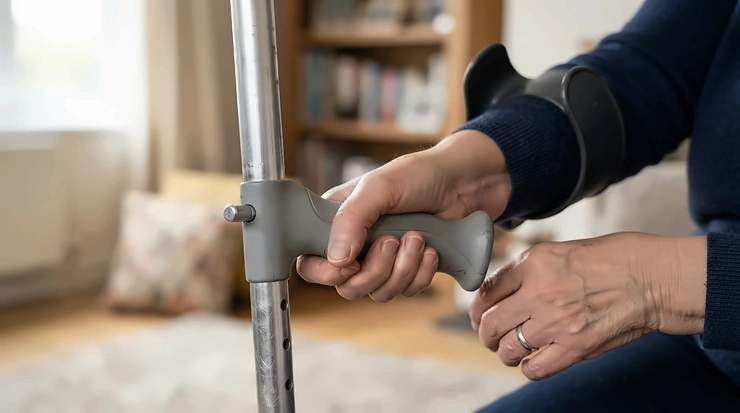
The best lightweight crutches are adjustable aluminium or carbon fibre elbow (forearm) crutches weighing roughly 550g-750g each. They fit your height precisely, carry your body weight safely and spare your wrists and shoulders from fatigue. They are also far cheaper than most people expect.
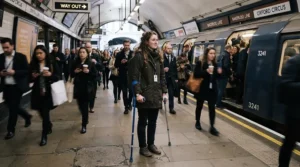
Here’s the thing nobody mentions when you’re handed a pair in A&E. Crutches are a carrying problem as much as a walking problem. Every stride lifts the crutch, so 150g extra per side adds up over a long day. By teatime you can feel it.
Many people start with a hospital loan pair, and that’s sensible. Hospital leaflets explain that loaned crutches are fitted to your height, then returned to be cleaned, refurbished and reused. But loan pairs are built to be sturdy and reusable, not pleasant. Plenty of people end up wanting something lighter, a second pair for the office, or something that folds into a car boot.
So we’ve done the homework. This guide compares seven real UK-available pairs using manufacturer and retailer specifications. We weigh what each number means in practice, summarise real reviewer themes, and cover the questions people actually ask. Those include cheap adjustable crutches, a budget crutches pair, aluminium vs steel crutches, how long you’ll need them, and whether to borrow or buy. Prices are ranges only and will vary.
Best Lightweight Crutches at a Glance: Quick Comparison
Before the deep dive, here’s the whole field on one screen. Weights are per crutch, taken from manufacturer or retailer listings at the time of research.
| Product | Material | Weight (each) | Max user weight | Price range | Best For |
|---|---|---|---|---|---|
| KMINA PRO | Carbon fibre, folding | ~590g | Listings vary (100-136kg) | Premium (indicative £80-£120) | Travel and daily use |
| Complete Care Shop Carbon Fibre Comfort Grip | Carbon fibre, folding | 650g | 140kg | Premium (check current price) | Carbon with UK OT advice |
| PEPE Mobility | Aluminium, open cuff | ~545g | ~125kg | Mid-range (check current price) | Lightest aluminium option |
| Days Ergonomic | Aluminium, closed cuff | 740g | 160kg | Around £35-£45 | Comfort for heavier users |
| Essential Aids Double Adjustable | Aluminium | 600g | 127kg | Under £25 | Cheapest light pair |
| Trulife Combi | Aluminium | Not listed | 190kg | Mid-£20s | Heavy-duty on a budget |
| Drive Devilbiss Underarm | Aluminium, underarm | Not verified | ~159kg | Budget-to-mid | Short-term recovery |
Look at the weight column. The lightest pair on paper isn’t the carbon fibre. At roughly 545g and 600g, the best aluminium models match or beat the 650g carbon pair from Complete Care Shop. Carbon earns its premium through folding, finish and durability rather than raw grams.
If budget is tight, the Essential Aids Double Adjustable and Trulife Combi deliver the most weight capacity per pound spent. If you travel or need all-day comfort, the KMINA PRO is the one to watch.
💬 Just one click — help others make better buying decisions too!😊
Top 7 Best Lightweight Crutches: Expert Analysis
1. KMINA PRO — folding carbon fibre for travellers
The KMINA PRO is the pair that makes other crutches feel agricultural. It’s a European-made forearm crutch in carbon fibre, listed at about 1.3 lb (roughly 590g) each. It has ten height settings spanning roughly 74-99cm and folds to about 55cm.
That fold matters more than it sounds. It means a crutch can live in a rucksack, under a train seat or in a footwell instead of sliding around the boot. The open cuff also lets you drop your grip to open a door without the crutch clattering away.
On paper, the weight limit is murky. Some listings quote 300 lb (about 136kg), while others suggest 100kg per crutch or 220 lb. Check the current listing against your own weight before ordering.
Reviewers across retail listings repeatedly praise the low weight, comfort and quiet operation. One noted a faint creak under full body weight, and another observed it takes more storage space than a hospital pair when stood upright. We couldn’t verify review counts, so treat this as themes rather than a score.
Pros:
- ✅ Roughly 590g each, light enough to forget
- ✅ Folds to about 55cm for travel
- ✅ Ten height settings for fine-tuning
Cons:
- ❌ Conflicting weight-limit figures across listings
- ❌ Premium pricing for a short recovery
Expect premium-tier money (indicatively £80-£120). Worth it for long-term or frequent travel, harder to justify for six weeks at home.

2. Complete Care Shop Carbon Fibre Comfort Grip Folding Crutches — carbon with built-in UK advice
This pair is the more conservative route into carbon. The listing gives 650g per crutch and a 140kg maximum user weight, with a quick fold and height adjustment. Soft cushioned handles are said to mould to the hand and cut shock.
Here’s the honest comparison. At 650g, these aren’t dramatically lighter than the lightest aluminium pairs here. What you’re buying is the fold, the slim modern look and a retailer that advertises free consultations with occupational therapists. If you’re unsure whether elbow crutches suit you at all, that human backup is worth something.
The 140kg limit is clear and comfortably above the PEPE Mobility and Essential Aids Double Adjustable. It sits below the Days Ergonomic (160kg) and Trulife Combi (190kg), so heavier users should compare carefully.
On reviews, we couldn’t verify a meaningful pool of independent user feedback, so we’re not going to invent a verdict. Judge it on the published spec and the retailer’s support.
Pros:
- ✅ Carbon fibre with a clearly stated 140kg limit
- ✅ Folds for cars, trains and wardrobes
- ✅ Free OT advice offered by the retailer
Cons:
- ❌ Not much lighter than top aluminium pairs
- ❌ Few verifiable independent reviews
It sits in the premium bracket; check the current price and availability. Value is fair if you want the fold and advice, weaker if grams are your only goal.
3. PEPE Mobility — lightest aluminium in the line-up
The PEPE Mobility is an open-cuff aluminium elbow crutch listed at around 1.2 lb (roughly 545g) each. It’s European-made, with adjustable height and a stated maximum user weight of 275 lb (about 125kg).
At about 545g, it’s the lightest pair in this guide on published figures. Against the Days Ergonomic at 740g, that’s close to 200g less per crutch. Over a long day of walking, that difference adds up in the shoulders.
The open cuff is a trade-off. It lets you free a hand quickly, which is handy at the door or cash desk. But a closed cuff keeps the crutch on your arm even if you let go, so users with unsteady grip may prefer the Days Ergonomic.
Reviews we could verify were thin. Editorial roundups describe it as light enough for everyday errands while still sturdy, but we can’t point to a large body of user data. Check recent buyer feedback before ordering.
Pros:
- ✅ Around 545g each, very light for aluminium
- ✅ Open cuff for quick hand release
- ✅ European-made with adjustable height
Cons:
- ❌ Lower weight limit of about 125kg
- ❌ Limited verifiable user reviews
UK pricing sits in the mid-range; check the current price. Excellent value if you’re under the weight limit and want the lightest aluminium feel.
4. Days Ergonomic Double Adjustable Crutches — comfort-first handle, 160kg capacity
The Days Ergonomic is the dependable all-rounder. It’s anodised aluminium at 740g per crutch, with handle height adjustable from 69-94cm. Handle-to-cuff distance runs from 19-27cm, and the maximum user weight is 160kg (25 stone).
Double adjustment is the key phrase. Because you can alter both height and handle-to-cuff distance, you’re fitting the crutch to your arm proportions, not just your height. That’s why it suits many body shapes, including people who find standard single-adjust pairs awkward.
The contoured handle spreads pressure across the palm. Days describes it as developed with physiotherapists and healthcare professionals. The closed fixed armband stops the crutch dropping when you release the handle.
At 740g, it’s heavier than the PEPE Mobility and Essential Aids Double Adjustable. You’re trading some grams for comfort and capacity.
Review data we could verify was limited. The consistent theme in how it’s described is comfort and simple push-pin adjustment, so we’d call that a design intent rather than a proven verdict.
Pros:
- ✅ Double adjustment for a tailored fit
- ✅ Ergonomic handle spreads hand pressure
- ✅ 160kg (25 stone) maximum user weight
Cons:
- ❌ Heavier than the lightest aluminium pairs
- ❌ Closed cuff can feel restrictive for some
Pricing sits around £35-£45. A strong value pick for comfort and capacity.
5. Essential Aids Double Adjustable Elbow Crutches — cheapest genuinely light pair
If you want cheap adjustable crutches that aren’t heavy, the Essential Aids Double Adjustable is the standout. The listing gives 600g per crutch, anodised aluminium, 22mm ferrules and a 127kg limit. It comes in three sizes, with the Adult size covering handgrip heights of roughly 63.5-91cm.
At 600g, it’s lighter than the Days Ergonomic (740g) and not far off the PEPE Mobility (~545g). The price is dramatically lower, typically under £25 depending on size and offer. That makes it the pair that reframes the entire “lightweight means expensive” assumption.
Two caveats. First, handgrips are moulded and contoured but basic, so long-term users who want padded comfort should look elsewhere. Second, 127kg is solid but not generous.
The retailer’s own page shows a 100% rating from 19 reviews, with customers praising fast dispatch and one long-term user saying they’d used elbow crutches for over 15 years. That’s the seller’s own site, so read it with sensible scepticism.
Pros:
- ✅ About 600g each at a very low price
- ✅ Three sizes for a closer fit
- ✅ Double adjustment included
Cons:
- ❌ Basic handgrips for long-term use
- ❌ 127kg limit is modest
Under £25 is superb value. Check whether it’s available on amazon.co.uk or via specialist stockists.
6. Trulife Combi Mid Range Double Adjustable Crutches — 190kg capacity at a bargain price
The Trulife Combi is the unglamorous hero for heavier users. It’s anodised aluminium, double adjustable, with a stated limit of 190kg (30 stone). The listing gives handle height as 530-840mm, cuff-to-handle at 217mm and a 22mm ferrule.
That 190kg limit is the highest in the guide. For comparison, the Days Ergonomic tops out at 160kg and the PEPE Mobility at about 125kg. If you’re a larger user, the lesson is plain: check capacity first and weight second.
The handle height range is shorter than some competitors, so taller users should check it covers their measurements. Handle-to-ground of 840mm will suit many users, but not everyone.
At the time of research, the listing we found showed it out of stock, so check availability. We couldn’t verify a pool of user reviews, so we’re relying on the published specification and the brand’s long presence in UK mobility products.
Pros:
- ✅ 190kg (30 stone) maximum user weight
- ✅ Double adjustable for fit
- ✅ Low price for the capacity
Cons:
- ❌ Limited height range for tall users
- ❌ Stock can be patchy
Pricing sits in the mid-£20s. Excellent value for heavier users who need genuine capacity without the cost.
7. Drive Devilbiss Aluminium Underarm Crutches — familiar, adjustable, short-term friendly
The Drive Devilbiss Underarm is the classic “armpit” crutch in aluminium. The adult size suits users around 5’2″-5’10” (roughly 157-178cm), adjusting from 45-53 inches in one-inch (2.5cm) steps via a push pin. The listed capacity is 350 lb (about 159kg), and a double-extruded centre tube reinforces the load-bearing area.
Underarm crutches are generally the choice for shorter recoveries. One health publisher puts typical use at around one to three months, with forearm crutches more common long-term. They’re also more forgiving if your arms are weak, because the underarm pad shares the load. Just don’t hang on them: weight belongs in your hands, not your armpits.
I couldn’t verify the individual crutch weight. If grams are central to your decision, choose a pair with a published figure, such as the Essential Aids Double Adjustable (600g).
Verified UK reviews were limited. The design is a clinical-supply staple, so familiarity is its main strength.
Pros:
- ✅ Push-pin height adjustment in 2.5cm steps
- ✅ About 159kg stated capacity
- ✅ Stable for short-term recovery
Cons:
- ❌ Individual weight not verified
- ❌ Underarm style tiring over long distances
It sits in budget-to-mid territory; check the current price. Sensible value for a few weeks of recovery.
How to Choose the Best Lightweight Crutches
Choosing the best lightweight crutches comes down to seven checks, in this order:
- Confirm the type with your clinician. Underarm and elbow crutches load your body differently, so ask which suits your injury and strength.
- Check the maximum user weight. Published limits range from about 125kg to 190kg across these pairs. Choose a figure with real headroom.
- Compare weight per crutch. Aim for roughly 550g-750g. Heavier pairs tire shoulders, but a few extra grams buys capacity or padding.
- Prefer double adjustment. Adjusting both handle height and handle-to-cuff distance gives a far better fit than height alone.
- Decide on cuff style. Closed cuffs keep the crutch on your arm. Open cuffs free your hand quickly.
- Inspect the ferrules. Look for non-marking, slip-resistant tips, and know how to replace them.
- Match folding to your life. Fold only matters if you travel, drive or store crutches in small spaces.
What most buyers overlook is step 4. A crutch that fits your arm, not just your height, is the difference between “fine” and “I’d forgotten I was holding them.”
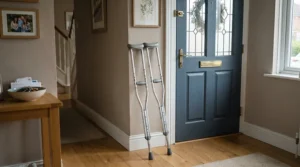
Cheap Adjustable Crutches: What You Really Get for the Money
Cheap adjustable crutches have a bad reputation, mostly from the days of clunky wood and steel. Today, the budget end is genuinely good. The Essential Aids Double Adjustable (around 600g, under £25) and Trulife Combi (mid-£20s, 190kg) are built from anodised aluminium with double adjustment.
So what’s missing at the bottom end? Mainly comfort extras. Handgrips are plain moulded plastic, there’s no folding mechanism and cuffs are basic. For a six-week recovery, that’s absolutely fine. For daily long-term use, you may want to step up to the Days Ergonomic.
Here’s what to scrutinise before buying on price alone:
- Weight limit: a bargain pair with a 100kg limit isn’t a bargain for everyone.
- Adjustment type: “height adjustable” alone may mean single adjustment.
- Stock and returns: specialist listings can go out of stock, as the Trulife Combi did at the time of research.
Remember also that NHS-issued pairs cost you nothing. Buying makes sense when weight, comfort or availability matter more than free.
Budget Crutches Pair: Value Analysis
A budget crutches pair isn’t one price point. It’s a ladder, and each rung buys something different.
| Tier | Typical range | What you get | Example | Best For |
|---|---|---|---|---|
| Entry | Under £25 | Light aluminium, double adjust, basic grips | Essential Aids Double Adjustable, Trulife Combi | Short recoveries |
| Mid | Around £35-£45 | Ergonomic grips, 160kg capacity, closed cuff | Days Ergonomic | Daily use, heavier users |
| Premium | £80+ (indicative) | Carbon, folding, travel-friendly | KMINA PRO, Complete Care Shop Carbon Fibre Comfort Grip | Frequent travellers |
The table shows a simple pattern. Moving from entry to mid-range mostly buys comfort and capacity, while moving to premium buys portability and finish. Weight savings are smaller than the price jumps suggest.
For most short-term users, the entry tier is the smart buy. Spend more only if you’ll use the crutches daily for months, or if travel is part of your routine.
Aluminium Crutches Low Cost: Why the Cheap Metal Works
Aluminium crutches low cost isn’t a contradiction. It’s the point. Anodised aluminium is cheap to extrude, light to carry and strong enough for most users, which is why it dominates both clinical supply and the budget market.
Look at the numbers in this guide. The Essential Aids Double Adjustable weighs about 600g, the PEPE Mobility about 545g, and both are aluminium. Meanwhile the carbon Complete Care Shop Carbon Fibre Comfort Grip is 650g. In other words, the metal isn’t the limiting factor.
Anodising matters too. It gives a tough finish that resists scratches and needs little maintenance, usually just an occasional wipe with a damp cloth.
Aluminium isn’t unlimited, though. One review-roundup site notes that standard aluminium has weight limits to check, and that reinforced or bariatric models exist for heavier users. The Trulife Combi (190kg) and a bariatric aluminium elbow pair at 222kg (35 stone, about 2.2kg for the pair) show how far aluminium can stretch.
Aluminium vs Steel Crutches (and Carbon Fibre)
Aluminium vs steel crutches is a weight-versus-capacity decision. Steel is stronger by volume, so it dominates the bariatric end. Aluminium is lighter, cheaper and more than adequate for most adults.
| Material | Weight | Strength | Cost | Best For |
|---|---|---|---|---|
| Aluminium | Light (about 545g-740g each in this guide) | Good, up to 190kg-222kg in reinforced designs | Low | Most adults, short and long term |
| Steel | Heavier | Very high, for example Drive 10408 at 500 lb (about 227kg) | Moderate | Very heavy users needing maximum capacity |
| Carbon fibre | Light (about 590g-650g each) | High for its weight | Premium | Travel and daily comfort |
Steel earns its place at the heavy end of the market, where an aluminium failure isn’t an acceptable risk. Everyone else benefits from the lighter material. Carbon splits the difference on strength, but costs more.
The practical rule is simple. If you’re within the published limit of a quality aluminium pair, choose aluminium. If you’re near or above it, don’t gamble: step up to a bariatric aluminium or steel model, ideally with clinical advice. One NHS foot-surgery leaflet even states crutches aren’t suitable above a set weight, so always check limits with your care team.
NHS Crutch Loan vs Buying
NHS crutch loan vs buying is less a contest than a sequence. You almost always start with a loan pair, then decide whether to buy.
| NHS loan | Buying privately | |
|---|---|---|
| Cost | Free | Pay for your pair |
| Fit | Fitted in the department | You adjust yourself |
| Weight | Often heavier, sturdy | Choose lighter models |
| Maintenance | Replace via the department | Yours to maintain |
| Return | Must return when finished | Keep or sell |
| Best For | Short-term recovery | Comfort, travel, long-term use |
Loaned crutches are fitted correctly to your height in the department, and hospitals ask for them back so they can be cleaned and reused. You may even receive a reminder letter, and you can usually arrange to keep them longer if you still need them.
Buying gives you choice, but also responsibility. The Spinal Injuries Association’s walking aids sheet notes that you’re responsible for upkeep if you purchase privately, whereas NHS-provided aids come with a route to replacement.
Weight is the common complaint. One reviewer on a specialist crutch listing described their NHS pair as heavy and found a lighter pair a relief. That’s a single voice, but it matches the spec comparison.
The sensible strategy: use the loan pair while you’re being assessed, then buy a lighter pair if you’re still on crutches after a couple of weeks or need a second set.
How Long Will I Need Crutches?
How long will I need crutches? The honest answer is “it depends on the injury, and your clinician decides.” At your first visit, you’re typically told why you need them, for how long, and whether to be partial or non-weight-bearing.
Some signposts help set expectations:
- Short term: minor sprains may mean days to a couple of weeks.
- Medium term: fractures and surgery often mean weeks to a few months.
- Long term: ongoing balance or mobility conditions can mean indefinite use.
One health publisher says underarm crutches are typically used for around one to three months, while forearm crutches suit longer use. Community anecdotes from an online forum range from about eight weeks to more than four months, which shows how varied recoveries are.
Practical tips: if you’re still on crutches when your loan period ends, contact the department, because crutches can be booked out for longer. And if you need more than seven days off work, one NHS leaflet advises contacting your GP for a sick note.
That timeline is also why buying decisions shift. Four weeks at home suits an entry-tier pair. Four months of commuting justifies something lighter and more comfortable.
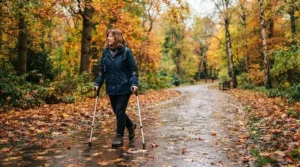
Setting Up and Fitting Your Crutches: A Practical Guide
Getting the fit right matters more than the brand. Follow your clinician’s instructions first, then use these practical checks.
Day-one setup
- Stand upright in flat, supportive shoes with your arms relaxed.
- Set both crutches to exactly the same height. Mismatched pairs are a common cause of back and shoulder pain.
- Adjust so your elbows are slightly bent when you hold the handles.
- With double-adjustable pairs such as the Days Ergonomic, set handle-to-cuff distance so the cuff sits comfortably on your forearm without pinching.
Safe technique
A hospital walking guide advises standing before putting your hands in the crutches and taking your hands out before sitting down. When standing still, place the crutches in front and about 10cm to the side for a stable base. Don’t use stairs unless a nurse or physio has shown you how.
Weekly maintenance
- Check pins pass fully through the holes.
- Inspect rubber ferrules for wear.
- Look for bends or cracks and replace damaged crutches.
Common mistakes in the first 30 days
- Leaning on underarm pads instead of your hands.
- Placing crutches too far ahead.
- Wearing slippery shoes.
- Skipping rest breaks when your hands begin to ache.
Real-World Scenarios: Which Pair Fits Which Person
Specs only matter when matched to a life. Here are three profiles with the reasoning.
The student with a fractured ankle. If you’re a student commuting 8 miles a day by bus, with a six-week recovery and a tight budget, the Essential Aids Double Adjustable makes sense. At around 600g and under £25, it keeps costs low while staying light. Stairs, lecture halls and wet pavements are the main challenges.
The frequent traveller recovering from knee surgery. If you work in a city, take trains and fly occasionally, a folding pair earns its keep. The KMINA PRO folds to about 55cm and weighs roughly 590g each. If budget is tighter, the Complete Care Shop Carbon Fibre Comfort Grip folds too, with the retailer’s OT advice as a bonus.
The heavier user needing capacity. If you’re 22-24 stone, capacity comes first. The Trulife Combi (190kg) and bariatric aluminium elbow crutches (222kg) cover that range. Skip pairs with a 125kg limit, such as the PEPE Mobility, regardless of how light they are.
If you’re a longer-term user with sore hands, the Days Ergonomic handle is worth the extra spend. Its pressure-spreading design directly targets the problem.
Common Crutch Problems and Practical Solutions
Even the best lightweight crutches create everyday annoyances. Here are the common ones and what to do.
Problem: sore hands and wrists. Check the fit first. Handles set too high or low increase pressure. If it persists, move to ergonomic handles such as the Days Ergonomic, or use fingerless gloves, as one children’s hospital leaflet suggests.
Problem: slipping on smooth floors. Hospital guidance warns that laminate and smooth surfaces are slippery. Check ferrules aren’t worn, wear grippy shoes and slow your pace.
Problem: arm cuff rubbing. Adjust handle-to-cuff distance on a double-adjustable pair and make sure you’re not gripping too tightly. Neoprene covers can help.
Problem: carrying things. Use a rucksack or crossbody bag. If you can’t, keep one crutch folded and use a single crutch only if your clinician agrees.
Problem: dropped crutches. A closed cuff, as on the Days Ergonomic, keeps the crutch on your arm. Open-cuff pairs like the PEPE Mobility are quicker to release but easier to drop.
Problem: awkward storage in cars. Folding carbon pairs like the KMINA PRO fit in footwells. Non-folding aluminium pairs lie flat on a back seat.
Features That Actually Matter (And Those That Don’t)
Marketing loves a long feature list. Most of it doesn’t change your recovery. Here’s a sorted view.
Features that matter
- Weight per crutch. Anything from roughly 550g to 750g is the sweet spot.
- Maximum user weight. Always check, and keep real headroom.
- Double adjustment. The most useful fit upgrade.
- Ferrule condition. Slip resistance is a safety feature, not a luxury.
- Handle shape. Ergonomic grips reduce hand strain.
Features that matter only sometimes
- Folding. Brilliant for travel and cars, irrelevant at home.
- Open versus closed cuff. Personal preference and grip stability.
Features that mostly don’t
- The word “carbon”. As the specs show, a 650g carbon pair isn’t lighter than a 600g aluminium pair.
- Patterns and colours. Fun, and some reviewers love them, but they don’t change safety. One reviewer praised a patterned pair for being much lighter than their NHS crutches, which shows weight mattered more than the print.
- Extra accessories. Nice to have, not essential.
Long-Term Cost and Maintenance
Total cost of ownership is where lightweight crutches quietly win. Consider a rough comparison.
An entry pair at around £25 used for eight weeks works out to about £3 per week. A premium folding pair at around £100 used daily for two years works out to under £1 per week. Cost per use falls the longer you keep them.
Lifespan is the other variable. One NHS trust leaflet estimates the life expectancy of walking aids at around two years, and South Tees Hospitals’ guidance stresses regular safety checks. If you’re using crutches daily, plan to inspect them weekly and replace them when they show wear.
Maintenance is minimal:
- Wipe aluminium with a damp cloth and mild detergent.
- Replace worn ferrules promptly.
- Never store crutches in sub-zero conditions, as one NHS leaflet warns.
- Replace bent, cracked or loose pairs, as damaged crutches are a safety risk.
The cheapest option isn’t always the lowest cost if it forces you to replace a pair or live with pain. For long-term use, comfort and durability often win on value.
FAQ
❓ Are carbon fibre crutches worth the extra money?
❓ Can I buy crutches without a referral from the NHS?
❓ Is there VAT relief on crutches in the UK?
❓ Do the best lightweight crutches have lower weight limits?
❓ How do I stop crutches slipping on wet or smooth floors?
Conclusion
The best lightweight crutches aren’t necessarily the priciest. On published specs, the 600g Essential Aids Double Adjustable and roughly 545g PEPE Mobility match or beat carbon, while the Trulife Combi and Days Ergonomic deliver real capacity for heavier users.
Here’s the short version. Choose the Essential Aids Double Adjustable or Trulife Combi for cheap adjustable crutches. Choose the Days Ergonomic for comfort and 160kg capacity. Choose the PEPE Mobility if you’re under its limit and want the lightest aluminium option. Pick the KMINA PRO or Complete Care Shop Carbon Fibre Comfort Grip if folding matters. The Drive Devilbiss Underarm suits a straightforward short recovery.
Start with the NHS loan, work out how long you’re likely to be on crutches, then buy only if weight, comfort or travel justify it. Whatever you pick, set both crutches to the same height and check ferrules regularly.
Recommended for You
- Trekking Poles For Elderly: 7 Best Picks For Safer Walks (2026)
- Carbon Fibre Trekking Poles Vs Aluminium Trekking Poles 2026
- Telescopic Trekking Poles vs Fixed Length Poles: 7 Best Picks (2026)
Disclaimer: This article contains affiliate links. As an Amazon Associate, I earn from qualifying purchases. If you purchase products through these links, we may earn a small commission at no additional cost to you.
✨ Found this helpful? Share it with your friends! 💬🤗
