
In This Article
Carbon fibre trekking poles vs aluminium trekking poles is a straight choice between two shaft materials. Carbon is lighter, stiffer and better at damping vibration. Aluminium is heavier and cheaper, and it tends to bend rather than snap when abused. Which one wins depends on your terrain, your budget and how kindly you treat your kit.
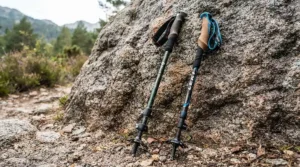
Here’s the thing most buyers miss. A trekking pole is a tool your hands carry, swing and plant for hours. Pack weight sits on your hips; pole weight travels through your wrists and shoulders with every stride. That’s why a few dozen grams can feel like a bigger deal at mile fourteen than it did in the shop.
The internet loves to frame this as a war. It isn’t. Testers keep landing in the same place: carbon wins on weight and comfort, aluminium wins on toughness and price. Roughly speaking, the sensible UK hiker’s default has been aluminium, or a hybrid, unless low weight is a genuine priority on a demanding route. That advice is a starting point, not a rule.
This guide works through the trade-off using real spec data and the aggregated verdicts of published tests, not invented anecdotes. You’ll get seven real poles, four carbon and three aluminium, plus honest analysis of pole weight comparison, impact resistance and cost per pole material. We’ll also cover what carbon fibre hiking poles do well on British hills, and where they fall short. Prices are given as ranges only. Please check current prices before you buy.
Quick Comparison Table: 7 Poles at a Glance
Before the deep dive, here is the shortlist in one place. The weight figures appear where a source stated them. Where none did, I’ve left them out rather than guess.
| Pole | Material | Standout | Price band | Best For |
|---|---|---|---|---|
| Black Diamond Alpine Carbon Cork | Carbon | Exceptional strength | Premium | Heavy loads, rough ground |
| Lifesystems Trekking Poles | Carbon | Value with warranty backing | Around £70 | Budget-minded carbon converts |
| Fizan Ultrax Carbon | Carbon | Undercuts big-brand carbon | Around £100 | Weight-savers on a budget |
| Leki Makalu FX Carbon | Carbon (folding) | Racing-grade carbon, compact | Premium | Packability and performance |
| Fizan Passport TL130 | Aluminium | 190g per pole | Mid to upper-mid | Light but tough |
| Black Diamond Trail Ergo Cork | Aluminium | Cork grip all-rounder | Mid-range | Everyday UK walking |
| TrailBuddy Trekking Poles | Aluminium | Beginner-friendly | Budget to mid | First-time buyers |
Look at how the price bands cluster. The two carbon poles at the lower end, Lifesystems Trekking Poles and Fizan Ultrax Carbon, show that carbon no longer demands a premium price for a decent pair. Meanwhile the Fizan Passport TL130 shows aluminium can undercut many carbon poles on weight. If you want maximum abuse tolerance, the Black Diamond Alpine Carbon Cork is the outlier: carbon, but built like a lump hammer.
💬 Just one click — help others make better buying decisions too!😊
Top 7 Poles: Expert Analysis
1. Black Diamond Alpine Carbon Cork — carbon poles built to survive abuse
Most carbon poles promise lightness. This one promises you can’t easily kill it. The shafts are wide-diameter carbon in a simple three-section telescoping design, with cork grips and external flip locks.
Published specs put the unisex pair at about 17.1 oz (roughly 485g), with a maximum length of 130cm. That’s heavy for carbon. The trade-off is stiffness: wide shafts resist deflection, so the pole feels planted on loaded, steep descents where skinnier ultralight shafts flex and chatter.
My read is that this pole is for people who genuinely put weight through their poles. Think heavy packs, scree and rocky Scottish ridges. Two independent gear-testing sites describe it among the strongest poles they tested, and the flick locks draw repeated praise. Weight and price are the recurring complaints. If you’re chasing every gram, look elsewhere; if you’ve snapped poles before, this is the carbon pick that answers your worries.
Pros:
- ✅ Among the strongest poles in independent tests
- ✅ Comfortable cork grip that copes with damp hands
- ✅ Fast, dependable flip locks
Cons:
- ❌ Heavy for a carbon pole
- ❌ Premium price bracket
Price sits firmly in the premium bracket, so check current price. The value is real if durability is your priority, but not if you simply want the lightest pair.

2. Lifesystems Trekking Poles — carbon on a sensible budget
Carbon fibre for around £70 sounds like the setup to a disappointment. Reviewers at Live for the Outdoors argue otherwise, calling these a genuine bargain and possibly the best-value carbon poles from a brand with proper warranty support.
That warranty point matters more than it sounds. Carbon’s weak spot is a sharp side impact, and the honest question with any cheap carbon pole is what happens when one section fails. Warranty support from an established brand takes some of the sting out of that scenario, which is something budget marketplace poles rarely offer.
Based on the review evidence, this is the pole to try if you’re curious about carbon fibre hiking poles but not ready to spend Leki money. I’d still check the listing for lock type, grip material and collapsed length before buying, because those details determine daily comfort. Reviewers frame it as core performance done well rather than a feature-laden flagship, and that’s an honest description of what you’re paying for.
Pros:
- ✅ Genuine carbon weight saving at a modest price
- ✅ Brand warranty support offers peace of mind
- ✅ Low-risk way to test carbon
Cons:
- ❌ Fewer refinements than premium rivals
- ❌ Carbon’s usual vulnerability to side shocks
Price sits around £70 at the time of research. For a first carbon pair, the value verdict is strong.
3. Fizan Ultrax Carbon — undercuts big-brand carbon
Fizan has a reputation for poles that punch above their weight. The Fizan Ultrax Carbon continues the habit by coming in at around £100, which reviewers describe as a significant undercut on carbon poles from established names.
Why does a £100 price tag matter? Because at that level, carbon stops being a luxury and becomes a practical choice for anyone who does long days. The lower swing weight reduces fatigue across thousands of pole plants, and carbon’s vibration damping softens the jolt on hard, stony ground. Those benefits are cumulative rather than dramatic, so you notice them at the end of the day rather than the start.
If you already know you like the Fizan approach, this is the natural carbon step up from its aluminium range. If you’re new to poles altogether, it’s a solid mid-price entry. The caveat is the same as with any carbon shaft: treat it with a little more respect on boulder fields than you would an aluminium pole.
Pros:
- ✅ Carbon shaft at a mid-price point
- ✅ Established brand known for value
- ✅ Lower fatigue over long days
Cons:
- ❌ Carbon shafts are less forgiving of side impacts
- ❌ Not the strongest choice for scrambling
Price sits around £100. Value verdict: one of the better routes into carbon without touching the premium bracket.
4. Leki Makalu FX Carbon — racing-grade carbon that folds small
Leki’s premium reputation rests on fit, finish and engineering, and this folding carbon pole is the brand’s lightweight statement. Reviewers describe the shafts as top-end, premium-grade performance racing carbon fibre. Trekking and snow baskets are included as standard.
The folding design uses three carbon sections held by an internal cable, similar to a tent pole. It packs small, which matters when you’re stashing poles in a rucksack for a scramble or a flight. The compromise is that folding poles are generally less stiff and more mechanically complex than telescoping ones. Gear testers who prefer telescoping designs point out they are stiffer, simpler and cheaper.
So who is it for? Hikers who want the lightest, most packable pole from a brand with excellent service and will pay for it. A closely related Leki model, the Black Series FX Carbon, also earns praise for durability under stress despite its carbon build, though testers warn it’s expensive for beginners.
Pros:
- ✅ Premium carbon construction
- ✅ Folds compactly for packing
- ✅ Baskets included as standard
Cons:
- ❌ Expensive for casual users
- ❌ Folding designs are less stiff than telescoping
Price sits in the premium bracket. Value verdict: worth it if packability and refinement matter to you, otherwise overkill.
5. Fizan Passport TL130 — aluminium that undercuts carbon on weight
This is the pole that turns the “aluminium is heavy” assumption upside down. At 190g per pole, or about 380g per pair, it’s light enough to undercut many carbon rivals while retaining the toughness carbon can’t match.
Put that in context. One retailer guide describes a good pair of carbon poles as weighing between 380 and 480g. The Fizan Passport TL130 sits at the bottom of that range using an aluminium shaft. That means you get carbon-class weight with aluminium’s tendency to bend rather than shatter, which is a powerful combination for anyone who scrambles or wedges poles between rocks.
The catch is that at this weight, aluminium walls are thin, so a hard bend can still put a kink in the shaft. Thin isn’t invincible. Even so, for most British hillwalking the balance is hard to fault. If your priority is lightweight vs durable trekking poles in a single package, it’s one of the closest compromises I’ve found.
Pros:
- ✅ Carbon-class weight in aluminium
- ✅ Tough enough for rocky ground
- ✅ Bends rather than snaps under stress
Cons:
- ❌ Thin aluminium can still kink
- ❌ Priced above budget aluminium
Price sits above budget aluminium; check current price. Value verdict: excellent if you want low weight without carbon anxiety.

6. Black Diamond Trail Ergo Cork — the everyday UK all-rounder
One UK trail guide names this its best overall pick, and the reasons are unglamorous. Cork grips handle sweaty hands well and feel good over long distances, while flick locks stay dependable in wet conditions, which is practically a job requirement in Britain.
Aluminium shafts here mean you accept extra weight in exchange for durability and a friendlier price. For most day walks, weekend trips and muddy footpath rambles, that’s a sensible deal. You won’t feel the extra grams on a four-hour circuit, and you won’t lose sleep about a snapped shaft.
The cork grip is worth dwelling on. Cork moulds slightly to your hand over time and copes with damp better than foam, which suits drizzly conditions. The trade-off is that cork adds a little weight compared with foam. As an all-rounder, this pole rarely disappoints; as a weight-saver, it won’t win any prizes.
Pros:
- ✅ Comfortable cork grip
- ✅ Reliable flick locks in wet weather
- ✅ Durable aluminium build
Cons:
- ❌ Heavier than carbon alternatives
- ❌ Not aimed at ultralight users
Price sits in the mid-range bracket; check current price. Value verdict: the safest buy for most UK hikers.
7. TrailBuddy Trekking Poles — beginner-friendly aluminium
A UK guide lists these as its best beginner choice, which is a fair description. The maker states they use aircraft-grade 7075 aluminium. That’s a manufacturer claim, so I’d treat it as marketing until you’ve checked the spec on the listing.
If the claim holds, it’s a good sign. That alloy family is widely used in quality trekking poles and is known for handling abuse better than carbon. As a starter set, this is the sort of pole that forgives clumsy technique: you can jam it in a crevice, lean on it awkwardly and probably just bend it back.
For someone unsure whether they even like poles, buying a mid-priced aluminium pair before considering carbon is a smart way to learn. You’ll discover whether you prefer cork or foam, flick or twist locks, and how much you actually use them, before committing bigger money to carbon.
Pros:
- ✅ Forgiving aluminium build
- ✅ Approachable price for beginners
- ✅ Adjustable length for varied terrain
Cons:
- ❌ Heavier than carbon options
- ❌ Fewer premium refinements
Price sits in the budget-to-mid bracket. Value verdict: a low-risk first pair.
How to Choose Between Carbon and Aluminium Poles
Featured snippet answer: choose carbon if weight and vibration damping matter most; choose aluminium if durability and price matter most. Here’s how to decide in seven steps.
- Decide your terrain. Rocky, off-trail or scrambling ground favours aluminium because it bends before it breaks. Well-made paths and long distances favour carbon.
- Set a weight target. Guides suggest under 500g per pair is ideal for most hikers, with ultralight options nearer 300g. Anything lighter helps on long days.
- Check your budget honestly. A tighter budget points to aluminium, but entry-level carbon now costs surprisingly little.
- Consider your load. Heavy packs put more force through poles, so stiffer, thicker shafts are safer.
- Choose telescoping or folding. Telescoping is stiffer and simpler; folding packs smaller.
- Pick your lock. Flick locks are easier to adjust in cold or wet conditions than twist locks.
- Pick your grip. Cork handles sweat and damp well; foam is lighter and warmer in cold months.
The most common mistake is buying on weight alone. A lighter pole you’re nervous about using is worse than a slightly heavier one you can trust.

Pole Weight Comparison: What the Grams Really Mean
Time for the numbers. Different sources give slightly different figures, so treat them as a spread rather than gospel. Carbon fibre poles commonly land between about 380 and 480g per pair in one UK retailer’s summary, and 12 to 16 oz per pair in another. One brand comparison puts its carbon at 11.2 to 16 oz per set against aluminium at 20.8 oz. Another states carbon delivers weight savings of 30 to 40 per cent per pole.
Those percentages sound dramatic. In real terms, we’re talking roughly 100 to 200g per pair between typical carbon and typical aluminium. You’d barely notice that on a short walk. Over a long day, though, the effect compounds. Poles are swung and planted thousands of times, and that repeated lifting adds up in your arms and shoulders in a way pack weight doesn’t. Several hikers who’ve used both report carbon feeling meaningfully better on 15-mile-plus days.
However, exceptions muddy the picture. The Fizan Passport TL130 weighs 190g per pole in aluminium, while the Black Diamond Alpine Carbon Cork weighs about 485g per pair in carbon. So the material tells you less than the design does. Wall thickness, diameter, grip material and locks all matter.
The practical takeaway: compare actual weights on the spec sheet, not materials in the marketing copy. A pole’s swing weight, meaning how heavy it feels at the tip, matters more than the total figure.
Aluminium Trekking Poles Durability: Bend, Don’t Break
Aluminium’s great virtue is how it fails. Under excessive stress, an aluminium shaft usually bends. You can often straighten it enough to finish the walk. Carbon tends to splinter or snap with little warning, leaving you with a very expensive stump.
Quality aluminium poles typically use the 7075 aluminium alloy family, widely used where strength matters. Testers repeatedly note that good 7-series aluminium handles more abuse than carbon, though it can still bend or break. That’s an important caveat: aluminium durability isn’t infinite, particularly in thin-walled ultralight designs.
Why does it matter in practice? Because poles get abused in predictable ways. They get wedged in rock cracks, stepped on, caught in stiles, trapped in car boots and used as levers. Aluminium shrugs off most of these. It’s also cheaper to replace if damaged, which lowers the emotional cost of rough treatment.
There’s a nuance worth stating. One brand argues that thin aluminium can deform while well-designed carbon can outlast it, and that geometry and layup matter more than the logo on the tube. That’s fair. A fat, well-made carbon shaft can be tougher than a skinny aluminium one. As a rule, though, for aluminium trekking poles durability remains the material’s strongest selling point, especially for beginners, off-trail walkers and anyone hard on gear.
Impact Resistance: Vertical Strength vs Side Shocks
Impact resistance is where the carbon debate gets interesting. Carbon is strong under vertical load, meaning straight compression along the shaft. It’s much weaker when hit from the side or shock-loaded at an angle. That’s why the classic failure story involves a pole wedged between rocks while the hiker’s weight swings sideways.
This isn’t a design flaw so much as a property of carbon-fibre-reinforced polymer. The fibres are extremely strong along their length but the composite resists sideways crushing less well than a ductile metal does. One test reviewer put it bluntly: hit a rock wrong on a wet slope and carbon snaps where aluminium would bend.
Yet carbon isn’t automatically fragile. Wider diameters and woven outer layers improve toughness considerably. One test of 33 poles found some wide-diameter carbon models tied for the strongest overall, which shows design matters as much as material. Another editor reported being surprised at how tough 100 per cent carbon poles proved, despite being heavy-handed.
The practical rule for impact resistance: choose aluminium if you’ll be in boulder fields, scree or crevice-riddled terrain, or choose a thick-walled carbon pole like the Black Diamond Alpine Carbon Cork if you want both. For paths, moorland and long trails, carbon’s vulnerability rarely becomes a problem. Look after the pole and it’ll look after you.
Lightweight vs Durable Trekking Poles: Head-to-Head
Here’s the whole debate condensed into one table.
| Factor | Carbon fibre | Aluminium | Best For |
|---|---|---|---|
| Weight | Lighter | Heavier (with exceptions like the Fizan Passport TL130) | Carbon for long days |
| Failure mode | Can snap or splinter | Tends to bend | Aluminium for rough ground |
| Vibration damping | Better | Good | Carbon for sensitive joints |
| Cost | Usually higher | Usually lower | Aluminium for budgets |
| Side-impact resistance | Weaker | Stronger | Aluminium for scrambling |
| Repair and replacement | Costlier | Cheaper | Aluminium for hard use |
The table’s message is that neither material wins outright. Carbon takes weight and comfort, while aluminium takes toughness and cost. The exceptions matter, though: the Fizan Passport TL130 narrows the weight gap, and the Black Diamond Alpine Carbon Cork narrows the durability gap.
If you’re torn, ask yourself which failure would ruin your day more: sore arms at the end of a long walk, or a snapped pole miles from the road. Your answer probably decides it.
Cost Per Pole Material: Long-Term Value
The sticker price only tells half the story. Cost per pole material breaks down like this, using indicative bands only.
| Bracket | Typical examples | Indicative range | Best For |
|---|---|---|---|
| Budget aluminium | TrailBuddy Trekking Poles | Under about £50 | First-time buyers |
| Mid aluminium | Black Diamond Trail Ergo Cork | Mid-range | Regular UK walkers |
| Budget to mid carbon | Lifesystems Trekking Poles, Fizan Ultrax Carbon | Around £70 to £100 | Weight-conscious hikers |
| Premium carbon | Leki Makalu FX Carbon, Black Diamond Alpine Carbon Cork | Premium | Heavy use, refined kit |
Now do the cost-per-use maths. A £100 pole used on 40 days a year for five years is 200 days of use, or about 50p a day. A £45 pole that survives three seasons at 30 days a year works out at a similar 50p a day. Longevity, not sticker price, decides the winner.
Consider replacement costs as well. Carbon breakages can mean buying a whole new pole, while aluminium bends are sometimes recoverable. Warranty matters too: brand support can effectively reduce your long-term cost, as with Lifesystems Trekking Poles.
In short, carbon costs more up front but can win on comfort per pound spent over a long life, if you avoid snapping it. Aluminium wins for hikers who treat kit roughly.
Carbon Fibre Hiking Poles for Specific Audiences
Beginners: Start with aluminium, or budget carbon if you’d like weight savings. There’s little value in spending premium money before you know your preferences.
Long-distance walkers: Carbon is the strongest argument here. Lower fatigue and vibration damping become genuine advantages across multi-day routes, and poles like the Fizan Ultrax Carbon suit this well.
Older hikers or those with joint concerns: Poles reduce the tension on legs, knees and ankles on descents, and carbon’s vibration damping is often welcomed. Lightness helps if your wrists tire quickly. Speak to a physiotherapist if you have persistent joint issues.
Wild campers and backpackers: Weight matters most, so consider carbon or the Fizan Passport TL130. Folding poles like the Leki Makalu FX Carbon save pack space too.
Scramblers and mountaineers: Strength dominates. The Black Diamond Alpine Carbon Cork or a robust aluminium pair suits this better than an ultralight carbon shaft.
Budget-conscious families: Aluminium poles are cheaper to replace when children inevitably use them as swords. Enough said.

Features That Actually Matter (And Those That Don’t)
Marketing loves to shout about materials. Everything else, though, decides daily comfort.
Matters: lock quality. Flick locks are easier to adjust in cold or wet conditions than twist locks, and reviewers repeatedly rate them highly. Grip material matters too: cork copes with sweat and damp, while foam is lighter and better for colder months.
Matters: collapsed length. You won’t always be using your poles, so look for a pole that collapses small enough to strap to your pack. Folding designs excel here, though they’re less stiff.
Matters: baskets and tips. Mud baskets and carbide tips help on soft UK ground. The Leki Makalu FX Carbon includes baskets as standard, which saves you buying extras.
Doesn’t matter as much: exotic layup names and marketing terms. Wall thickness and diameter tell you more than a glossy label.
Doesn’t matter as much: shaving 20g at any cost. If a slightly heavier pole is easier to adjust, more comfortable and more durable, take it.
Common Mistakes When Buying Trekking Poles
Buying on weight alone. The lightest pole isn’t the best one. It’s often the most fragile.
Ignoring your terrain. A carbon pole that excels on the South West Coast Path could suffer on a Lake District scramble. Match the pole to the ground.
Skipping the lock check. A pole that slips is useless. Flick locks generally perform better in the wet, which describes much of British hiking.
Overlooking grip material. Sweaty hands on foam, or cold hands on cork, quickly become annoying.
Buying the cheapest carbon on a marketplace. Some very cheap carbon poles exist, but warranty and support vary wildly. A brand like Lifesystems at least offers support behind the product.
Never trying before buying. If possible, borrow or rent a pair first. It costs nothing and avoids an expensive mistake.
Practical Usage Guide: Setup, Maintenance and the First 30 Days
Setting the height. For flat ground, your elbow should sit at roughly 90 degrees when the pole tip is planted. Shorten slightly for climbing and lengthen for descents. Many hikers forget to adjust, which wastes the benefit.
Using the strap. Slide your hand up through the strap from below, then grip the handle over the strap. This transfers force to your wrist rather than your fingers and reduces gripping fatigue.
Cleaning after muddy walks. Rinse the shafts, extend the sections and let them dry fully before collapsing. Trapped grit accelerates wear on locks and can jam sections in both carbon and aluminium poles.
Storage. Store poles loosely extended or collapsed in a dry place. Avoid leaving them in a hot car, especially carbon poles with adhesives.
Inspecting carbon. Check regularly for hairline cracks, scuffs or fraying near joints. Damage on a carbon shaft can be hard to spot, and it’s the sort of damage that leads to sudden failure.
Inspecting aluminium. Look for bends, dents and corrosion. Small kinks can weaken the shaft.
Common first-month mistakes: over-tightening locks, using poles as levers, and forgetting to swap worn tips. Treat your poles as walking aids rather than crowbars and they’ll last far longer.
Real-World Scenarios: Matching the Pole to the Walker
Scenario one: the weekend Peak District walker. Budget is modest, walks are 8 to 12 miles, terrain is mostly paths and stiles. A Black Diamond Trail Ergo Cork or TrailBuddy Trekking Poles fits perfectly. Aluminium keeps costs down and shrugs off stile scrapes.
Scenario two: the long-distance route walker. Someone tackling multi-day trails like the Cotswold Way or the West Highland Way, carrying a 10kg pack. Weight savings matter more here, so Fizan Ultrax Carbon or Lifesystems Trekking Poles make sense. Carbon reduces cumulative arm fatigue, and the mid-range price feels reasonable for the mileage.
Scenario three: the Scottish scrambler. Ridge routes, loose rock, heavy weather. Robustness beats weight. The Black Diamond Alpine Carbon Cork delivers strength and stiffness, while the Fizan Passport TL130 offers a lighter aluminium alternative that bends rather than breaks.
Scenario four: the airline-hopping traveller. Poles need to fit in hand luggage or a small bag. The Leki Makalu FX Carbon folds compactly and adds carbon’s weight saving, so it earns its premium here.
The pattern is simple: fit the pole to the walk, not the marketing.
Buyer’s Decision Framework: If This, Choose That
Use this quick checklist to decide.
- If you scramble, hike off-trail or carry heavy loads, choose aluminium or a thick-walled carbon pole. Toughness beats grams.
- If you walk long distances on established paths, choose carbon. Cumulative fatigue is the real enemy.
- If you’re on a tight budget or buying your first pair, choose aluminium.
- If you want the lightest possible pack, choose folding carbon, or the Fizan Passport TL130 for aluminium.
- If you’re hard on gear, choose aluminium, or carbon with strong warranty backing.
- If you dislike the idea of a sudden snap, stay with aluminium and enjoy the peace of mind.
Still stuck? Buy a mid-priced aluminium pair, learn what you value, then upgrade to carbon if weight really bothers you. That approach keeps regret to a minimum and lets you build knowledge before you spend big.
Safety and Responsible Use on British Trails
Poles change how you interact with the landscape, so it’s worth thinking beyond the kit. The Countryside Code asks visitors to protect plants and animals, leave gates as you find them and keep to marked paths. Sharp tips and mud baskets help you avoid damaging soft ground and vegetation, and rubber tip protectors keep points from catching on other people’s clothing or kit.
On safety, a snapped carbon pole in exposed terrain can be a real problem. If you carry carbon poles on remote routes, bring a plan for failure: an ability to continue without poles, or a lightweight spare option. Aluminium’s tendency to bend gives more margin for error in remote places.
Never rely on poles for security on steep, exposed ground. They’re aids to balance, not safety equipment. Check weather, tell someone your route and carry the usual essentials. UK regulations don’t specifically cover trekking poles, but check that any pole you buy carries the relevant conformity marking for sale in the UK, such as UKCA or CE, where applicable.
FAQ
❓ Are carbon fibre trekking poles worth the extra money?
❓ Do carbon trekking poles snap easily?
❓ Can you fix a bent aluminium trekking pole?
❓ What is the lightest trekking pole for UK hiking?
❓ Are folding or telescoping poles better?
Conclusion
So, carbon fibre trekking poles vs aluminium trekking poles: who wins? Neither, and both. Carbon wins on weight, vibration damping and long-day comfort. Aluminium wins on toughness, forgiving failure and price. The best pole for you depends on the ground you cover and the way you treat your kit.
If you hike long distances on established paths, carbon like the Fizan Ultrax Carbon or Lifesystems Trekking Poles makes a compelling case. If you scramble or carry heavy loads, the Black Diamond Alpine Carbon Cork brings carbon comfort with unusual strength, while the Fizan Passport TL130 delivers aluminium that’s light enough to rival carbon. For everyday walking, the Black Diamond Trail Ergo Cork and TrailBuddy Trekking Poles offer sound aluminium value, and the Leki Makalu FX Carbon is the premium folding option if packability is a priority.
Whichever you choose, prices change and stock moves, so check current price and specifications before buying. Then get out there and put those poles to work.
Recommended for You
- Telescopic Trekking Poles vs Fixed Length Poles: 7 Best Picks (2026)
- Nordic Walking Poles: 7 Best UK Picks For Fitness Walking (2026)
- Nordic Walking Poles For Beginners: 7 Best Picks (2026)
Disclaimer: This article contains affiliate links. As an Amazon Associate, I earn from qualifying purchases. If you purchase products through these links, we may earn a small commission at no additional cost to you.
✨ Found this helpful? Share it with your friends! 💬🤗
