
In This Article
Your knees don’t lie. Fine on the flat, fine on the climb, and then somewhere around mile six of a rocky descent, they start sending a very clear message: slow down, or pay for it tomorrow. If that sounds familiar, you’re not alone, and you’re not broken — hiking poles for bad knees exist precisely because descending is where most knee pain actually happens, not walking itself.
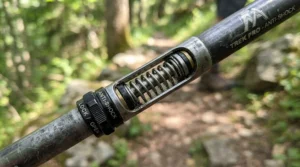
The mechanics are straightforward. Every time your foot lands on a downhill step, your knee absorbs a jolt roughly equivalent to several times your body weight. A well-chosen pair of poles redirects a meaningful chunk of that force through your arms and shoulders instead, which matters enormously if you’re managing osteoarthritis, recovering from injury, or simply an older set of knees that’s earned the right to complain occasionally.
What is hiking poles for bad knees? In practical terms, it means poles engineered with features that specifically ease joint strain on descents — anti-shock springs, generous length adjustment, and ergonomic grips — rather than generic walking sticks that offer balance but little cushioning. This guide compares seven real, currently available options across every price bracket, explains how the anti-shock spring actually works, breaks down proper downhill walking technique, and gives you a straightforward framework for choosing the right pair for your knees, your terrain, and your budget.
Quick Comparison Table
Before the deep dive, here’s the short version for anyone short on time. This table ranks our seven picks by what actually matters for sore knees: shock absorption, weight, and who each pole genuinely suits.
| Pole | Anti-Shock? | Weight (pair) | Best For |
|---|---|---|---|
| Leki Legacy Lite AS | Yes (DSS) | ~514g | Best all-round pick for knee pain |
| Black Diamond Trail Pro Shock | Yes (4-stage) | ~590g | Heavy packs, long descents |
| Black Diamond Trail Vista Shock | Yes | ~535g | Value shock absorption |
| Leki Micro Vario Carbon | Yes | ~430g | Folding, travel, minimal pack space |
| Black Diamond Trail Ergo | No (ergonomic grip) | ~490g | Wrist and grip comfort |
| Leki Makalu Lite | No | ~540g | Durable everyday workhorse |
| Trekology Trek-Z Carbon | No | ~450g | Budget entry point |
Reading across this table, the pattern is clear: if knee pain is your main driver, the anti-shock models cluster at the top for a reason, but they’re not the only route to relief — the Black Diamond Trail Ergo and Leki Makalu Lite prove that a well-shaped grip and correct technique can matter just as much as a spring inside the shaft. Budget shouldn’t be the sole deciding factor either, since the Trekology Trek-Z Carbon shows a sub-£50 pole can still be a genuinely useful knee-support tool if you’re realistic about its limits.
Found a favourite already? Scroll down to see exactly why it made the cut — and grab it before your next hike.
Top 7 Hiking Poles for Bad Knees: Expert Analysis
1. Leki Legacy Lite AS — best all-round anti-shock for knee pain
The Legacy Lite AS is Leki’s answer to a simple problem: most anti-shock poles are heavier or pricier than they need to be. At roughly 257g per pole, it stays close to non-shock aluminium poles in weight while adding genuine cushioning. The Dynamic Suspension System sits directly above the tip and, according to Leki’s own testing, cuts peak impact force by around 40% — a figure that lines up with the general 25-40% reduction researchers have measured for anti-shock poles more broadly.
What most buyers overlook about this model is the lock-out switch: you can turn the shock absorption off entirely for climbs, where a firm, direct pole plant is actually more efficient, then switch it back on for the descent. That flexibility is rare at this price point. The Speed Lock+ external clamp system also means length adjustment happens in seconds, which matters if your knees feel different in the morning than they do three hours into a walk.
Reviewers consistently report that the Evocon grip’s rounded shape reduces hand fatigue on long descents, and several buyers specifically mention using the poles post-surgery or with hip and knee replacements, describing them as comfortable enough for daily rehab walks rather than occasional weekend use.
Pros:
- ✅ Genuine 40% shock reduction with a lock-out option
- ✅ Lightweight for an anti-shock pole at this price
- ✅ Comfortable Evocon grip reduces hand fatigue
Cons:
- ❌ Aluminium shaft flexes slightly more than carbon under heavy load
- ❌ Standard grip size may not suit very small or very large hands
Priced in the £85-£110 range at the time of research, the Legacy Lite AS sits comfortably in the mid-range bracket and, weighed against what dedicated knee support usually costs, represents strong value for anyone descending regularly.

2. Black Diamond Trail Pro Shock — premium four-stage shock absorption
If the Legacy Lite AS is the sensible mid-range choice, the Trail Pro Shock is what you buy when you’re carrying a heavier pack or tackling longer, steeper descents on a regular basis. Its Control Shock Technology, housed inside the grip itself, uses four progressive stages of absorption rather than a single spring rate — meaning it responds differently to a gentle step-down than it does to a hard, jarring plant on loose scree.
What that means in practice: on gradual terrain the shock feels barely noticeable, but on a sudden drop it engages more firmly, controlling rebound so the pole doesn’t “pogo” back at your hand. At 590g per pair it’s not the lightest option here, but the redesigned SmashLock quick-release system and forged aluminium FlickLock Pro adjusters are built for hikers who deploy and collapse poles constantly — trailheads, scrambles, stiles, the lot.
Aggregated feedback across outdoor retailers frequently highlights the dual-density grip and softer rubber texture as a genuine upgrade over Black Diamond’s earlier shock models, with several users noting reduced numbness in the hands on multi-day treks with significant elevation loss.
Pros:
- ✅ Four-stage progressive shock absorption handles varied terrain
- ✅ SmashLock system makes deployment fast and reliable
- ✅ Interchangeable carbide tips work on rock, mud, and snow
Cons:
- ❌ Heaviest pole in this roundup
- ❌ Premium price relative to similar shock-absorbing alternatives
At around £130-£160, this is the pick for hikers who see poles as essential kit rather than an occasional extra, and who want a system engineered specifically for sustained downhill pressure.
3. Black Diamond Trail Vista Shock — value-focused shock absorption with a cork grip
The Trail Vista Shock is Black Diamond’s mid-tier answer for hikers who want genuine shock absorption without paying premium-tier prices. Built on a UL-certified recycled aluminium shaft, it pairs shock damping with a natural cork grip rather than foam or rubber — a detail that matters more than it sounds, since cork moulds to your hand shape over repeated use and wicks moisture better on hot, sweaty descents.
At roughly 535g per pair, it sits neatly between the ultra-light non-shock poles and the heavier premium shock models. Based on the spec comparison with Black Diamond’s non-shock Trail range, the Vista Shock adds only a modest weight penalty for the joint protection it provides, which makes it an easy upgrade recommendation for anyone currently using basic poles and struggling on the way down.
The FlickLock adjustability found across Black Diamond’s range means length changes are tool-free and reliable, even with gloves on — a small thing that becomes important in colder UK conditions on hills like the Peak District or the Lakes.
Pros:
- ✅ Cork grip moulds to hand shape and manages sweat well
- ✅ Solid shock absorption at a mid-range price
- ✅ Recycled aluminium construction with reliable FlickLock adjustment
Cons:
- ❌ Not as refined as Black Diamond’s top-tier Control Shock system
- ❌ Cork grips need occasional care to avoid cracking over years of use
Expect to pay somewhere in the £110-£140 bracket, making the Trail Vista Shock the pole to reach for if you want most of the joint-protection benefit without the flagship price tag.
4. Leki Micro Vario Carbon — best folding anti-shock pole for travel
For hikers who need poles that pack down small — plane travel, a daypack with limited straps, or simply someone who dislikes bulky telescopic sections banging against their leg — the Micro Vario Carbon folds into a compact bundle using an internal cord system, similar to a tent pole, while still including genuine antishock damping.
What most people don’t realise about folding poles is that the folding mechanism itself used to come at the cost of durability or adjustability. Reviewers who’ve used multiple generations of this model note it as a clear improvement over earlier antishock folders, citing better comfort and build quality despite the marginally higher weight compared with non-shock folding alternatives. The trade-off worth knowing about upfront: folding poles generally offer a narrower height adjustment range than three-section telescopic poles, so it’s worth checking the size range against your own height before buying.
Carbon fibre construction keeps swing weight low, which matters over a full day when your arm is repeatedly lifting and planting the pole — less fatigue in the shoulder often translates to a steadier, more controlled plant, which in turn protects the knee on the way down.
Pros:
- ✅ Folds compact for travel and pack storage
- ✅ Carbon shaft keeps swing weight low over long days
- ✅ Antishock damping built into a folding design
Cons:
- ❌ Narrower height-adjustment range than telescopic three-section poles
- ❌ Carbon fibre is less forgiving of hard lateral knocks than aluminium
At around £140-£180, this is a specialist pick — pay the premium if packability genuinely matters to you, and consider a telescopic option if it doesn’t.
5. Black Diamond Trail Ergo — best ergonomic grip for wrist and knee comfort
Not every solution to knee strain involves a spring. The Trail Ergo takes a different approach entirely: rather than absorbing shock after the fact, its angled cork grip is designed to let your wrist sit in a more natural position throughout the pole plant, which changes how force travels up through your arm in the first place.
Here’s what the spec sheet won’t tell you, but the design logic makes clear: a poorly angled grip forces your wrist into extension on every plant, which over thousands of steps on a long descent adds up to real fatigue and can subtly change how hard you’re gripping — and, in turn, how much shock actually reaches your knee versus your hand. The Trail Ergo’s aluminium shaft and sweat-wicking cork grip aim to correct that without adding the weight or cost of a mechanical shock system.
This makes it a smart pick for hikers whose knee pain is compounded by wrist or hand arthritis, since the ergonomic angle reduces strain at both ends of the pole simultaneously rather than just cushioning the tip.
Pros:
- ✅ Angled cork grip reduces wrist strain on every plant
- ✅ Lighter than most shock-absorbing alternatives
- ✅ Good value for hikers managing multiple joint issues
Cons:
- ❌ No mechanical shock absorption for the knee itself
- ❌ Ergonomic angle takes a short adjustment period to get used to
Typically priced around £75-£100, the Trail Ergo is worth considering alongside — or even instead of — a dedicated anti-shock model, depending on where your discomfort actually sits.

6. Leki Makalu Lite — best durable everyday workhorse
Sometimes the honest answer is that you don’t need the fanciest pole — you need one that won’t let you down. The Makalu Lite is the aluminium pole most UK walkers seem to buy once and keep using for years, built around a tough HTS 6.5 shaft, a SpeedLock lever adjustment system, and the sculpted Aergon Air grip that Leki has refined across several generations.
Based on the spec comparison with Leki’s antishock range, the Makalu Lite skips the internal damping system entirely, which keeps the price down and the mechanism simpler — fewer moving parts generally means fewer things to fail on a wet Tuesday on Snowdon. What most buyers overlook is that correct technique and a slightly shorter grip length on descents can replicate a meaningful chunk of what an anti-shock spring does, simply by changing how directly force transfers up the shaft.
That said, if your knee pain is significant or diagnosed, this isn’t the pole to reach for first — it’s better suited to hikers whose knees are simply tired rather than those managing an active condition.
Pros:
- ✅ Extremely durable shaft and locking mechanism
- ✅ SpeedLock lever adjusts length quickly with gloves on
- ✅ Trusted, long-running model with wide spare-parts availability
Cons:
- ❌ No anti-shock damping system
- ❌ Slightly heavier than comparable carbon alternatives
At around £65-£90, the Makalu Lite earns its place as the reliable, no-nonsense option — ideal as a first pair or a durable spare.
7. Trekology Trek-Z Carbon — best budget entry point
Not everyone needs to spend over £100 to find out whether poles actually help their knees, and that’s exactly the gap the Trek-Z Carbon fills. Made from carbon fibre with cork grips and a simple lever-lock adjustment, it’s a genuinely capable introduction to pole walking rather than a token cheap accessory.
The honest picture: build quality doesn’t match Leki or Black Diamond, and there’s no shock-absorbing mechanism, so all the joint benefit here comes from correct technique and the basic principle of transferring load through your arms rather than your knees. But for someone testing whether poles suit them before committing to a premium purchase, or a family member who only hikes occasionally, that’s a reasonable trade. The included snow and mud baskets add genuine year-round versatility that some pricier poles charge extra for.
Reviewers commonly describe these as a solid choice for anyone trying poles for the first time, with the caveat that frequent, serious hikers tend to outgrow them within a season or two.
Pros:
- ✅ Genuinely low price point for carbon fibre construction
- ✅ Includes both mud and snow baskets
- ✅ Simple lever locks are easy for beginners
Cons:
- ❌ No anti-shock system for direct knee protection
- ❌ Build quality noticeably below premium brands over time
At around £25-£45, the Trek-Z Carbon is the sensible starting point if you’re not yet sure hiking poles are for you long-term.
Top 7 Products: Specs & Value Comparison
| Pole | Shaft Material | Weight (pair) | Price Range | Best For |
|---|---|---|---|---|
| Leki Legacy Lite AS | Aluminium HTS 6.0 | ~514g | £85-£110 | All-round knee support |
| Black Diamond Trail Pro Shock | Aluminium (forged) | ~590g | £130-£160 | Heavy loads, long descents |
| Black Diamond Trail Vista Shock | Recycled aluminium | ~535g | £110-£140 | Value shock absorption |
| Leki Micro Vario Carbon | Carbon fibre | ~430g | £140-£180 | Travel and packability |
| Black Diamond Trail Ergo | Aluminium | ~490g | £75-£100 | Wrist and grip comfort |
| Leki Makalu Lite | Aluminium HTS 6.5 | ~540g | £65-£90 | Everyday durability |
| Trekology Trek-Z Carbon | Carbon fibre | ~450g | £25-£45 | First-time buyers |
Laid out side by side, the value pattern becomes obvious: the jump from Trekology Trek-Z Carbon to Leki Makalu Lite buys durability and brand reliability, while the jump from either into the shock-absorbing tier — Leki Legacy Lite AS, Black Diamond Trail Vista Shock, or Black Diamond Trail Pro Shock — buys direct joint protection rather than just build quality. Cost-per-use tells a similar story: a £100 pole used weekly for five years works out at under 40p a walk, which puts the “is it worth it” question for anyone with genuine knee pain into fairly stark perspective.

Downhill Walking Technique: Practical Usage Guide
Buying the right poles is only half the job — poor downhill walking technique can undo even the best anti-shock spring on the market. Getting the basics right in your first few outings matters more than any single spec.
Start with length. On flat ground, your elbow should sit at roughly a 90-degree angle when the tip touches the floor beside your foot. For descents, extend each pole by around 5-10cm beyond that flat-ground setting — a longer pole reaches the ground sooner on a downward step, catching your weight earlier and reducing the drop your knee has to absorb. Most poles in this guide, including the Leki Legacy Lite AS and Black Diamond Trail Vista Shock, adjust quickly enough to do this mid-walk without much fuss.
Next, plant with purpose rather than dragging the poles along beside you. Place the tip slightly ahead of your leading foot and press down through your palm and wrist as your foot lands, actively transferring weight into the pole rather than letting it act as a passive prop. This single habit change is often responsible for more knee relief than the anti-shock mechanism itself.
In the first 30 days, a common mistake is over-tightening wrist straps, which restricts natural wrist movement and can actually increase strain. Loosen them slightly so your hand can pivot. Check lock mechanisms before every walk — a slipping pole on a steep drop is worse than no pole at all — and wipe down shafts after muddy walks to stop grit working into the locking clamps.
Real-World Scenarios: Which Poles Suit Your Knees?
Picture three different hikers, because the “right” pole genuinely depends on who’s using it.
Margaret, 68, has mild knee osteoarthritis and walks the South Downs Way in short sections most weekends with her local ramblers group. For her, the Leki Legacy Lite AS makes sense — light enough not to add fatigue, with a lock-out switch so she can turn shock absorption off on the flat and on again for the steeper chalk descents, and a grip shaped for comfort over several hours.
Tom, 34, carries a 15kg pack on multi-day trips through Snowdonia and has recurring runner’s knee from years of trail running before he switched to hiking. The Black Diamond Trail Pro Shock suits his situation better — heavier pack, longer descents, and a genuine need for the four-stage progressive absorption to handle sudden drops on scree without transmitting the full jolt upward.
Priya, 41, is newly diagnosed with early-stage knee osteoarthritis and isn’t sure poles are even for her yet. She hikes occasionally, mostly flat coastal paths. The Trekology Trek-Z Carbon is the sensible starting point — low financial risk, genuinely usable, and enough to establish whether pole-assisted walking changes how her knee feels before she commits to a premium purchase.
How to Choose Knee Support Hiking Poles
Picking knee support hiking poles doesn’t need to be complicated if you work through it in order:
- Identify your terrain first. Regular steep descents point strongly toward an anti-shock model; mostly flat or gently rolling routes may not need one at all.
- Check the adjustable length range. You want enough range to lengthen poles meaningfully for descents — a narrow range limits how much benefit you’ll get.
- Prioritise grip shape for your hands. Cork moulds over time and manages sweat well; foam is lighter but wears faster; test-hold a few if you can.
- Decide if anti-shock is worth the extra weight to you. It typically adds 40-80g per pair but meaningfully reduces impact on hard descents, according to Which?’s testing of leading walking pole brands.
- Match material to your pack style. Carbon fibre saves weight but is less forgiving of hard side-knocks; aluminium flexes rather than snaps.
- Consider folding vs telescopic based on storage needs. Folding poles pack smaller but usually offer a narrower height range.
- Set a realistic budget band and stick to it. The jump from £30 to £100 buys durability and comfort; the jump from £100 to £180 mostly buys weight savings and refinement.
Trekking Poles for Knee Pain vs Walking Sticks
A single walking stick and a pair of trekking poles for knee pain solve overlapping but genuinely different problems, and mixing them up is a common source of disappointment.
A walking stick, used in the hand opposite a painful knee, offloads weight on that one side — useful for a specific injury or flare-up, and it’s the approach several NHS knee pain leaflets recommend as short-term support. Trekking poles, used in pairs, distribute load across both arms and shoulders symmetrically, which suits hikers managing general joint wear rather than a single acute problem, and they add stability on uneven ground in a way a single stick can’t match.
| Feature | Single Walking Stick | Pair of Trekking Poles |
|---|---|---|
| Weight distribution | One side only | Both arms, symmetrical |
| Best for | Acute injury, one-sided pain | General knee/joint protection |
| Stability on uneven terrain | Moderate | Higher |
| Shock absorption available | Rarely | Yes, on anti-shock models |
The table above makes the decision fairly simple in practice: if your pain is genuinely one-sided or you’re recovering from a specific injury, a stick may actually suit you better than a pair of poles like the Black Diamond Trail Ergo. If your knees are generally tired or arthritic across both sides, a matched pair — such as the Leki Legacy Lite AS — will almost always outperform a single stick for comfort and balance on longer routes.

Common Mistakes When Buying Hiking Poles for Bad Knees
Even well-intentioned buyers trip up on a few recurring errors. First, choosing poles based on brand reputation alone rather than whether they include the specific features that help knees — a beautiful, expensive pole with no anti-shock system and a poor grip angle won’t help a sore knee more than a mid-range pole built with those features in mind.
Second, ignoring weight entirely in favour of maximum shock absorption. A heavier pole like the Black Diamond Trail Pro Shock is excellent for its intended use, but if you’re already managing shoulder or wrist fatigue, an over-heavy pole can shift strain rather than remove it.
Third, buying a single fixed-length pole rather than an adjustable one, which prevents you from lengthening poles for descents — arguably the single most effective free technique for reducing knee strain, and one that a fixed-length pole makes impossible.
Walking Poles for Downhill Support: What to Expect
Specs on a page don’t tell you what a descent actually feels like with the right poles, so here’s the translation. On a moderate gradient, a well-adjusted anti-shock pole like the Black Diamond Trail Vista Shock should feel like a subtle cushioning at the moment of impact — not a bounce, just a softened landing that you’ll likely stop consciously noticing after the first few hundred metres.
On steeper or rockier ground, the difference becomes far more obvious. Without poles, each step down transmits a jolt through the knee that compounds over hundreds of steps on a long descent — this is where hikers typically report the familiar ache setting in around the kneecap or just below it. With poles used correctly, walking poles for downhill support noticeably reduce that cumulative fatigue; many hikers describe finishing a descent with “fresh legs” rather than the usual burning sensation, a difference that becomes especially apparent on multi-hour routes with sustained elevation loss.
What to expect realistically: poles reduce strain, they don’t eliminate it entirely, and technique matters as much as equipment. A premium pole used with poor form will underperform a budget pole used correctly.
Anti-Shock Spring Technology: Is It Worth Paying For?
The anti-shock spring is the single most marketed feature in this category, so it deserves honest scrutiny rather than blanket praise. Mechanically, it’s usually an elastomer or spring-based dampener positioned either inside the grip (as with Black Diamond’s Control Shock) or just above the pole tip (as with Leki’s DSS system), compressing slightly on impact and controlling the rebound so the pole doesn’t spring back unpredictably.
What most marketing copy won’t tell you: the difference is most noticeable on hard, unforgiving surfaces — compacted trail, rock, tarmac — and considerably less noticeable on soft ground like grass or leaf litter, which already absorbs some shock naturally. If most of your hiking happens on soft moorland paths, the practical benefit of an anti-shock spring shrinks; if you’re regularly on stony descents in places like the Peak District or the Lake District fells, it becomes far more relevant. Independent gear analysis from Coast & Fell’s UK trekking pole testing similarly notes that anti-shock mechanisms matter most on hard surfaces and add comparatively little on soft, forgiving terrain.
The honest verdict: anti-shock is worth paying for if your descents are regularly on hard, rocky ground, or if you have a diagnosed joint condition where any reduction in impact genuinely helps. It’s a nice-to-have rather than essential if your walking is mostly gentle, soft-underfoot terrain.
Hiking Poles and Knee Osteoarthritis: A Safety Guide
If you’re managing diagnosed knee osteoarthritis rather than general joint tiredness, a few extra precautions are worth building into your routine. NHS guidance on managing knee pain recommends using any walking aid provided to keep the joint moving while reducing load, which aligns closely with why poles are recommended for osteoarthritic hikers specifically — they let you stay active rather than avoiding walking altogether, which research consistently links to worse long-term outcomes.
Before a longer hike, a brief warm-up involving gentle knee bends and a few minutes of easy walking helps the joint settle before you ask more of it. On the trail, resist the urge to push through sharp or worsening pain — general OA discomfort that eases as you warm up is different from a sharper pain signalling you should stop, and NHS guidance on managing acute knee pain recommends partial rest and ice if swelling develops after activity.
Always consult your GP or physiotherapist before starting a new hiking routine if you have a diagnosed joint condition, particularly regarding suitable distances and terrain. Poles are a supportive tool, not a substitute for professional advice tailored to your specific situation.

Frequently Asked Questions
❓ Do hiking poles really help with bad knees?
❓ What length should hiking poles be for knee pain?
❓ Is anti-shock worth it for hiking poles?
❓ Can I use one walking pole instead of two for knee support?
❓ How much should I spend on hiking poles for knee pain?
Conclusion
Sore knees don’t have to mean giving up on hills you love. Whether that’s the Leki Legacy Lite AS for its balance of weight and genuine shock reduction, the Black Diamond Trail Pro Shock for serious descents under load, or the budget-friendly Trekology Trek-Z Carbon as a low-risk way to test whether poles help you at all, there’s a realistic option here across every price point covered in this guide.
The single biggest factor, though, isn’t the pole you buy — it’s how you use it. Correct length adjustment, an active plant rather than a passive drag, and honest attention to what your knees are telling you will do more for your comfort on the trail than any spec sheet. Combine the right equipment with the right technique, and there’s no reason bad knees should keep you off the paths that matter to you.
Recommended for You
- Trekking Poles For Arthritis: 7 Best Picks For Sore Joints (2026)
- Telescopic Trekking Poles For Seniors: 7 Best Easy-Grip Picks (2026)
- Lightweight Trekking Poles: 7 Best Picks for UK Hikers (2026)
Disclaimer: This article contains affiliate links. As an Amazon Associate, I earn from qualifying purchases. If you purchase products through these links, we may earn a small commission at no additional cost to you.
✨ Found this helpful? Share it with your friends! 💬🤗
