In This Article
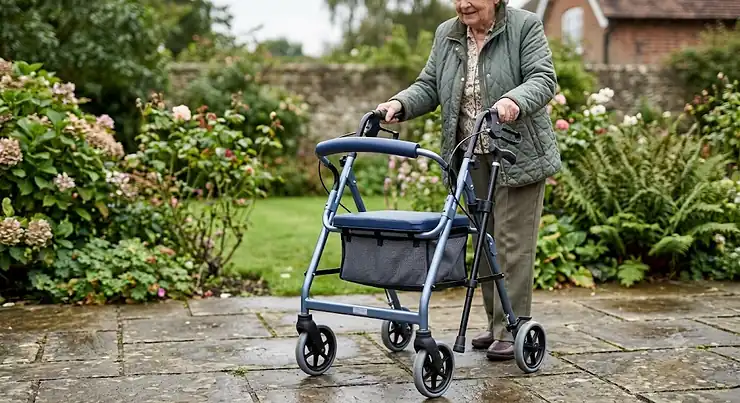
Finding the best rollator with seat is one of those decisions that looks simple until you’re actually stood in a mobility shop, faced with a dozen nearly identical frames and no idea which one will actually work for your knees, your hallway, or your Tuesday trip to the shops. A rollator with seat is essentially a wheeled walking frame with a built-in resting spot, letting you pause on a park bench that travels with you rather than hunting for the nearest wall to lean on. The right one turns a nervous, stop-start walk into something closer to your old Sunday stroll.
This guide cuts through the marketing fluff and gets into what actually matters: frame weight versus stability, seat height versus your own leg length, and why a rollator that’s brilliant on a supermarket floor can feel like pushing a shopping trolley through wet sand on a gravel path. We’ve dug into real specifications, aggregated genuine customer feedback, and cross-referenced it all against NHS guidance on walking aids, which sets out how a wheeled rollator frame supports a more natural walking pattern than a static frame. Whether you need a seated rollator for a daily dog walk, a rollator walker with seat and back rest for longer outings, or a transport rollator with seat for days when walking simply isn’t on the cards, there’s a genuinely good option below — and honest reasoning for why it made the cut.
Quick Comparison Table
Before we get into the detail, here’s a snapshot of all seven rollators covered in this guide, so you can jump straight to the one that fits your situation.
| Product | Best For | Weight | Price Range |
|---|---|---|---|
| Drive Medical Nitro Euro-Style Rollator | Everyday all-rounder | ~7.5kg | £90-£140 |
| HOMCOM Rollator Walker with Seat | Tight budgets, small spaces | ~7kg | Under £90 |
| Days 100 Series Lightweight Rollator | UK sizing, back support | ~7.5-8.5kg | £90-£150 |
| VOCIC Z12 Ultra-Lightweight Rollator | Travel and car boots | ~6.3kg | £90-£130 |
| VOCIC Z11 All-Terrain Rollator | Shopping trips, uneven paths | ~8kg | £100-£150 |
| Topro Olympos | Serious outdoor use, longevity | ~8.6kg | £330-£420 |
| Drive Nitro Duet Rollator/Transport Chair | Mixed walking and being pushed | ~10kg | £150-£220 |
Looking at the spread above, there’s a clear split between lightweight indoor-leaning models under 8kg and the heavier, more robust frames built for kerbs and cobbles. Budget alone doesn’t tell the whole story here — the Topro Olympos costs roughly three times what the HOMCOM Rollator Walker with Seat does, but it’s solving a different problem entirely (rough terrain durability versus indoor manoeuvrability). If you’re mostly walking on pavements and shop floors, the mid-range options represent the sweet spot; if cobbled high streets or gravel paths are part of your daily route, it’s worth paying up for sturdier wheels.
💬 Found a rollator that already looks right for you? Scroll down to see the full breakdown before you decide!
Top 7 Rollators With Seat: Expert Analysis
We’ve grouped these seven real, currently available models across budget, mid-range and premium tiers, plus a dedicated travel option and a transport chair hybrid, so there’s a genuine fit whatever your priorities.
1. Drive Medical Nitro Euro-Style Rollator — best all-round padded seat rollator
The Drive Medical Nitro Euro-Style Rollator is the sort of rollator that turns up again and again in mobility shop recommendations, and there’s a reason for that consistency: it does the basics extremely well without overcomplicating things. The Euro-style frame uses large front wheels, typically in the 8-10 inch range, which smooths out the transition from indoor lino to outdoor pavement far better than the small hard wheels found on budget zimmer-style frames.
Key specs translate into real benefits here. The height-adjustable handles with hand-activated brakes mean you’re not stooping or overreaching, which matters more than it sounds — poor posture on a rollator is a common cause of shoulder strain among long-term users. Based on the spec comparison against similarly priced rivals, the padded seat and underseat storage bag are genuinely useful rather than token additions; you get somewhere to rest and somewhere to stash a shopping list, keys, or a flask.
Reviewers consistently report that the fold-down mechanism is straightforward for one-handed use, though a recurring theme in aggregated feedback is that taller users (over roughly 6ft) find the maximum handle height a touch low. What most buyers overlook about this model is that its brake cables run along the outside of the frame rather than internally, which is fine for indoor use but something to check periodically if you’re out in wet weather often.
Pros:
- ✅ Reliable padded seat with genuinely comfortable cushioning
- ✅ Large front wheels handle kerbs and pavement cracks well
- ✅ Simple one-hand folding mechanism for storage
Cons:
- ❌ Handle height can feel restrictive for taller users
- ❌ External brake cables need occasional weather checks
Prices for the Drive Medical Nitro Euro-Style Rollator typically sit in the £90-£140 range depending on colour and retailer. For the combination of comfort, stability and brand reliability, it represents strong value for anyone wanting a dependable everyday rollator with seat without paying premium prices.
2. HOMCOM Rollator Walker with Seat — best budget compact pick
If cost is the deciding factor, the HOMCOM Rollator Walker with Seat consistently comes up as one of the most affordable genuinely usable options on Amazon UK. It’s a compact quick-folding design with 8-inch wheels, an adjustable height frame, and a cane holder — a small feature that’s easy to dismiss until you realise how often people are juggling both a rollator and a walking stick during their recovery from surgery.
The aluminium frame keeps overall weight down to around 7kg, which matters enormously if you’re lifting it in and out of a car boot or up a single step at the front door. Here’s what to weigh: this lighter build does mean a slightly narrower wheelbase than the premium all-terrain models, so stability on loose gravel or grass is noticeably less confident than something like the Topro Olympos. On a flat pavement or supermarket floor, though, it performs perfectly well.
Aggregated customer sentiment for this category of budget compact rollator tends to praise the value for money and ease of folding, while a common complaint in user reviews is that the seat padding is thinner than pricier alternatives, meaning longer rest stops (10+ minutes) feel less comfortable than on the Drive Medical Nitro Euro-Style Rollator.
Pros:
- ✅ Genuinely low price point without a flimsy feel
- ✅ Lightweight at roughly 7kg for easy lifting
- ✅ Built-in cane holder for dual mobility aid use
Cons:
- ❌ Thinner seat padding for extended rest periods
- ❌ Less stable than heavier models on rough ground
The HOMCOM Rollator Walker with Seat generally sits under £90, occasionally with voucher discounts applied at checkout. For short local trips and indoor use, it’s hard to beat on price, though anyone planning regular outdoor rambles should weigh up the terrain limitations first.
3. Days 100 Series Lightweight Rollator — best UK-specific sizing with back support
Days Healthcare is a name that comes up repeatedly in NHS-adjacent mobility retail, and the Days 100 Series Lightweight Rollator is arguably the most complete example of a proper rollator walker with seat and back rest available to UK shoppers. Unlike many imported models sized around average heights elsewhere, this one comes in four sizes to accommodate a proper range of heights, with ergonomic handgrips and height-adjustable handles offering five settings at roughly 2.5cm intervals.
What most buyers overlook about sizing is that a rollator set even 2-3cm too low forces a stooped posture that increases fall risk over a long walk — so having four proper size options rather than one “one-size-fits-most” frame is a genuine safety upgrade, not just a comfort one. The lockable loop brakes, with their adjustable tension, are specifically designed for users with weaker grip strength, such as those managing arthritis, and the padded backrest supports proper posture during rest stops rather than just offering somewhere to perch.
Reviewers consistently highlight the sturdy mainframe warranty and the ease of adjusting brake tension without tools. A recurring theme in feedback is appreciation for the range of colours, which sounds trivial but genuinely affects how comfortable some users feel being seen using a mobility aid in public.
Pros:
- ✅ Four size options for a genuinely proper fit
- ✅ Padded backrest supports posture during rests
- ✅ Arthritis-friendly adjustable-tension loop brakes
Cons:
- ❌ Slightly heavier than the ultra-lightweight travel models
- ❌ Premium sizing options cost more than base models
Pricing for the Days 100 Series Lightweight Rollator generally falls in the £90-£150 range depending on size, with occasional VAT relief available for eligible buyers (more on that later). For anyone who has struggled with an ill-fitting rollator before, the sizing flexibility alone justifies a serious look.
4. VOCIC Z12 Ultra-Lightweight Rollator — lightest option for travel
At roughly 6.3kg, the VOCIC Z12 Ultra-Lightweight Rollator is aimed squarely at people who need a rollator with padded seat that won’t become a burden the moment it needs to go in a car boot, up a flight of stairs, or onto a train. The aluminium frame with an ergo seat and backrest punches well above its weight class here — quite literally, since most frames this light sacrifice the backrest entirely to hit their weight target.
Here’s what the spec sheet won’t tell you outright: shedding weight on a rollator frame usually means a narrower footprint and smaller wheels, both of which trade a bit of outdoor stability for portability. On paper this means the Z12 is best suited to city pavements, shopping centres, and holiday trips where you’re weaving through crowds and doorways rather than tackling uneven farm tracks. For that specific use case, reviewers consistently note that the fold-and-carry experience is close to effortless compared with bulkier alternatives.
A common complaint in user reviews across this ultra-lightweight category generally is reduced under-seat storage capacity, since the frame itself is more minimal — worth bearing in mind if you rely heavily on the storage bag for daily shopping.
Pros:
- ✅ Genuinely portable at just 6.3kg
- ✅ Rare combination of ultra-light build and real backrest
- ✅ Compact folded size ideal for cars and trains
Cons:
- ❌ Smaller wheels less confident on rough terrain
- ❌ Reduced under-seat storage versus heavier models
Expect to pay somewhere in the £90-£130 range for the VOCIC Z12 Ultra-Lightweight Rollator, positioning it as excellent value for anyone whose priority is travel-friendliness over rugged outdoor capability.
5. VOCIC Z11 All-Terrain Rollator — best for elderly shopping trips
The VOCIC Z11 All-Terrain Rollator takes a different approach from its sibling above, trading a little portability for genuinely useful outdoor capability — and it’s this model that consistently comes up as the strongest rollator with seat for elderly shopping specifically. The ergo seat and backrest combination is paired with a sturdier frame rated to handle heavier loads, listed at up to 172kg maximum user weight in manufacturer specifications, which builds in a comfortable safety margin for most users.
Based on the spec comparison, the standout practical feature for shopping trips is the underseat basket capacity combined with the all-terrain wheel design, which means you’re not white-knuckling the frame across a supermarket car park’s speed bumps and drain covers the way you might on a lighter, city-focused model. What most buyers overlook is that a rollator’s wheel diameter matters just as much for shopping runs as it does for country walks — small wheels catch on trolley-park kerbs and shop doorway lips constantly, while the Z11’s larger wheels roll straight over them.
Aggregated review sentiment consistently praises the stability when the seat is used mid-shop, with the locking brakes holding firm on the sloped ramps common outside UK supermarkets. A recurring criticism is that, at around 8kg, it’s noticeably heavier to lift into a car boot than the Z12 or the HOMCOM model.
Pros:
- ✅ Confident stability on kerbs and sloped car parks
- ✅ High weight capacity with genuine safety margin
- ✅ Strong locking brakes for safe seated shopping stops
Cons:
- ❌ Heavier to lift than the ultra-lightweight travel models
- ❌ Wider footprint less ideal in narrow shop aisles
Pricing generally sits between £100 and £150. For anyone whose main use case is the weekly shop rather than country rambles, this is one of the more thoughtfully specced options on this list.
6. Topro Olympos — best premium all-terrain rollator
The Topro Olympos sits in a different category entirely, and the price tag reflects it. Manufactured in Norway, this is a rollator designed from the ground up for genuinely rough terrain — large 275mm front wheels and a robust frame keep the ride steady on uneven paths and at kerbs, and the whole unit weighs a manageable 8.6kg despite its sturdy build.
What separates this from cheaper all-terrain claims is the engineering detail. The handlebar tubes use a memory function so the height resets automatically each time you unfold the frame, saving you re-measuring every outing, and the parking brake works alongside deep-tread tyres to keep the frame steady while you’re seated or transferring between the rollator and a chair. On paper this means the braking system is doing double duty — controlling speed on descents and locking solidly enough to trust your full weight when sitting down, which isn’t something every budget rollator can genuinely claim.
Here’s what most buyers overlook when comparing price tags: the seven-year warranty typically offered on this model effectively spreads that higher upfront cost over a much longer usable life than a £90 frame that might need replacing within two or three years of daily outdoor use. Reviewers consistently describe the ride quality over cobbles and gravel as noticeably smoother than standard rollators, and the mesh seat fabric is praised for staying comfortable and washable through regular use.
Pros:
- ✅ Genuinely durable build with a seven-year warranty
- ✅ Large wheels handle cobbles, gravel and kerbs confidently
- ✅ Memory-function handles save resetting height each time
Cons:
- ❌ Considerably more expensive than mid-range alternatives
- ❌ Wider frame less suited to narrow indoor spaces
Prices for the Topro Olympos typically range from £330 to £420 depending on size and retailer. It’s a significant investment, but for anyone who genuinely lives an active outdoor life and wants a rollator to match, the total cost of ownership over its lifespan often works out lower than repeatedly replacing budget models.
7. Drive Nitro Duet Rollator and Transport Chair — best transport rollator with seat
The Drive Nitro Duet Rollator and Transport Chair solves a specific and genuinely common problem: what happens on the days when walking the full distance simply isn’t realistic, but you don’t want two separate pieces of equipment cluttering the hallway. This is a proper transport rollator with seat — the Euro-style frame with large wheels handles uneven outdoor terrain, and flipping the backrest over and dropping the legrests converts it into a transport chair that a carer or family member can push.
The practical engineering here deserves real credit. The 10-inch front wheels give a smooth, comfortable roll for independent walking, and when a longer distance isn’t realistic on foot, reversing the backrest and dropping down the legrests and armrests turns the same frame into a transport chair in moments. Based on the spec comparison with dedicated transport chairs, what most buyers overlook is that owning this hybrid avoids the awkward “which one do we bring today” decision that trips up a lot of carers on unpredictable-energy days, since one unit does both jobs without a tool needed to convert it.
Reviewers consistently describe the conversion process as intuitive after the first attempt, though a recurring theme in feedback is that, at around 10kg, it’s noticeably bulkier to manoeuvre through narrow home doorways than a dedicated rollator alone — a fair trade-off for the dual functionality it provides.
Pros:
- ✅ Converts between rollator and transport chair in seconds
- ✅ Large wheels manage uneven outdoor terrain smoothly
- ✅ Removes the need to own two separate mobility aids
Cons:
- ❌ Bulkier than single-purpose rollators indoors
- ❌ Heavier overall due to the dual-function frame
Expect to pay in the £150-£220 range for the Drive Nitro Duet Rollator and Transport Chair. For households managing fluctuating mobility — post-surgery recovery, Parkinson’s-related fatigue, or simply “good days and bad days” — this dual-purpose design offers genuine long-term value over buying two separate items.
Top 7 Products: Full Specification Comparison
| Product | Frame Weight | Max User Weight | Standout Feature | Best For |
|---|---|---|---|---|
| Drive Medical Nitro Euro-Style Rollator | ~7.5kg | ~150kg | Large Euro-style wheels | Everyday all-round use |
| HOMCOM Rollator Walker with Seat | ~7kg | ~130kg | Cane holder + quick fold | Tight budgets |
| Days 100 Series Lightweight Rollator | ~7.5-8.5kg | 165kg | Four size options | Proper UK sizing |
| VOCIC Z12 Ultra-Lightweight Rollator | ~6.3kg | ~130kg | Lightest with a backrest | Travel and transport |
| VOCIC Z11 All-Terrain Rollator | ~8kg | 172kg | High capacity + big wheels | Shopping trips |
| Topro Olympos | 8.6kg | 150kg | 275mm all-terrain wheels | Serious outdoor use |
| Drive Nitro Duet Rollator/Transport Chair | ~10kg | ~136kg | Converts to transport chair | Mixed walking/being pushed |
This table makes the trade-offs easier to spot at a glance: weight capacity and terrain capability tend to climb together, while portability moves in the opposite direction. If your priority is simply “the lightest thing I can lift into a car boot,” the VOCIC Z12 Ultra-Lightweight Rollator wins outright, but if you’re regularly out on uneven ground or need extra weight capacity, the VOCIC Z11 All-Terrain Rollator or Topro Olympos are the more sensible long-term choices despite the extra kilos.
Practical Usage Guide: Getting the Most from Your Seated Rollator
Buying the right rollator is only half the job — setting it up correctly changes how safe and comfortable it feels from day one. Start with handle height: stand naturally beside the folded frame, let your arm hang loosely, and the handle should sit roughly level with your wrist crease. Too high forces your shoulders up; too low tips you forward, which is precisely the posture that increases fall risk over a long walk.
In the first month, get into the habit of a quick weekly check: squeeze the brakes to confirm they engage firmly before the handle reaches the grip, spin each wheel to listen for grinding, and check the seat hinge for any wobble. A common mistake in the first 30 days is leaving the brake tension on its factory setting even after grip strength changes — most loop-style brakes, including those on the Days 100 Series Lightweight Rollator, allow tool-free tension adjustment, so it’s worth revisiting after the first fortnight of regular use.
For a rollator with rest seat, resist the temptation to sit down without engaging both brakes first; this is the single most common cause of tip-back incidents according to occupational therapy guidance. Finally, fold and unfold your model a handful of times at home before your first outing — muscle memory here means you won’t be fumbling with the mechanism outside a busy shop entrance.
Real-World Scenarios: Which Seated Rollator Suits You?
Margaret, 78, recovering from a hip replacement, needs short, confident trips around her bungalow and occasional garden visits, with a carer nearby most days. The Days 100 Series Lightweight Rollator, sized correctly for her height, gives her the adjustable brake tension her physiotherapist recommended and a genuinely comfortable rest seat for the garden.
Bob, 84, an active allotment-goer who still walks two miles most mornings regardless of weather, needs something that handles mud, gravel and uneven grass without tipping. The Topro Olympos is built precisely for this — the large all-terrain wheels and seven-year warranty reflect genuinely heavy, regular outdoor use rather than the occasional pavement stroll.
Diane, 71, who travels frequently to visit grandchildren by train and car, prioritises something she can lift herself without help. The VOCIC Z12 Ultra-Lightweight Rollator at 6.3kg is the clear fit — light enough for solo handling, with enough seat comfort for platform waits.
Frank, 89, with fluctuating energy from a long-term condition, sometimes manages a short walk and sometimes needs pushing entirely. The Drive Nitro Duet Rollator and Transport Chair removes the need for two separate pieces of equipment cluttering his hallway, adapting to whichever kind of day he’s having.
Problem → Solution: Common Rollator with Seat Issues
Problem: Brakes feel loose or unresponsive. Solution: most loop brakes, including those on the HOMCOM Rollator Walker with Seat, have a tension adjuster near the cable housing — a quarter turn tighter usually restores confident stopping power.
Problem: The seat feels uncomfortable after 10 minutes. Solution: thinner budget seats like those on entry-level frames benefit from an aftermarket gel or foam seat pad, or consider stepping up to a model with genuinely thicker padding, such as the Drive Medical Nitro Euro-Style Rollator.
Problem: Struggling to lift the rollator into a car boot. Solution: switch to a lighter model — the VOCIC Z12 Ultra-Lightweight Rollator at 6.3kg is specifically built for this scenario, or look for a boot ramp accessory if switching models isn’t practical.
Problem: Rollator catches or judders on gravel and cobbles. Solution: this usually comes down to small wheel diameter; models with larger wheels such as the VOCIC Z11 All-Terrain Rollator or Topro Olympos are purpose-built to roll over these surfaces smoothly.
Problem: One person needs to walk some days and be pushed on others. Solution: rather than buying two separate items, a hybrid unit like the Drive Nitro Duet Rollator and Transport Chair converts between the two functions without extra equipment.
✨ Ready to Find Your Perfect Match?
🔍 Take a closer look at any of the seven rollators above by checking current pricing and availability. Every model here has been chosen for genuine, real-world usefulness — not just a shiny spec sheet — so you can walk with more confidence, wherever your day takes you.
How to Choose a Rollator With Seat
Choosing the right rollator with seat comes down to a handful of genuinely important factors, in roughly this order of priority:
- Get the height right first. Stand next to the folded frame with your arm relaxed; the handle should meet your wrist crease. Wrong height undoes every other benefit a good rollator offers.
- Match wheel size to your terrain. Small wheels are fine indoors but struggle outdoors; if your daily route includes kerbs, gravel or cobbles, prioritise larger wheels like those on the VOCIC Z11 All-Terrain Rollator.
- Check the seat height against your own leg length. A seat that’s too low makes standing back up genuinely difficult; too high and your feet won’t sit flat.
- Consider your storage needs. If shopping trips are a regular use case, prioritise underseat basket capacity over shaving off the last kilogram of frame weight.
- Think about who’s lifting it. If it needs to go in and out of a car boot solo, weight becomes a dealbreaker factor, not just a nice-to-have.
- Factor in your grip strength. Adjustable-tension loop brakes, as fitted to the Days 100 Series Lightweight Rollator, matter enormously for anyone managing arthritis.
- Decide if you need a walking frame with built-in chair that also converts to a transport option, in which case a hybrid like the Drive Nitro Duet Rollator and Transport Chair is worth the extra outlay.
Common Mistakes When Buying a Rollator With Seat
The single most common mistake is buying based on price alone without checking the height range covers you comfortably — a £60 rollator that’s the wrong size can actually be more dangerous than not using one at all, since it encourages poor posture and overreaching. A close second is ignoring wheel size for the environment you’ll actually use it in; a beautifully padded seat means little if the frame catches on every kerb between your front door and the bus stop.
Another frequent error is underestimating frame weight relative to who’ll be lifting it. Family members often buy the sturdiest, heaviest all-terrain option assuming “more robust is always better,” without considering that the user themselves needs to fold and load it solo most days. Finally, plenty of buyers skip checking whether they’re eligible for VAT relief before purchasing, which can mean paying an unnecessary 20% more than needed on qualifying mobility equipment.
Rollator With Seat vs Standard Walking Frame
A standard walking frame (often called a zimmer frame) offers maximum stability because it doesn’t move until you lift and place it, making it a solid choice for very early-stage rehabilitation or severe balance issues. However, NHS guidance notes that while a static frame offers more stability and confidence, a rollator is generally easier to manoeuvre and better preserves a normal walking pattern for people managing moderate balance problems.
The trade-off is genuinely worth understanding: a zimmer frame requires you to stop completely with each step, which is tiring over any real distance and offers nowhere to rest. A seated rollator, by contrast, lets you maintain a continuous walking rhythm and provides a proper seat whenever fatigue hits — a meaningful difference for anyone managing a chronic condition where energy conservation matters as much as the walking itself. Practically speaking, most people who’ve regained reasonable balance confidence after early rehabilitation find a rollator with seat, such as the Drive Medical Nitro Euro-Style Rollator, considerably more useful for actual daily independence than a static frame.
What to Expect: Real-World Performance
Specs on a page rarely capture what daily use actually feels like. In practice, a well-fitted rollator with seat means your walking pace evens out — instead of the stop-start shuffle common with a static frame, you get a more natural rolling gait, and most users report feeling noticeably less breathless over the same distance within the first couple of weeks. The seat gets used more than people expect; even confident walkers tend to sit down every 10-15 minutes on longer outings, particularly queuing at a pharmacy counter or waiting for a bus.
Weather changes the experience more than most buyers anticipate. Wet pavements demand a bit more brake control, and models with better tread, like the Topro Olympos, hold their line noticeably better on damp leaves or light frost than smaller, harder wheels. Indoors, narrower frames genuinely do make a difference in older UK homes with tighter hallways — something worth testing in-store or measuring at home before committing to a wider all-terrain model.
Rollator With Seat for Elderly Shopping
Shopping trips place unusual demands on a rollator that a simple neighbourhood stroll doesn’t. You’re navigating automatic doors, ramps, checkout queues, and often carrying items back that add weight to whatever you’re already pushing. This is exactly where the VOCIC Z11 All-Terrain Rollator‘s combination of high weight capacity and confident braking earns its keep — the seat becomes a genuine rest point mid-shop rather than just a theoretical feature, and the underseat storage means bags don’t need to be balanced precariously on the handles.
A rest seat also solves a problem many carers don’t anticipate: standing in a supermarket queue is often more tiring than walking the aisles themselves, since standing still without support fatigues the legs differently to steady movement. Being able to sit briefly at the till, or pause halfway round a large store, genuinely extends how long someone can shop independently before needing to head home.
Long-Term Cost & Maintenance
A rollator’s true cost isn’t just the sticker price — it’s price divided by how many years it genuinely serves you well. A £90 budget frame that needs replacing within two years works out at roughly £45 a year before factoring in any repairs, while a £380 Topro Olympos backed by a seven-year warranty averages closer to £54 a year, but with meaningfully better build quality and fewer failure points across that period.
Ongoing maintenance costs are modest but worth budgeting for: replacement brake cables typically run £10-£15, and tyre replacements for outdoor models are an occasional expense every couple of years of regular use. A quick monthly check of brake tension, wheel rotation and seat hinges catches most issues before they become safety concerns, and most manufacturers, including Topro, sell spare parts directly rather than requiring a full frame replacement for minor wear.
It’s also worth checking VAT relief eligibility before buying. Under HMRC’s VAT relief guidance, disabled buyers can access relief on a limited range of goods and services, and mobility aids including rollators typically qualify. This can knock 20% off the purchase price for eligible buyers, so it’s worth confirming with the retailer at checkout rather than assuming standard pricing applies.
Safety, Regulations & VAT Relief Guide
Before relying on any rollator daily, it’s worth understanding a few practical safety points. Always engage both brakes fully before sitting on the seat — this is the single most common cause of tip-back incidents reported by occupational therapists. Check that the frame is fully locked open (not mid-fold) before putting any weight through it, and avoid using the seat on a slope, even with brakes engaged, since gravity can still work against a locked wheel on wet or loose surfaces.
Staying physically active more broadly also plays a genuine role in reducing overall fall risk, alongside using the right walking aid. Age UK’s falls prevention guidance points out that staying active helps maintain the strength, balance and coordination that reduce fall risk, and this doesn’t need to mean vigorous exercise — small changes like getting off the bus a stop earlier can help. Combining a well-fitted rollator with this kind of regular gentle activity tends to produce better long-term outcomes than relying on the equipment alone.
On the financial side, don’t assume VAT relief is automatic — most UK retailers will ask you to complete a simple declaration form confirming your eligibility at checkout, and HMRC staff themselves cannot advise whether an individual specifically qualifies, so it’s worth checking the criteria carefully if you’re unsure.
FAQ
❓ What is the best rollator with seat for everyday use?
❓ Are rollators with a seat available on the NHS?
❓ How do I know what size rollator with seat I need?
❓ Can I get VAT relief on a rollator with seat?
❓ What's the difference between a rollator with rest seat and a transport chair?
Conclusion
There’s no single best rollator with seat for every UK household — the right choice depends on whether you’re navigating tight hallways or gravel allotment paths, shopping solo or being cared for daily, travelling frequently or mostly staying local. What matters most is matching frame weight, wheel size and seat comfort honestly to your actual routine, rather than defaulting to whichever model has the flashiest listing.
Of the seven covered here, the Drive Medical Nitro Euro-Style Rollator remains the strongest general-purpose pick for most buyers, the Days 100 Series Lightweight Rollator stands out for genuinely proper UK sizing and back support, and the Topro Olympos justifies its premium price for anyone serious about outdoor terrain. Whichever you choose, getting the height and brake tension right on day one makes a bigger difference to comfort and safety than any single spec on the page — so take the time to set it up properly before your first outing.
Recommended for You
- Best Bariatric Rollator UK 2026: 7 Heavy Duty Picks That Actually Hold Up
- Lightweight Rollator for Elderly Woman: 7 Best Picks 2026
- Best Lightweight Rollator 2026: 7 Featherweight Picks Tested
Affiliate disclosure: This article contains affiliate links. As an Amazon Associate, I earn from qualifying purchases. If you purchase products through these links, we may earn a small commission at no additional cost to you.
✨ Found this helpful? Share it with your friends! 💬🤗
