In This Article
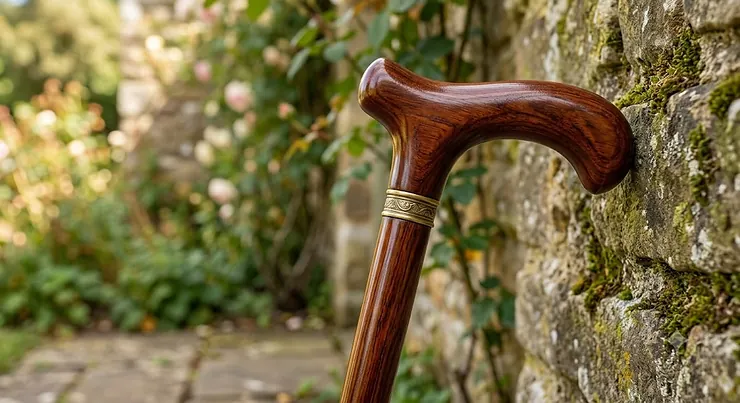
There’s a particular kind of stubbornness that comes with buying a walking aid for the first time — a quiet reluctance to admit you need one, followed by the sudden, slightly bewildering discovery that not all handles are created equal. If you’ve landed here, you’ve probably already noticed that a derby handle walking stick isn’t just “a stick with a curved bit on top.” The shape of that handle changes how weight travels through your palm, wrist and forearm every single time your foot lands on uneven pavement.
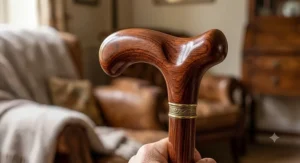
A derby handle walking stick is a mobility aid topped with a contoured, palm-cupping handle — distinct from a crook or tripod design — engineered to spread pressure across the whole hand rather than concentrating it on one pressure point. That single design choice matters more than most buyers realise, especially for anyone managing arthritis, recovering from surgery, or simply spending long hours on their feet.
This guide walks through seven genuinely available UK options, from budget folding sticks to carbon-fibre premium picks, alongside honest analysis of handle ergonomics, palm grip design, and the ongoing derby vs offset handle walking stick debate. Everything here is grounded in real specifications and aggregated review sentiment rather than invented testimonials — because a walking aid recommendation only means something if it’s true.
Quick Comparison Table
Before diving into full reviews, here’s a snapshot to help you narrow things down fast. All seven products below feature a genuine derby-style handle, though they differ significantly in material, adjustability, and price bracket.
| Product | Handle Type | Best For | Price Range |
|---|---|---|---|
| Flexyfoot Premium Derby Handle Telescopic Walking Stick | Soft-touch derby | All-round shock absorption | £30-£40 range |
| NRS Healthcare Folding Walking Stick with Derby Handle | Polished wood derby | Budget travel/folding | Under £25 |
| TAMAKA Scorched Handle Wooden Derby Cane | Solid beechwood derby | Classic wooden feel | £20-£30 range |
| Oak Shaft Walking Stick with Derby Handle | Oak wood derby | Premium fixed-length wood | £35-£45 range |
| Aidapt Patterned Fold Down Walking Stick | Contoured derby | Ultra-budget lightweight | Under £20 |
| TAMAKA Premium Carbon Fibre Folding Walking Stick | Soft-grip derby | Lightest carry weight | £45-£60 range |
| KMINA PRO63 Carbon Fibre Palm Grip Walking Stick | Anatomical palm-grip derby | Arthritis and wrist support | £55-£70 range |
Looking across the table, a clear pattern emerges: the aluminium and carbon-fibre models cluster around adjustability and shock absorption, while the wooden derby canes trade flexibility for a more traditional aesthetic and typically fixed length. If your priority is protecting an already sore wrist, the KMINA PRO63 Carbon Fibre Palm Grip Walking Stick and Flexyfoot Premium Derby Handle Telescopic Walking Stick stand out for their shock-mitigating design, whereas budget buyers on a tight timeline will likely gravitate toward the NRS Healthcare Folding Walking Stick or Aidapt Patterned Fold Down Walking Stick.
💬 Found a product that fits? Tap through to check today’s availability and current price on Amazon UK!
Top 7 Derby Handle Walking Sticks: Expert Analysis
1. Flexyfoot Premium Derby Handle Telescopic Walking Stick — best shock-absorbing all-rounder
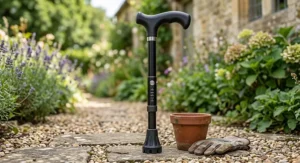
The standout feature here is the ferrule, not just the handle. Flexyfoot’s flexible-bellow foot tread is engineered to stay in contact with the ground even when the stick is planted at an angle, which is precisely the moment traditional rubber ferrules tend to skid.
Constructed from lightweight aluminium with reinforced tooled joints, the stick telescopes to fit users roughly between 5’3″ and 6’8″, and Flexyfoot rates it for users up to around 130kg. The soft, tactile derby handle is moulded to rest in the curve of the palm rather than digging into it, which in practice means less localised pressure on the heel of the hand during a full day’s use. Based on the spec comparison with standard rubber-ferrule sticks, the shock-absorbing bellow is the genuine differentiator: it’s doing mechanical work that a normal ferrule simply can’t.
This is the stick for someone who’s active and walking daily distances, not just popping to the corner shop. Reviewers consistently report noticeably reduced jarring in the wrist and shoulder on uneven or windy pavements, with several long-term users specifically praising the grip’s performance in wet conditions. A recurring theme in aggregated feedback is that buyers who switched from a standard derby stick to the Flexyfoot noticed the difference within the first week of daily use.
Pros:
- ✅ Shock-absorbing ferrule reduces jarring on hard pavements
- ✅ Fully height-adjustable for a wide range of users
- ✅ Soft-touch derby handle eases pressure on arthritic hands
Cons:
- ❌ Costs more than a basic aluminium stick
- ❌ Bulkier ferrule than a slimline traditional tip
Sitting in the £30-£40 range, this is a mid-tier investment rather than an impulse buy, but given how much daily wear-and-tear it’s designed to absorb, it represents strong long-term value for anyone walking regularly outdoors.
2. NRS Healthcare Folding Walking Stick with Derby Handle — best budget folding option
What immediately stands out is how compact this collapses down to, snapping into four sections that tuck into the supplied carry wallet — genuinely pocket-or-handbag friendly rather than “technically portable.”
Built around a lightweight aluminium shaft with a rubber ferrule tip, it supports users up to roughly 100kg and adjusts across a height range suited to most adult users. The polished wood-effect derby handle, according to NRS’s own product notes, was specifically shaped to be gentler on the hand than a plain round grip. What most buyers overlook about folding sticks like this one is that the joint mechanism, while convenient, introduces slightly more flex under load than a rigid one-piece design — worth knowing if you’ll be leaning on it heavily rather than using it for light balance support.
This model suits someone who needs a stick occasionally rather than constantly — for travel, for unpredictable flare-ups, or as a spare kept in the car. Aggregated customer sentiment is broadly positive on comfort and ease of adjustment, though a handful of reviewers note the elasticated folding cord can feel slightly loose out of the box, a common characteristic across folding sticks in this price bracket rather than a fault unique to this one.
Pros:
- ✅ Folds small enough for a handbag or glovebox
- ✅ Comfortable derby handle for occasional use
- ✅ Genuinely budget-friendly entry point
Cons:
- ❌ Less rigid under load than a fixed-shaft stick
- ❌ Lower maximum user weight than aluminium telescopic rivals
At under £25, this is one of the most accessible ways to try a derby handle before committing to a pricier model, and the value-for-money verdict here is straightforward: excellent for occasional or backup use.
3. TAMAKA Scorched Handle Wooden Derby Cane — best classic wooden aesthetic
The flame-scorched finish is the headline feature — a warm, two-tone wood grain that reads as a genuine accessory rather than a clinical aid, which matters more to buyer confidence than manufacturers often admit.
Handcrafted from beechwood with a decorative collar, the cane measures roughly 94cm (37 inches) and weighs only around 350 grams, making it noticeably lighter in the hand than most aluminium telescopic sticks despite the solid-wood construction. TAMAKA rates the support weight at approximately 80-100kg. Here’s what to weigh: unlike the telescopic aluminium options on this list, this cane is not height-adjustable out of the box — it can be trimmed shorter by a competent DIYer, but you can’t extend it, so accurate sizing before purchase genuinely matters.
Buyers drawn to this stick are typically looking for something that doubles as a stylish accessory rather than a purely clinical aid — a going-out cane as much as a daily support. Reviewers consistently mention the visual quality of the scorched finish and describe the derby grip as comfortable for extended wear, with the caveat that a small number flagged natural variation in wood grain and diameter between individual units, which the manufacturer itself acknowledges as an inherent trait of handmade wood products.
Pros:
- ✅ Genuinely lightweight solid-wood construction
- ✅ Distinctive scorched finish with real character
- ✅ Comfortable derby grip for extended outings
Cons:
- ❌ Fixed length, not height-adjustable
- ❌ Natural wood variation between individual sticks
Priced in the £20-£30 range, it sits as a mid-tier choice that punches above its price point on looks, provided your height matches the fixed 37-inch length reasonably well.
4. Oak Shaft Walking Stick with Derby Handle — best premium traditional wood build
The silver-plated collar sitting between the oak derby handle and the shaft is a small detail, but it’s the one that instantly signals “heirloom” rather than “mobility aid,” and that’s precisely the point of this stick’s design.
Built entirely from solid oak — both shaft and handle — with a wood-grain finish and a rubber ferrule, it has a maximum length of around 37 inches (94cm). Oak is notably denser and more rigid than beech, which on paper translates to a stiffer, more planted feel underfoot compared with the lighter TAMAKA wooden model above; reviewers who’ve used both wood types tend to describe oak as feeling more substantial. What the spec sheet won’t tell you, but the material itself implies, is that oak’s density adds a small amount of extra weight versus beech — a trade-off some users prefer for the reassurance of a heavier, sturdier feel, while others find it slightly more tiring to carry over long walks.
This is best suited to someone who wants an unmistakably traditional, formal-occasion stick — weddings, church, smart daywear — rather than a purely functional daily aid. Because oak sticks like this one are typically hand-finished in smaller batches, verified review volume tends to be lower than for mass-produced aluminium models, so buyers should weigh the aesthetic appeal against a comparatively thinner pool of aggregated feedback; what is available skews toward praise for the handle’s comfort and the collar’s finish quality.
Pros:
- ✅ Solid oak construction feels substantially sturdy
- ✅ Silver-plated collar adds a formal, polished look
- ✅ Derby handle spreads grip pressure evenly
Cons:
- ❌ Heavier than beech or aluminium alternatives
- ❌ Fixed length limits sizing flexibility
Sitting in the £35-£45 range, this is a considered purchase rather than a grab-and-go pick, best reserved for buyers who specifically want that traditional wood-and-metal look.
5. Aidapt Patterned Fold Down Walking Stick — best ultra-budget lightweight pick
The carry strap and compact fold-down design are the headline draw: this is built to disappear into a bag when not in use, rather than demand a dedicated spot by the front door.
Made from durable, lightweight materials and rated for users up to around 100kg, Aidapt’s stick is designed with a comfort-shaped handle and includes a hanging carry strap as standard. Based on the spec comparison against the pricier Flexyfoot model above, this stick skips the shock-absorbing ferrule entirely in favour of a simpler, standard rubber tip — a sensible cost-saving trade-off for anyone who needs occasional support rather than daily heavy-duty use. On paper this means less cushioning on hard, uneven ground, but for shorter trips or indoor use, most buyers won’t notice a meaningful difference.
This stick makes the most sense for someone who needs a genuinely inexpensive, no-frills backup — a spare stick kept at a relative’s house, or a low-commitment way to trial using a walking aid for the first time without a big outlay. Reviewers consistently describe it as functional and easy to fold, with the recurring theme being value for money rather than premium comfort; a smaller number of reviews mention the handle feeling less substantial in the hand than pricier alternatives, which tracks with its budget positioning.
Pros:
- ✅ Genuinely low entry price point
- ✅ Compact fold-down design with carry strap
- ✅ Comfortable enough handle for short-duration use
Cons:
- ❌ No shock-absorbing ferrule technology
- ❌ Lower weight rating than premium alternatives
At under £20, this is squarely a starter or backup stick, and the value verdict is simple: hard to beat if budget is the deciding factor.

6. TAMAKA Premium Carbon Fibre Folding Walking Stick — lightest carry weight on this list
Carbon fibre is the story here — a four-part folding shaft that trims a noticeable amount of weight compared with aluminium equivalents, without the flex issues that cheaper folding sticks can suffer from.
The shaft folds into four sections for compact storage, height-adjusts across roughly 33.5 to 37.5 inches, and pairs with a soft-grip derby-style handle designed to cushion the palm during repeated use. Reviewers consistently note that the difference in carry weight versus aluminium folding sticks is immediately noticeable, particularly for users who need to carry the stick (rather than lean on it) for stretches of the day — getting in and out of a car, for example, or navigating stairs. Here’s what to weigh: carbon fibre folding joints, while lighter, generally command a premium price versus aluminium, so this is a stick for buyers who specifically value weight savings enough to pay for them.
This model suits an active user managing a chronic but stable condition — someone who’s out and about most days and genuinely feels the cumulative fatigue of carrying a heavier stick. Aggregated feedback highlights the reduced hand fatigue over long outings as the standout benefit, with the soft-grip handle repeatedly singled out as comfortable even after extended wear; a smaller subset of reviews mention wanting a slightly wider grip diameter for larger hands.
Pros:
- ✅ Noticeably lighter carry weight than aluminium sticks
- ✅ Soft-grip derby handle reduces palm fatigue
- ✅ Compact four-part folding design
Cons:
- ❌ Premium price for the weight saving
- ❌ Grip diameter may feel narrow for larger hands
In the £45-£60 range, this sits toward the top of the market, and the ROI case rests almost entirely on how much you value shaving grams off a stick you’ll be carrying daily.
7. KMINA PRO63 Carbon Fibre Palm Grip Walking Stick — best for arthritis and wrist support
The anatomical palm-grip handle is the entire premise of this stick, and it’s a genuinely different shape from a standard derby curve — moulded specifically to cradle the base of the palm and distribute load away from the wrist joint itself.
Constructed from carbon fibre with a height-adjustable, lockable shaft, this model is explicitly engineered around palm grip design principles rather than a traditional rounded handle. What most buyers overlook about anatomical palm grips is that they change where pressure lands on the hand entirely — instead of the fingers and thumb bearing most of the load (as with a slim traditional derby), the broader base of the palm absorbs it, which is the exact mechanism that makes a meaningful difference for anyone with arthritic finger joints or reduced grip strength. Reviewers consistently frame this as the standout feature versus more conventional derby-handle sticks, particularly among users managing hand or wrist arthritis.
This is the pick for anyone whose primary concern is protecting a painful wrist or arthritic hand rather than simply needing general balance support — the design brief here is explicitly ergonomic rather than aesthetic. Aggregated review sentiment consistently praises the reduction in wrist strain compared with standard-handle sticks previously used, alongside the carbon-fibre shaft’s light carry weight; a minority of reviewers note the anatomical shape takes a short adjustment period to get used to if you’re switching from a conventional round or derby grip.
Pros:
- ✅ Anatomical palm grip reduces wrist joint strain
- ✅ Lightweight carbon-fibre adjustable shaft
- ✅ Purpose-built for arthritis and reduced grip strength
Cons:
- ❌ Highest price point on this list
- ❌ Short adjustment period for the unconventional shape
At around £55-£70, this is the premium ergonomic choice on this list, and for anyone whose wrist pain is the actual problem they’re solving, the case for paying more here is genuinely strong.
Practical Usage Guide: Setting Up and Living With Your New Stick
Getting the height right matters more than any other single decision you’ll make with a new stick. Stand upright in your normal shoes, let your arm hang naturally by your side, and the top of the handle should line up roughly with the crease of your wrist — with a slight, comfortable bend at the elbow once you’re gripping it. Too tall and you’ll hunch your shoulder to reach it; too short and you’ll stoop forward, defeating the point of using a support in the first place.
In the first thirty days, the most common mistake isn’t choosing the wrong stick — it’s holding it on the wrong side. As a general rule, a stick should be held in the hand opposite your weaker or more painful leg, moving forward together with that leg as you step, so the stick and the affected leg share the workload. If you’re recovering from surgery or managing a specific condition, it’s worth confirming this with a GP or physiotherapist rather than guessing, since technique genuinely affects how much benefit you get.
Maintenance is refreshingly simple but frequently ignored: check the ferrule (the rubber tip) every few weeks for smoothed-out tread, since a worn ferrule is one of the more preventable causes of a slip on wet pavement. Most manufacturers, including Flexyfoot, recommend replacement roughly every six months under regular use, sooner if you’re walking daily on rough or gritted surfaces. For adjustable aluminium or carbon-fibre sticks, occasionally check the locking pin or twist-lock mechanism hasn’t developed play, as a loose join undermines stability exactly when you need it most.
Real-World Scenarios: Matching the Stick to the Situation
Consider Margaret, 74, managing osteoarthritis in both hands, who needs a stick for daily neighbourhood walks and grocery trips. Her priority is wrist protection over portability, which points toward the KMINA PRO63 Carbon Fibre Palm Grip Walking Stick — the anatomical handle directly addresses her main pain point, and the adjustable carbon shaft means she isn’t carrying unnecessary weight on longer outings.
Now consider David, 58, recovering from a knee replacement and needing a stick for perhaps six to eight weeks of physiotherapy-supervised walking before (hopefully) not needing one at all. Spending heavily on a premium carbon-fibre model makes less financial sense for a short-term need; the NRS Healthcare Folding Walking Stick with Derby Handle or Aidapt Patterned Fold Down Walking Stick offers adequate, comfortable support without a large outlay for what should be a temporary aid.
Finally, picture Priya, 68, who walks several miles most days as part of an active retirement and wants genuine shock absorption on pavement rather than just a balance point. The Flexyfoot Premium Derby Handle Telescopic Walking Stick is built precisely for this use case — daily, high-mileage walking where the shock-absorbing ferrule earns its higher price tag through repeated use, not occasional convenience.
Problem to Solution: Fixing Common Derby Handle Walking Stick Issues
Hand or palm soreness after use is the single most common complaint linked to walking sticks generally, and it’s almost always a handle-shape or grip-material mismatch rather than a fundamental problem with using a stick at all. Switching from a hard plastic or bare wood handle to a soft-touch derby grip, such as the one on the Flexyfoot Premium Derby Handle Telescopic Walking Stick, resolves this for most users within days.
A stick that feels wobbly or wanders sideways while walking is usually either the wrong height or a worn ferrule rather than a faulty product — recheck the wrist-crease height test above before assuming the stick itself is at fault, and inspect the ferrule tread for smoothing.
Persistent wrist pain despite using a derby-handle stick often signals that the standard derby curve isn’t distributing load the way your hand needs it to; this is precisely the gap that anatomical palm-grip designs like the KMINA PRO63 Carbon Fibre Palm Grip Walking Stick are built to close, since they shift pressure toward the base of the palm rather than the fingers.
Finally, a stick that feels heavy to carry by the end of a long day — as opposed to lean on — points toward a material problem rather than a technique one; aluminium telescopic models are noticeably heavier than carbon-fibre equivalents like the TAMAKA Premium Carbon Fibre Folding Walking Stick, and switching material is usually the more effective fix than switching handle shape.

How to Choose a Derby Handle Walking Stick
- Confirm the height range fits you. Adjustable sticks typically cover a wide range, but fixed-length wooden canes like the Oak Shaft Walking Stick with Derby Handle don’t — measure first.
- Decide how much you’ll be carrying it versus leaning on it. Frequent carrying favours carbon fibre; constant leaning favours a sturdier aluminium or wood shaft.
- Match the handle to your hand condition. Standard derby handles suit most users; anatomical palm-grip designs suit arthritic or weaker hands specifically.
- Check the maximum user weight rating. This varies meaningfully between roughly 100kg and 130kg across the models above — don’t assume they’re interchangeable.
- Consider ferrule technology if you’re walking daily. Shock-absorbing ferrules genuinely reduce cumulative joint strain versus standard rubber tips.
- Factor in portability needs. Folding designs win for travel and storage; fixed shafts win for maximum rigidity and stability.
- Get a proper fitting if you’re unsure. A physiotherapist or occupational therapist can confirm both height and which side to hold the stick on — advice worth taking seriously, as outlined in NHS inform’s guidance on moving around safely.
Derby vs Offset Handle Walking Stick
This is one of the most genuinely useful comparisons a first-time buyer can make, because the two handle shapes solve slightly different problems.
A derby handle curves gently and sits directly above the shaft’s centreline, distributing weight across the whole palm in a fairly neutral, balanced way — it’s the traditional, versatile choice suited to most general users. An offset handle, by contrast, positions the grip slightly to one side of the shaft, deliberately shifting the point of contact so that the user’s body weight travels more directly down through the stick rather than at a slight angle. In practice, that offset geometry can reduce strain for users who need to lean more heavily on the stick, such as those recovering from a lower-limb injury or managing significant balance issues.
| Feature | Derby Handle | Offset Handle |
|---|---|---|
| Weight distribution | Across the palm, balanced | Directs weight straight down the shaft |
| Best for | General daily support | Heavier reliance / leaning |
| Typical user | Most walking stick users | Post-injury or higher-weight-bearing needs |
| Common material pairing | Wood, soft-touch plastic | Usually moulded plastic or foam |
Interpreting the table, the honest answer is that neither shape is objectively superior — a derby handle like the ones on the Flexyfoot Premium Derby Handle Telescopic Walking Stick or TAMAKA Scorched Handle Wooden Derby Cane suits the majority of users who need moderate, general support, while an offset handle earns its keep specifically for people bearing significant weight through the stick on every step. If you’re unsure which category you fall into, that’s precisely the kind of question a GP-referred physiotherapy assessment is designed to answer.
Handle Ergonomics: What Actually Matters
Marketing copy loves the word “ergonomic,” but the substance behind a genuinely ergonomic handle walking stick comes down to a small number of measurable things: contact surface area, grip material, and how evenly pressure is spread across the hand rather than concentrated at one point.
Contact surface area matters because a narrow, hard handle concentrates your entire body weight onto a small patch of skin every time you step — which is exactly why arthritic users report more discomfort with slim, unpadded grips. A broader derby curve, or better still an anatomical palm-grip shape, spreads that same load across a larger area, meaningfully reducing peak pressure at any single point.
Grip material is the second lever. Soft-touch, slightly tacky materials — as used on the Flexyfoot Premium Derby Handle Telescopic Walking Stick and TAMAKA Premium Carbon Fibre Folding Walking Stick — improve grip security without requiring the user to squeeze harder, which matters enormously for anyone with reduced hand strength. Hard gloss-finished plastic or varnished wood, by contrast, looks smart but typically demands a firmer grip to prevent slipping, which is counterproductive for exactly the users most likely to need a walking aid.
What most buyers overlook entirely is handle diameter relative to their own hand size — a grip that’s too narrow for a large hand, or too wide for a small one, undermines even the best ergonomic shape. If possible, it’s worth handling a display model in a pharmacy or mobility shop before buying online, purely to check diameter feels natural in your grip.
Palm Grip Design and Wrist Support: Why They Matter
Palm grip design refers specifically to handle shapes engineered to rest across the broad base of the palm rather than being gripped primarily by the fingers — and the distinction matters enormously for wrist support, because the wrist joint itself absorbs dramatically less repetitive strain when load transfers through the palm rather than through flexed fingers.
The KMINA PRO63 Carbon Fibre Palm Grip Walking Stick on this list is the clearest example of the principle taken seriously: its anatomical shape is deliberately not a standard derby curve, precisely because a standard curve still relies partly on finger and thumb grip strength to stay secure in the hand. For someone with arthritis, a previous wrist fracture, or general reduced grip strength, that difference between “resting in the palm” and “held by the fingers” can be the difference between a comfortable stick and a genuinely painful one after twenty minutes of use.
It’s worth being clear-eyed here, though: palm grip designs aren’t automatically better for everyone. Users with full hand strength and no wrist concerns often find a traditional derby handle, like that on the NRS Healthcare Folding Walking Stick with Derby Handle, perfectly comfortable and see no meaningful benefit from paying more for an anatomical alternative. The decision genuinely comes down to whether wrist support is solving an existing problem or simply a nice-to-have.
✨ Don’t Miss These Exclusive Deals!
🔍 Take your search for the right derby handle walking stick further — check current pricing and availability on the models above directly through the highlighted links, and compare stock before it changes. A well-chosen stick genuinely makes daily walking more comfortable and confident again.
Long-Term Cost & Maintenance
A £15 budget stick and a £65 premium carbon-fibre stick don’t compete on the same terms once you account for replacement parts and expected lifespan, and it’s worth running the numbers honestly rather than assuming cheaper is always better value.
| Cost Factor | Budget Stick (e.g. Aidapt Patterned Fold Down) | Premium Stick (e.g. KMINA PRO63) |
|---|---|---|
| Upfront price | Under £20 | £55-£70 range |
| Ferrule replacement | Standard rubber, ~£3-5, every 6-12 months | Often shock-absorbing type, similar replacement cost |
| Expected shaft lifespan | 1-3 years with daily use | 3-5+ years with daily use |
| Ongoing hand/wrist comfort cost | Potentially higher if discomfort persists | Lower, by design |
Reading the numbers, the budget stick wins comfortably for occasional or short-term use, where a longer lifespan simply isn’t relevant. But for daily, years-long use, the premium option’s higher upfront cost is offset by a longer expected shaft lifespan and, less tangibly but arguably more importantly, by reduced cumulative wrist and hand strain — a cost that doesn’t show up on a receipt but absolutely affects quality of life.
Safety, Regulations and VAT Relief Guide
Before buying, it’s worth knowing that most walking sticks purchased for a genuine, ongoing disability or chronic condition qualify for UK VAT relief, meaning you may be able to buy VAT-free without needing to be formally registered disabled. Eligibility and the full rules are set out in HMRC’s official VAT relief notice for disabled people, and most reputable UK mobility retailers include a simple self-declaration form at checkout.
On the safety side, ferrule condition is the single most overlooked risk factor. A smoothed-out or cracked ferrule dramatically increases slip risk on wet or icy pavement, and it’s a cheap, five-minute fix that too many users postpone. Equally, an incorrectly sized stick — too tall or too short — forces awkward posture that can itself contribute to falls rather than prevent them, which is precisely why proper fitting deserves more attention than most buyers give it. For a broader look at fitting a stick correctly and avoiding common sizing mistakes, the Independent Living Centre’s walking stick buying guide is a genuinely useful independent resource.
Features That Actually Matter (And Those That Don’t)
Height adjustability, ferrule quality, and handle-to-hand fit are the three features genuinely worth prioritising, in roughly that order — they affect safety and comfort every single time the stick is used. Weight capacity matters too, but mostly as a pass/fail threshold rather than a spectrum: check it meets your needs, then move on.
Decorative collars, engraved patterns, and colour options — while pleasant — genuinely don’t affect function at all, and it’s fine to let personal taste decide here without overthinking it. Similarly, brand name carries less weight than buyers assume; a well-reviewed, spec-appropriate stick from a smaller manufacturer will outperform a big-name stick that’s simply the wrong height or handle shape for your hand.

Frequently Asked Questions
❓ What is the difference between a derby handle and a standard handle walking stick?
❓ Can I get VAT relief on a derby handle walking stick?
❓ How do I know what height my walking stick should be?
❓ Are carbon fibre walking sticks worth the extra cost over aluminium?
❓ Which hand should I hold my walking stick in?
Conclusion
Choosing between these seven sticks ultimately comes down to answering three honest questions: how often will you actually use it, how much are you leaning on it versus simply carrying it, and does your hand or wrist need extra protection beyond what a standard grip offers? Get those three answers right, and the rest of the decision — wood or carbon fibre, folding or fixed, budget or premium — largely falls into place on its own.
For general daily use, the Flexyfoot Premium Derby Handle Telescopic Walking Stick remains a genuinely strong, well-rounded pick. For anyone whose priority is protecting a painful wrist, the KMINA PRO63 Carbon Fibre Palm Grip Walking Stick earns its higher price through purposeful design rather than marketing gloss. And for occasional, low-commitment use, there’s real honesty in saying that the NRS Healthcare Folding Walking Stick or Aidapt Patterned Fold Down Walking Stick does the job perfectly well without overspending.
Whatever you choose, getting the height and grip right matters more than the brand on the label — and organisations like Age UK’s falls prevention service remain a genuinely valuable, free resource if you want a proper fitting assessment rather than guesswork.
Recommended for You
- Folding Walking Stick Under £20: 7 Brilliant Picks for 2026
- Best Rollator for Travelling 2026: 7 Top Picks Ranked
- Best Folding Rollator 2026: 7 Featherweight UK Picks Compared
Disclaimer: This article contains affiliate links. As an Amazon Associate, I earn from qualifying purchases. If you purchase products through these links, we may earn a small commission at no additional cost to you.
✨ Found this helpful? Share it with your friends! 💬🤗
