
In This Article
Every downhill step is a small negotiation with gravity. If arthritis has moved into your knees, hips or hands, gravity tends to win the argument. That is where trekking poles for arthritis earn their keep. They share the workload with your arms, widen your base on wobbly ground and, with the right handles, spare your fingers a fight they never signed up for.
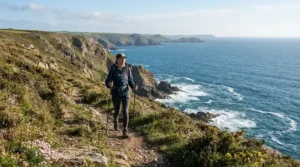
The evidence is more nuanced than the marketing. One UK outdoor retailer’s guide cites research suggesting poles cut knee compressive force by roughly a quarter on descents. An Osteoarthritis Australia video, however, cautions that load-reducing effects haven’t been proven for hiking poles and that forces can even rise for some people with knee osteoarthritis. Both can be true. That is why fit, technique and features matter more than any logo. Meanwhile, Versus Arthritis notes that Nordic walking, a pole-based activity, is among the exercises the NHS recommends for people with arthritis.
This guide sorts through seven real models worth your attention. It pays particular attention to shock absorbing trekking poles, ergonomic grip trekking poles and trekking poles for joint pain in general.
One honest note: I haven’t held these poles on a hillside. Everything below is analysis of published specifications and aggregated reviewer sentiment, framed as reasoning rather than personal testing. Prices are ranges only, and stock on amazon.co.uk changes, so check before you buy. This is general information, not medical advice.
Quick Comparison: 7 Trekking Poles for Arthritis at a Glance
| Pole | Lock | Grip | Anti-shock | Price range | Best For |
|---|---|---|---|---|---|
| Mountain King SuperTrekker Compact Speedlock | Lever (Speedlock) | Extended EVA foam | Yes, switchable | Around £45-£60 each | Sore knees, compact packing |
| Leki Makalu Lite Cor-Tec AS | Speed Lock+ lever | Angled cork/rubber | Yes | Around £100-£150 a pair | Hand comfort plus cushioning |
| Black Diamond Trail Cork | Double FlickLock | Natural cork | No | Around £100-£125 a pair | Long-term hand comfort |
| Black Diamond Explorer 2 | FlickLock | EVA foam | No | Around £50-£65 a pair | First-time buyers |
| Black Diamond Trail Vista FLZ | FlickLock, Z-fold | Cork/rubber hybrid | No | Around £120-£150 a pair | Travel and packability |
| Trekmates Wanderer Lock | Lever | T-handle | No | Under £30 each | Weak grip, tight budget |
| Black Diamond Explorer 3 | FlickLock | EVA foam | No | Around £55-£75 a pair | Rugged budget all-rounder |
Read the table as a set of trade-offs rather than a league table. Only two poles here offer anti-shock, and the Mountain King SuperTrekker Compact Speedlock does it at the lower price. The Leki Makalu Lite Cor-Tec AS adds an angled grip on top. If cushioning isn’t your priority, the Black Diamond Explorer 2 delivers the sturdiest lever-lock experience for the least money. Note that Mountain King and Trekmates poles are sold singly, so double the price for a pair.
💬 Just one click — help others make better buying decisions too!😊
What Are Trekking Poles for Arthritis?
Trekking poles for arthritis are adjustable walking poles chosen to ease strain on painful joints. They combine lever locks that need little grip strength, shaped or cork grips that spread pressure across the hand, padded straps and, sometimes, an anti-shock spring system that softens each plant. Used in pairs, they share load between arms and legs.
That definition matters because “arthritis” isn’t one thing. Osteoarthritis in the knee and hip pushes you towards cushioning and downhill stability. Arthritis in the fingers and thumbs pushes you towards grips and locks that need almost no squeeze. Many people have both, which is why the best pole is the one that solves your particular pain point rather than the one topping a generic list.
Top 7 Trekking Poles for Arthritis: Expert Analysis
1. Mountain King SuperTrekker Compact Speedlock — switchable anti-shock for sore knees
The headline feature is a switchable, spring-loaded anti-shock spring system that you can flick off on the climbs. That is rarer than it sounds.
The pole adjusts from roughly 63cm to 120cm and folds to about 59cm, so it slips into a day bag or car boot. At around 290g each, it’s light enough to swing all afternoon without shoulder ache. The 7075 aluminium shaft is a strong alloy, and the EVA foam grip runs further down the shaft, so you can “choke down” on steep sections without stopping to re-adjust.
Based on the spec sheet, this is the first pole to consider if your pain lives in the knees and hips and your hands cope with a standard vertical grip. Cushioning matters most on tarmac and compacted paths, where jarring is worst. It can feel spongy uphill, which is why the off switch matters. The lever lock also needs far less hand strength than a twist lock.
I found little independent review coverage, so I can’t offer a large pool of aggregated reviews. A specialist UK retailer recommends it as its pick for seniors wanting shock absorption, and that is the main sentiment I could verify.
Pros:
- ✅ Switchable anti-shock for descents and hard paths
- ✅ Easy lever lock, minimal grip strength needed
- ✅ Light, British-made, folds small
Cons:
- ❌ Sold singly, so you must buy two
- ❌ Spongy feel uphill if damping stays on
Expect roughly £45-£60 per pole at the time of research. That makes it good value for anti-shock, but check current price on amazon.co.uk.

2. Leki Makalu Lite Cor-Tec AS — angled cork grip meets anti-shock
Leki pairs its Aergon Air grip, an angled, hollow-core design, with a built-in damping system. The manufacturer claims it cuts pole impact by up to 40%.
The three-section aluminium shaft adjusts from about 100cm to 135cm, and Speed Lock+ levers can be worked with gloves on. At roughly 493g a pair it isn’t the lightest, but the heat-treated aluminium is built to last. The grip blends cork with rubber, so sweat is absorbed rather than making things slippery. Leki’s cork models also build in a positive grip angle, which is meant to keep the wrist more neutral.
Here is what the spec sheet won’t tell you: independent testers are split on how much anti-shock you actually feel. One reviewer praised the reduced fatigue across a long trip. OutdoorGearLab found the grips relatively comfortable but said the thick shafts don’t absorb rock impacts especially well. An older test of a previous Leki anti-shock model was unconvinced by the cushioning altogether. Treat the 40% figure as marketing, not a promise.
Still, for a walker with both sore knees and touchy hands, this is one of few poles that tackles both. Model years vary, so confirm the current spec.
Pros:
- ✅ Angled ergonomic grip eases wrist strain
- ✅ Cork surface wicks sweat
- ✅ Gloves-friendly Speed Lock+ levers
Cons:
- ❌ Costs more than most alternatives
- ❌ Anti-shock benefit varies between testers
Expect around £100-£150 a pair, depending on version and seller. It’s worth it if you need cushioning and hand comfort together.
3. Black Diamond Trail Cork — moulds to your hand over time
Cork grips reward patience. Retail guidance describes them as wicking moisture and gradually shaping to your palm, creating a near-custom fit.
The double FlickLock system puts a lever on each joint, and the aluminium shaft is one of the sturdier in its class at around 650g a pair. Cork also transmits less vibration than foam, which is a genuine perk on hard-packed trails and tarmac if your finger joints protest at buzzing handles. An extended foam section below the grip helps with steep ground.
For arthritic hands, the practical win is warmth and dryness. Foam can turn clammy on warm days, while cork stays comfortable in both heat and cold. There is no anti-shock here, so if your knees are the main complaint, look at poles 1 or 2.
Reviewer sentiment on this platform is positive: long-term owners of the standard Trail describe five-year durability, and users like the padded straps. A few found the strap adjuster fiddly, so tighten it properly before setting off. Cork also feels firmer than foam out of the box.
Pros:
- ✅ Cork wicks moisture and dampens vibration
- ✅ Double FlickLock is reliable and easy
- ✅ Padded, comfortable wrist straps
Cons:
- ❌ No anti-shock system
- ❌ Firmer feel until cork beds in
Expect around £100-£125 a pair. It’s strong value if you walk regularly and want years of use.
4. Black Diamond Explorer 2 — dependable ergonomic foam grip on a budget
The Black Diamond Explorer 2 is a two-section pole. That means fewer joints, a firmer planted feel and less to go wrong.
FlickLock adjustment is one-handed: flip, slide, close. That is a big deal if you’re shaky with fine motor tasks. The ergonomic foam grip is soft from day one, and dual-density foam gives a secure hold without strangling the hand. At around 600g a pair it is a touch heavier than carbon poles, but on walks of a few hours that extra heft reads as stability rather than a burden.
Retail feedback describes it as sturdy on wet limestone and steep, rocky ground. Reviewers rarely complain about the lock. The trade-offs are the two-section length, which packs less small than three-section designs, and the absence of anti-shock.
If you’re new to poles and want to see whether they help before investing further, this is a low-risk starting point.
Pros:
- ✅ One-handed FlickLock with minimal effort
- ✅ Soft ergonomic foam grip from day one
- ✅ Rigid two-section build feels planted
Cons:
- ❌ No shock absorption
- ❌ Longer packed length than three-section poles
Expect around £50-£65 a pair, which is excellent value for lever-lock reliability.
5. Black Diamond Trail Vista FLZ — folds tiny, still fully adjustable
Most folding poles are fixed length, so you must know your size before buying. The Black Diamond Trail Vista FLZ combines a Z-fold with FlickLock adjustment.
It folds to roughly 36.5cm, small enough for a day-pack side pocket, and each pole weighs around 260g. Grips are a sculpted cork and rubber blend, with an extended foam section for choking down. An integrated basket clip stops folded sections rattling. Customer feedback describes hand comfort across 15-20 mile days, and the lock held firm under a heavier hiker with a loaded pack.
For arthritis, the key insight is that a pole which folds small tends to be one you’ll actually take with you. That matters if you travel to your walks or want a “just in case” pole for good days and bad days.
The caveats are honest ones. It’s not the lightest Z-fold available, and it lacks anti-shock. You’re paying for build quality, adjustability and hand comfort.
Pros:
- ✅ Packs tiny yet stays adjustable
- ✅ Cork-rubber grip reduces hand fatigue
- ✅ Solid joints with no wobble
Cons:
- ❌ Premium price
- ❌ Heavier than some folding rivals
Expect around £120-£150 a pair. It’s worthwhile for frequent travellers, less so for local strollers.
6. Trekmates Wanderer Lock — cheapest way in for weak grips
This is a walking-stick-style pole with a T-handle you push down on. If a vertical grip hurts, the Trekmates Wanderer Lock may feel instantly familiar.
The lever lock is the star for weaker hands. At around 400g it’s heavier than the Mountain King options, and the 6061 aluminium is a softer alloy than pricier poles use. It ships with rubber ferrules for pavements. Keep a spare, since reviewers report the carbide tip wearing through rubber faster than expected.
Feedback on retail listings is striking for who is buying. People with balance problems, fibromyalgia, MS and sore knees recommend it, and several single out the clips as easy with reduced hand strength. Bear in mind these are retailer testimonials, not clinical evidence.
It’s a single pole, which suits country lanes and canal paths more than steep fell descents. Think of it as a low-risk trial.
Pros:
- ✅ Easy lever clips for weak hands
- ✅ Push-down T-handle feels familiar
- ✅ Rubber ferrule included for pavements
Cons:
- ❌ Heavier and softer aluminium
- ❌ Ferrule wears quickly
Expect under £30 each. It’s outstanding value as a try-before-you-invest option.
7. Black Diamond Explorer 3 — the packable, tough budget all-rounder
The Black Diamond Explorer 3 adds a third section to its sibling, so it folds shorter for suitcases and boots while keeping FlickLock and EVA foam.
At around 650g a pair, it trades a little weight for toughness. Retail feedback repeatedly praises durability: walkers report using them on rocky ground and heavy vegetation without bending. One user with balance problems reportedly leans on them daily in rough woodland.
A few people mentioned the lock occasionally loosening under heavy load. The fix is tightening the FlickLock tension screw, which takes seconds. Beginners should know that so a loose lever doesn’t cause alarm.
There’s no cushioning, and the extra joint adds a fraction more flex than the two-section model. But for a first pair that folds small, it’s tough to argue with.
Pros:
- ✅ Three sections pack shorter for travel
- ✅ Consistently praised for durability
- ✅ Easy FlickLock and soft foam grip
Cons:
- ❌ No anti-shock system
- ❌ Lock tension may need occasional tightening
Expect around £55-£75 a pair. It’s a solid value pick for regular walkers.
How to Choose Trekking Poles for Arthritis
- Pick lever locks, not twist locks. Twist locks demand two-handed torque and can seize in cold weather, so avoid them if your hands are stiff.
- Match the grip to your hands. Straight foam grips can be unforgiving on arthritic fingers, while angled or cork grips spread pressure more kindly.
- Decide whether you need anti-shock. Choose it for hard surfaces and sore knees, but insist on a switch-off if you climb often.
- Check the straps. Wide, padded straps used correctly take stress off your hands, which is more valuable than any fancy grip.
- Mind the weight. A few extra grams per pole compound over thousands of swings, especially with shoulder trouble.
- Think about packing. Folding designs mean poles come along on more outings.
Backpacker’s advice for a reader with hand arthritis echoes this: avoid straight grips, use wide straps snugly, and consider shock absorbers if the budget allows.
Shock Absorbing Trekking Poles: How the Anti-Shock Spring System Works
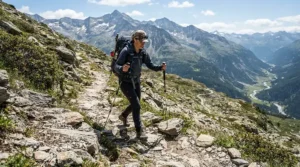
Shock absorbing trekking poles hide a spring or elastomer inside the shaft. When the tip strikes the ground, the mechanism compresses slightly and releases, softening the jolt travelling up your arm. It’s the same idea as suspension on a bike, only smaller.
The benefit is greatest on hard surfaces: tarmac, packed gravel, rocky descents. The catch is that an anti-shock spring system can absorb some of the force you push down with on climbs, making the pole feel bouncy. That is why the switchable design of the Mountain King SuperTrekker Compact Speedlock is clever. Leki’s Leki Makalu Lite Cor-Tec AS relies on an elastomer-based system instead.
Be realistic, though. The claimed impact reduction, up to 40% for Leki, is a manufacturer figure. Independent testers vary from “dramatically reduces strain” to “did little”. Shock absorbing trekking poles cost more, and I’d treat them as helpful rather than essential. If money is tight, spend on locks and grips first.
Ergonomic Grip Trekking Poles and the Ergonomic Foam Grip Question
Ergonomic grip trekking poles reshape where your hand rests. Cork moulds and wicks, angled heads keep the wrist neutral, and an ergonomic foam grip is soft and warm but can turn clammy.
For finger and thumb arthritis, angle matters. Pacerpoles, a UK-designed brand made by a physiotherapist, use strongly angled moulded handles that you rest on rather than squeeze. Reviewers with severe hand arthritis on SectionHiker describe them as the most comfortable they’ve tried. They are sold mainly direct, so check availability before assuming they’ll be on amazon.co.uk. Some reviewers also note the technique needs practice.
Among the seven picks above, the Leki Makalu Lite Cor-Tec AS offers the most angled shape, while the Black Diamond Trail Cork offers the best moisture control. The Black Diamond Explorer 2 proves an ergonomic foam grip needn’t be expensive. Whichever you choose, a pole gripped tightly will hurt no matter how clever the handle.
Trekking Poles for Joint Pain: Knees, Hips and Hands
Trekking poles for joint pain work differently depending on the joint. For knees and hips, poles share load, especially downhill. A local NHS musculoskeletal service suggests using a stick or pole in the hand opposite the sore knee. For hands, the goal is the reverse: grip less, lean on the strap and pick grips that reduce pressure.
It is worth being sceptical. Osteoarthritis Australia warns that load-reducing effects haven’t been proven for hiking poles and may increase forces for some people with knee osteoarthritis. People with widespread arthritis, or trouble coordinating movement, may benefit less. Poles are a tool to trial, not a guaranteed fix.
The practical takeaway: if a pole doesn’t reduce your pain within a few gentle sessions, don’t persevere out of stubbornness. Ask a physiotherapist to check your technique.
Trekking Poles vs Walking Sticks and Nordic Poles
| Option | Support | Hand Demand | Best For |
|---|---|---|---|
| Trekking poles (pair) | Balanced, both sides | Moderate; strap helps | Descents, uneven ground: Black Diamond Explorer 2 |
| Single T-handle stick | One-sided | Low; push down | Lanes, canal paths: Trekmates Wanderer Lock |
| Nordic poles | Propulsive, dynamic | Glove-strap system | Fitness walking |
| Single cane | One-sided | Grip needed | Mild, one-sided pain |
Pairs distribute effort across both sides, so they suit bilateral stiffness and steep descents. A single T-handle stick is simpler, and it’s kinder to hands that struggle with a vertical shaft. Nordic poles add upper-body exercise, but they need technique and are a separate discipline. If you’re unsure, start with a single stick or budget pair and upgrade only if you find yourself reaching for them.
Joint Pain Management With Poles: A 30-Day Set-Up Guide
Good joint pain management starts before the first step. Follow this sequence.
Week 1: fit and feel. Adjust so your elbow sits near a right angle when standing. Go slightly longer downhill and shorter uphill. Put your hand up through the strap from below and snug it around the wrist so the strap, not your fingers, takes the load.
Week 2: rhythm. Move opposite arm and leg together, like normal walking, not both poles together like skiing.
Weeks 3-4: build up gradually. NHS inform advises keeping exercise pain within a 0-5 rating out of ten and making sure it’s no worse the next morning. Use the same rule for pole walks.
Common first-month mistakes: gripping too hard, poles set too long, leaving anti-shock on for climbs, and skipping the strap. Try flat, familiar paths before tackling fells.
Real-World Scenarios: Which Pair Suits Which Walker?
The Dales descender. She is 66, with a stiff left knee, and walks two or three times a week on grass and limestone. Budget is flexible. The Mountain King SuperTrekker Compact Speedlock, sold singly, gives anti-shock on descents and folds for the car. If her hands protest, the Leki Makalu Lite Cor-Tec AS adds an angled grip.
The park stroller. He is 72, with painful thumb joints, and walks the local park daily. He has modest funds and a strong dislike of complex gear. The Trekmates Wanderer Lock offers a familiar T-handle and easy clips at low cost. If he wants a pair, the Black Diamond Explorer 2 is the step up.
The weekend traveller. She is 58, has arthritis in both hands and knees, and takes city breaks and coastal paths. She needs poles that fit in a suitcase. The Black Diamond Trail Vista FLZ folds small and remains adjustable, and its cork-rubber grips suit sensitive hands.
Problem → Solution: Fixing Common Pole Headaches
Hands ache after half an hour. Loosen your grip, tighten the strap, and try cork with the Black Diamond Trail Cork.
Poles feel spongy uphill. Switch off the anti-shock spring system if your pole allows it, as with the Mountain King SuperTrekker Compact Speedlock.
Straps rub. Choose padded straps and wear a thin cuff or glove. Adjust so the strap sits flat, not twisted.
Ferrules click and slip on pavements. Fit rubber ferrules, and carry spares for the Trekmates Wanderer Lock.
Lock slips. Tighten the FlickLock tension screw on the Black Diamond Explorer 3.
Long-Term Cost & Maintenance
| Tier | Example | Price range | Cost per walk (300 walks) |
|---|---|---|---|
| Budget | Trekmates Wanderer Lock | Under £30 | Around 10p |
| Mid-range | Black Diamond Explorer 2 | £50-£65 | Around 20p |
| Upper mid | Black Diamond Trail Cork | £100-£125 | Around 35p |
| Premium | Black Diamond Trail Vista FLZ | £120-£150 | Around 45p |
Even the priciest pair costs pennies per outing if used a few times a week for a few years. The real cost is buying a cheap pole that hurts and then leaving it in the shed. Value is in fit, not price.
Maintenance is light. Rinse mud from the joints, dry the poles extended, and store them loose. Check tips and ferrules occasionally, and wipe cork grips with a damp cloth.
Safety, Limits and When to See a Professional
Poles are aids, not treatment. If you have new or worsening joint pain, swelling, or you notice a change in balance, speak to your GP or a physiotherapist. The Royal Orthopaedic Hospital recommends combining strengthening, cardiovascular and stretching exercise for osteoarthritis, so treat poles as one part of a wider plan.
Watch the ground. Wet leaves, mud and ice make even good poles slip. Choose rubber ferrules for hard surfaces and avoid steep slopes until your technique is confident. If you have severe hand arthritis or rheumatoid arthritis, an occupational therapist can advise on specialised handles.
FAQ
❓ How much should I spend on trekking poles for arthritis?
❓ Can I use just one pole for knee arthritis?
❓ Do shock absorbing trekking poles work on tarmac?
❓ What height should I set my poles?
❓ Are carbon poles better than aluminium?
Conclusion
The right trekking poles for arthritis are the ones that solve your specific pain, not the ones with the most impressive spec sheet. If your knees ache on descents, start with the Mountain King SuperTrekker Compact Speedlock or the Leki Makalu Lite Cor-Tec AS. If your hands are the problem, look at the Black Diamond Trail Cork, and use the strap properly whichever pole you buy. For a low-risk first pair, the Black Diamond Explorer 2 and Trekmates Wanderer Lock cost little and make excellent trials, while the Black Diamond Trail Vista FLZ and Black Diamond Explorer 3 suit travellers and rugged use respectively.
Keep expectations honest. Poles help many people, but the evidence isn’t uniform, so test gently and check with a professional if pain persists. Then go and enjoy the walk.
Recommended for You
- Telescopic Trekking Poles For Seniors: 7 Best Easy-Grip Picks (2026)
- Lightweight Trekking Poles: 7 Best Picks for UK Hikers (2026)
- Best Quad Cane for Elderly: 7 Top Picks for Stability (2026)
Disclaimer: This article contains affiliate links. As an Amazon Associate, I earn from qualifying purchases. If you purchase products through these links, we may earn a small commission at no additional cost to you.
✨ Found this helpful? Share it with your friends! 💬🤗
