In This Article
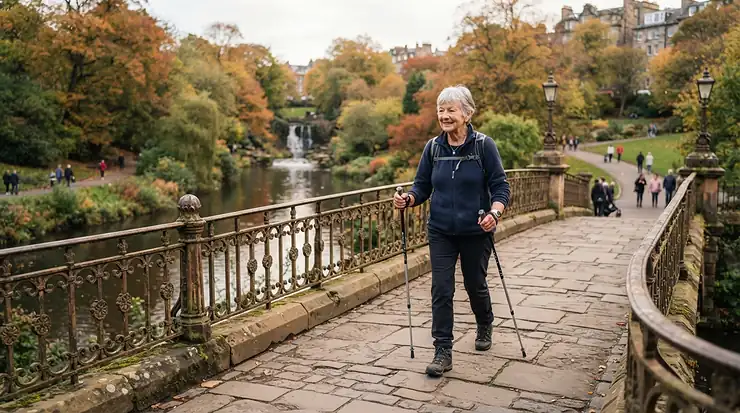
Trekking poles for elderly walkers are lightweight, adjustable poles, normally used as a pair, that give older walkers two extra points of contact with the ground. They steady your balance on uneven paths, share the load that would otherwise land on your knees and hips, and turn a wobbly stroll into a confident, rhythmic stride.
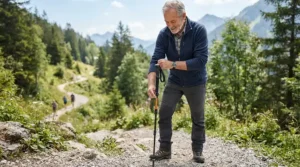
Nobody warns you that somewhere around 70 a kerb becomes a negotiation and a muddy footpath becomes a plot twist. Poles don’t stop time. They do change the odds. Live for the Outdoors reports that studies suggest well-used poles can take up to 25% of the load off your lower joints. Balance is the other half of the story, and the NHS’s advice on preventing falls puts strength, balance and confidence at the centre of staying upright.
This guide is for anyone shopping for walking poles for seniors. That might be the retired rambler, the new-hip recoverer, or the grandparent who just wants to keep up on Sunday’s lap of the park. Inside you’ll find:
- Seven carefully chosen models, from under £50 to around £200.
- A plain-English trekking pole buying guide for elderly walkers.
- A step-by-step walkthrough of correct pole height.
- Practical notes on fall prevention while walking and hiking safety for seniors.
A transparency note: everything here comes from published specifications and independent UK testing, not from my own ownership of these poles. Where review evidence runs thin, I’ll say so. Prices are ranges only, so check current listings on Amazon UK before you buy.
Quick Comparison: Trekking Poles for Elderly Walkers at a Glance
Here are all seven poles side by side. Weights are per pole, and the figures come from published specs and independent test data.
| Pole | Weight (per pole) | Adjustment range | Lock / fold style | Price range | Best For |
|---|---|---|---|---|---|
| Trekology Trek-Z 2.0 Cork | 294-306g | 100-120cm / 115-135cm | Lever lock, folds to 38cm | Under £50 | First-time buyers on a budget |
| Vango Camino | 280g | 105-135cm | Flip lock, anti-shock, 69cm collapsed | £35-£50 | Joint-conscious walkers on firm paths |
| Lifesystems Trekking Poles | 222g | 110-135cm | Lever lock, telescopic, 61cm | £65-£80 | Stiff carbon feel without a premium price |
| Fizan Ultrax Carbon | 229g | 112-135cm | Lever lock, 37cm folded | £85-£105 | Travellers needing compact poles |
| Black Diamond Pursuit | 247-258g | 100-125cm / 100-140cm | Flick lock, 58-63cm | £130-£150 | Comfort-first all-rounders |
| Leki Sherpa Lite | 254g | 100-135cm | Speed Lock 2 Plus, 68cm | £130-£150 | Rough ground and gloved or sore hands |
| Leki Cressida FX Carbon Lady | 245g | 100-120cm | Z-fold cord system, 40cm | £190-£210 | Smaller frames wanting a premium fold-flat pole |
Looking at the comparison, the Trekology Trek-Z 2.0 Cork delivers the best value if you’re unsure poles are for you. The Black Diamond Pursuit justifies its extra £90 or so if grip comfort is your priority. Budget buyers should note that the Vango Camino trades packability for its anti-shock spring, so it suits car-boot walkers better than train travellers.
💬 Just one click — help others make better buying decisions too! 😊
Top 7 Trekking Poles for Elderly Walkers: Expert Analysis
1. Trekology Trek-Z 2.0 Cork — best low-cost starter pair
Starting out shouldn’t cost a small fortune, and the Trekology Trek-Z 2.0 Cork proves it. A four-section 7075 aluminium shaft, lever lock and cork-and-foam grip are the same ingredients found on poles costing three times as much. Two sizes (100-120cm and 115-135cm) matter more than they sound, because shorter older walkers often end up with poles that are simply too long. Folded, it measures about 38cm, so it slips into a day sack.
The trade-off is weight, at roughly 294-306g per pole. On a flat hour round the park you’ll barely notice. On a long hilly day, you will. Live for the Outdoors testers called the value incredible. They also noted that the finish trails premium brands and that deployment is slower, because the telescopic section must be extended to tension the internal cord. I couldn’t verify current Amazon UK rating counts, so skim recent reviews for comments on lock slippage before committing.
Pros:
- ✅ Two size options suit shorter and taller walkers
- ✅ Cork grip with EVA foam extension
- ✅ Two sets of baskets included
Cons:
- ❌ Heavier than most poles here
- ❌ Slower to deploy than rivals
Price: under £50. That’s superb value as a first pair, provided you accept the extra grams.

2. Vango Camino — anti-shock spring on a budget
The Vango Camino is the no-nonsense option, and its party trick is a built-in anti-shock mechanism. In theory, that spring softens each pole strike, which is welcome on hard tracks and long descents when knees are grumbling. The shaft is 7075 aluminium with a flip-lock, a style generally more durable than twist-locks. A 105-135cm range covers most heights comfortably.
At roughly 280g per pole it’s mid-weight, and the foam grip is comfortable rather than luxurious. The catch is bulk: it collapses to around 69cm, so it won’t tuck into a small bag. Live for the Outdoors noted the Camino is sold as a single pole, which they tested as a pair, so make sure your listing contains two. On any shock-absorbing pole, an on/off lockout is useful uphill, so check whether this one offers it. The independent test was warm about solidity and value. I haven’t verified Amazon customer-review volume, so check recent feedback on how the spring feels.
Pros:
- ✅ Anti-shock spring cushions joint impact
- ✅ Durable flip-lock rather than twist-lock
- ✅ Wide 105-135cm adjustment range
Cons:
- ❌ Bulky at around 69cm collapsed
- ❌ Basic foam grip
Price: roughly £35-£50. Good value for walkers who prioritise cushioning over packability.
3. Lifesystems Trekking Poles — carbon stiffness at a modest price
Carbon fibre for a modest sum is the Lifesystems Trekking Poles pitch. Live for the Outdoors called them a genuine bargain. They felt rock-solid at full extension, with none of the flex of budget aluminium, and the lever-locks didn’t slip across months of Welsh moorland. That stiffness matters for older walkers, because a pole that flexes underfoot makes you hesitate. At about 222g per pole they’re noticeably lighter than the budget aluminium options, which means less shoulder fatigue late in a walk.
Adjustment spans 110-135cm, the cork grips manage sweat well, and a three-year warranty adds peace of mind. The compromises are mostly cosmetic: a slightly rough finish near the pommel and fiddly strap adjustment. The 61cm collapsed length also won’t suit tiny bags. Carbon can snap under sideways pressure, so don’t let a pole get trapped in a stile gap. Independent testing is positive. I haven’t verified Amazon UK reviews, so check recent comments on strap comfort.
Pros:
- ✅ Stiff, stable carbon feel at full extension
- ✅ Cork grips manage sweat well
- ✅ Three-year warranty included
Cons:
- ❌ Rougher finish than premium brands
- ❌ Fiddly wrist strap adjustment
Price: around £65-£80, which makes it a strong mid-budget pick.
4. Fizan Ultrax Carbon — compact carbon for travellers
If your poles regularly travel by train, car boot or coach, the Fizan Ultrax Carbon is the packing champion here. It folds to about 37cm, small enough for a daypack side pocket. The lever-lock covers 112-135cm and held firm under full load in Live for the Outdoors testing. Carbon also damps vibration, and the testers noticed less wrist and elbow fatigue than with aluminium rivals on rocky ground.
Two sets of baskets (trekking and snow) come included, plus rubber tip protectors. Those protectors are the unsung hero for older walkers. Rubber feet give far more predictable grip on wet pavements than bare carbide tips. At 229g per pole the weight is middling for carbon, and there’s no retention system to keep folded sections tidy, so they can rattle when strapped to a pack. For walkers who use public transport to reach their routes, that’s a small price for the compact size.
Pros:
- ✅ Very compact at around 37cm folded
- ✅ Rubber tip protectors and two basket sets included
- ✅ Carbon stiffness reduces wrist fatigue
Cons:
- ❌ Heavier than expected for carbon
- ❌ No built-in tidy strap for folded sections
Price: around £85-£105. That’s solid value for travel-minded walkers.
5. Black Diamond Pursuit — the comfort champion
The Black Diamond Pursuit earned one of the highest compliments a pole can get. Live for the Outdoors named it their favourite of all poles on test for comfort. Natural cork grips sit above a foam extension, so you can choke down on slopes. The strap is padded and sculpted. The FlickLock Pro mechanism now has soft-touch levers, which are easier to grip with cold hands or gloves. A 1.5mm hex bit is even hidden inside the shaft for on-trail tweaks.
Sizing is a quiet bonus for older walkers. The S/M version runs 100-125cm at 247g, while the M/L stretches to 100-140cm at 258g and has larger grips for larger hands. Those figures are genuinely helpful if you’re petite or tall. Two basket sets are included. It’s neither the lightest nor the most compact, since it collapses to 58-63cm. Independent reviewers describe it as durable and dependable. I haven’t verified current Amazon customer ratings, so scan recent reviews for comments on the left-hand lock.
Pros:
- ✅ Class-leading grip comfort with cork and foam
- ✅ Two sizes suit smaller and larger frames
- ✅ Soft-touch lever locks work well with gloves
Cons:
- ❌ Not the lightest option
- ❌ Not especially compact when collapsed
Price: around £130-£150, and a worthwhile spend if you walk weekly.

6. Leki Sherpa Lite — built to outlast everything else you own
Which? names Leki a Recommended Brand for walking poles, and the Leki Sherpa Lite shows why. Its HTS 6.5 aluminium shaft survived months of Welsh autumn and winter testing with only cosmetic scratches. The Speed Lock 2 Plus lever held under full load without slipping and was easy to operate in thick gloves. When a pole bears your weight, a lock that never creeps is the single most important safety feature.
Adjustment runs from 100-135cm, one of the widest ranges here, so a couple can share one pair. The Aergon Air grip has an extended foam section that’s genuinely useful on slopes, plus a rubberised pommel. Weight is about 254g per pole, with a 68cm collapsed length. It won’t suit small daypacks, and it’s overkill for casual strolls. For hillwalkers who want to stop thinking about equipment, though, that’s the point. Live for the Outdoors testers rated its reliability highly. I haven’t verified Amazon UK review counts, so check recent feedback on grip size.
Pros:
- ✅ Rock-solid lock works well with gloves
- ✅ Extended foam grip helps on slopes
- ✅ Wide 100-135cm adjustment range
Cons:
- ❌ Long collapsed length limits packing options
- ❌ Overkill for casual flat walks
Price: around £130-£150. This one is for demanding terrain and long-term durability.
7. Leki Cressida FX Carbon Lady — premium folding poles for smaller frames
The Leki Cressida FX Carbon Lady is the premium folding choice, and its men’s sibling is the Leki Makalu FX Carbon. Both use Leki’s ELD Z-fold system. You shake the pole out and pull the top section until it clicks, with no sequence of twists or levers. For anyone whose fingers dislike fiddly mechanisms, that simplicity may be a real advantage. Five sections fold to about 40cm, and the contoured Aergon Air cork grip is comfortable. Weight is around 245g per pole.
The women’s pole adjusts across a narrow 100-120cm window, and the men’s Makalu spans 110-130cm. Check that your correct pole height falls inside it, because a cord-fold pole has far less adjustment than a telescopic one. Live for the Outdoors testers loved the speed and compactness on mixed mountain terrain, but called it over-engineered for most people. That’s a fair verdict. Walkers who stow poles on trains and deploy them at trailheads will appreciate the engineering. Pavement-only walkers probably won’t.
Pros:
- ✅ Quick, simple shake-and-click deployment
- ✅ Folds to around 40cm
- ✅ Premium carbon and cork construction
Cons:
- ❌ Narrow adjustment range of 100-120cm
- ❌ Over-engineered for casual walkers
Price: roughly £190-£210. Treat it as a premium purchase for frequent travelling walkers.
Correct Pole Height: A Step-by-Step Setup Guide
Getting correct pole height right is the cheapest upgrade you’ll ever make. A pole set too long hikes your shoulders up. One set too short makes you stoop. Here’s the sequence, based on Live for the Outdoors’ guidance.
- Stand tall in your walking shoes. Relax your shoulders and let your arms hang naturally.
- Bend your elbow to 90°. Hold the pole upright with its tip on the ground. That hand-to-ground distance is your starting length.
- Lock it firmly. Tug each section to check nothing creeps. This matters most on the Trekology Trek-Z 2.0 Cork and Lifesystems Trekking Poles, which are telescopic.
- Adjust for terrain. Aim for 5-10cm shorter on ascents and 5-10cm longer on descents, which is where a wide range like the Leki Sherpa Lite‘s 100-135cm earns its keep.
- Use the strap correctly. Push your hand up through the loop from below, then grip the handle with the strap resting across your palm.
- Practise on flat ground. Swing the opposite arm with each leg, as in normal walking, before you tackle a hill.
If you’re hunched, lengthen the pole a touch. If your shoulders feel tight and raised, shorten it. Two minutes of fiddling at the start saves hours of discomfort later.

Real-World Scenarios: Matching Trekking Poles for Elderly Walkers to Real Lives
Specifications mean little until they meet a life. These three hypothetical profiles show how the same logic points to different poles.
The canal-path regular. Imagine a 68-year-old with early knee stiffness who walks flat towpaths for two hours, three times a week, on a budget of about £50. The Trekology Trek-Z 2.0 Cork or Vango Camino fits. The extra weight barely matters on level ground, and the Vango Camino‘s anti-shock spring adds cushioning for hard surfaces.
The post-operative walker. Picture a 75-year-old building confidence after hip surgery, doing short pavement loops. A physiotherapist’s clearance comes first, since poles aren’t a substitute for prescribed mobility aids. After that, the Black Diamond Pursuit‘s sizing and grip comfort suit shorter, steadier outings. Fit rubber tip protectors for pavements.
The weekend hillwalker. Consider a 71-year-old who takes the train to Lake District fells twice a month and carries a daypack. Packability and reliability matter most. The Fizan Ultrax Carbon gives compact carbon at a sensible price. Prefer an even simpler fold, and have £190 or more to spend? The Leki Cressida FX Carbon Lady or Leki Makalu FX Carbon fits.
Problem → Solution: Fixing the Most Common Pole Frustrations
Even good poles can annoy. These are the issues that crop up most, with practical fixes.
Problem 1: The pole slips or shrinks under load. Re-tighten the lock and check for dirt in the mechanism. Replace the pole if the problem returns, because a slipping lock is a balance hazard. Flip-lock models like the Leki Sherpa Lite are less prone to this than twist-locks.
Problem 2: Sore hands and wrists. Check grip size and strap position. A cork-and-foam grip like the Black Diamond Pursuit‘s spreads pressure better than hard plastic, and the strap should carry weight so your fingers don’t squeeze.
Problem 3: The tips skid on pavements. Fit rubber tip protectors. The Fizan Ultrax Carbon includes them.
Problem 4: Getting poles onto trains and planes. Folding models such as the Leki Cressida FX Carbon Lady pack to about 40cm. Telescopic poles are bulkier, and airline rules usually put poles in the hold, so check yours.
Trekking Pole Buying Guide for Elderly Walkers: How to Choose
How do you choose trekking poles for elderly use? Prioritise a size range that fits you, a secure lever lock, a comfortable grip, and low weight. Then check material and portability. Here are those priorities in order, with the reasoning.
- Check the length range. Your correct pole height must sit comfortably within the pole’s range. Shorter walkers should consider the Leki Cressida FX Carbon Lady (100-120cm) or the Black Diamond Pursuit S/M.
- Prefer lever locks. Flip locks are generally more secure and easier to use, while twist locks tend to slip over time, particularly when wet.
- Choose your grip material. Cork manages sweat and wet well. Foam is light but absorbs moisture. Rubber is durable but heavy and sticky in heat.
- Weigh the weight. An ultralight pole is typically 110-230g, standard is around 250g, and heavy-duty is 270g or more. For long days, lighter reduces fatigue. For rugged use, heavier is more forgiving.
- Decide on shaft material. Carbon is lighter and stiffer, but can snap under sideways pressure. Aluminium is tougher and cheaper.
- Consider portability and warranty. Z-folds suit travel. Telescopic poles suit external pole holders. A warranty, such as the Lifesystems Trekking Poles‘ three years, signals confidence.
Which?’s walking pole review also scores comfort, shock absorption and durability, and is worth checking alongside this list.
✨ Ready to Walk With Confidence?
🔍 Take your first steps with trekking poles for elderly walkers seriously. Click on any highlighted product above to check current pricing and availability on Amazon UK. A well-fitted pair can make every walk steadier and more enjoyable!
Hiking Poles for Older Walkers: Features That Matter (and Those That Don’t)
Marketing loves a buzzword. Here’s how to separate the useful from the decorative when choosing hiking poles for older walkers.
Features that matter:
- Lock reliability. Everything else is secondary if the pole creeps. This is why testers praised the Leki Sherpa Lite and Black Diamond Pursuit locks.
- Grip ergonomics. An extended foam section lets you choke down on slopes without changing pole length.
- Wrist straps. Padded, adjustable straps carry load so your fingers don’t have to.
- Rubber tips. For pavements, they’re essential. Bare carbide on tarmac is an invitation to skid.
- A sensible weight. For most older walkers, 220-260g per pole balances stability and fatigue.
Features that matter less:
- Ultralight obsession. Don’t chase every gram if it means sacrificing durability. Ultralight carbon can snap sideways.
- Mountaineering extras. Snow baskets are included with many models but unneeded for most UK walks.
- Tent-pole compatibility. It sounds clever and is irrelevant if you stay in B&Bs.
Shock absorption is the borderline case. It can soften downhills, as on the Vango Camino, but make sure you can switch it off, because springs sap energy uphill. Wide-ranging adjustability, like the Leki Sherpa Lite‘s 100-135cm, is usually worth more than any gimmick.
Walking Poles for Seniors vs Walking Sticks and Rollators
Poles aren’t the only support option, and the right choice depends on what you need. Here’s how they compare.
| Option | Stability | Joint relief | Best For |
|---|---|---|---|
| Pair of trekking poles, e.g. the Black Diamond Pursuit | Good on uneven ground, builds rhythm | Shares load across arms | Active walkers wanting more confidence outdoors |
| Single walking stick | Basic, one-sided | Limited | Light support on short, even routes |
| Nordic-style poles | Good, with technique | Good on longer distances | Fitness-minded walkers |
| Rollator / frame | Highest | Significant | Those needing prescribed mobility support |
The practical takeaway is simple. Walking poles for seniors work best for people who are already mobile and want extra confidence, not for those who need heavy weight-bearing support. A pair beats a single stick on balance because it’s symmetrical. Poles like the Leki Sherpa Lite are tough but not designed to replace a rollator. If you’re unsure which suits you, ask a physiotherapist or GP before buying.

Common Mistakes When Buying Trekking Poles for Elderly Walkers
Most regrets come from a handful of avoidable errors.
- Buying too long. A pole that’s too long hikes the shoulders and tires the neck. Check that your correct pole height falls inside the adjustment range, especially with narrow-range poles like the Leki Cressida FX Carbon Lady.
- Choosing twist locks for heavy use. They’re lighter, but more prone to slipping. For regular walkers, lever locks are the safer bet.
- Ignoring grip size. Small hands on chunky grips cause fatigue. The Black Diamond Pursuit offers sizing for exactly this reason.
- Chasing the lightest carbon. Carbon is stiff and light, but vulnerable to sideways knocks. If you walk on rocky or stile-heavy routes, aluminium like the Leki Sherpa Lite forgives more.
- Buying one pole. Two give better stability on descents, and a single pole can unbalance muscle use if you don’t swap sides.
- Skipping practice. Poles feel odd for the first few outings. Give it a few flat walks before judging.
- Forgetting rubber tips. A £45 pair like the Trekology Trek-Z 2.0 Cork is a bargain, but only if you fit the right tips for pavements.
Long-Term Cost and Maintenance
A pole’s true cost isn’t the sticker price. It’s the price divided by the walks it supports. A pair used 100 times at around £130 works out to roughly £1.30-£1.50 per outing. Cheaper poles can cost less per walk, but only if they last.
| Tier | Typical range | Example | What you gain | Value verdict |
|---|---|---|---|---|
| Entry | Under £50 | Trekology Trek-Z 2.0 Cork, Vango Camino | Basic support, decent materials | Excellent for trying poles |
| Mid | £65-£110 | Lifesystems Trekking Poles, Fizan Ultrax Carbon | Carbon stiffness, lighter weight | Best balance for regular walkers |
| Premium | £130-£210 | Black Diamond Pursuit, Leki Sherpa Lite, Leki Cressida FX Carbon Lady | Comfort, durability, refined locks | Worth it if you walk weekly |
Looking at the table, the mid tier is where most older walkers should land. The premium tier makes sense for frequent use or travelling. Maintenance is cheap and quick. Wipe poles dry after muddy walks, and don’t store them collapsed while wet. Check locks and screws every few weeks. Replace worn tips and baskets, and inspect straps. The Black Diamond Pursuit even hides a hex tool inside the shaft for quick adjustments.
Fall Prevention While Walking: Where Poles Fit In
Falls are a serious issue. The Centre for Ageing Better notes more than 210,000 falls-related emergency hospital admissions each year in England among people aged 65 and over, costing the NHS around £1 billion annually. Poor muscle strength and balance are the two most common modifiable risk factors.
Poles can help with fall prevention while walking, but they’re a supporting actor, not the star. Here’s how to use them as part of a wider approach:
- Strength and balance work. Regular exercise for strength and balance is the foundation. Poles supplement it. They don’t replace it.
- Appropriate footwear. Good grip and fit matter as much as the poles themselves.
- Rubber tips on hard surfaces. They give predictable traction on pavements.
- Check your health. Dizziness, medication effects and vision changes can all affect balance. Raise them with your GP.
Poles add two extra contact points, which can steady you on uneven ground. If you’ve had a fall or feel unsteady, speak to a GP or physiotherapist before relying on any equipment.
Hiking Safety for Seniors: Trail Rules Worth Following
Good kit is only part of hiking safety for seniors. The habits matter just as much.
- Tell someone your route and return time. A simple text is enough.
- Check the forecast and plan for daylight. Short winter days catch people out.
- Carry a charged phone, a map and water. Batteries drain faster in the cold.
- Set a conservative pace. Rest before you’re tired, not after.
- Stow poles on scrambles. Where you need your hands on rock, take them out of the straps or pack them away.
- Know your limits. Turning back is a decision, not a defeat.
If you have a medical condition, check with your GP before taking on longer or steeper walks. Poles like the Leki Sherpa Lite and Black Diamond Pursuit are built for hillwalking, but even the best equipment doesn’t replace good judgement.
FAQ
❓ Should elderly walkers use one or two trekking poles?
❓ Can I take trekking poles for elderly use on a plane?
❓ Can walking poles for seniors help with knee arthritis?
❓ How long does it take to get used to trekking poles?
❓ Are Nordic walking poles better than trekking poles for elderly walkers?
Conclusion
Choosing trekking poles for elderly walkers isn’t about buying the lightest or the priciest pair. It’s about fit, a lock you can trust, and a grip that doesn’t punish your hands. If you’re testing the water, the Trekology Trek-Z 2.0 Cork and Vango Camino keep costs under control. For a stiffer, lighter feel, the Lifesystems Trekking Poles and Fizan Ultrax Carbon are the mid-range sweet spot. If you walk weekly and want comfort and durability, the Black Diamond Pursuit and Leki Sherpa Lite reward the extra spend. And for compact, refined folding, the Leki Cressida FX Carbon Lady and Leki Makalu FX Carbon are the premium picks.
Whichever you choose, set your correct pole height, fit rubber tips for pavements, and keep up the strength and balance exercise that underpins fall prevention while walking. Pair that with sensible hiking safety for seniors, and a good pair of poles can keep you on the paths you love for years to come.
Recommended for You
- Carbon Fibre Trekking Poles Vs Aluminium Trekking Poles 2026
- Telescopic Trekking Poles vs Fixed Length Poles: 7 Best Picks (2026)
- Nordic Walking Poles: 7 Best UK Picks For Fitness Walking (2026)
Disclaimer: This article contains affiliate links. As an Amazon Associate, I earn from qualifying purchases. If you purchase products through these links, we may earn a small commission at no additional cost to you.
✨ Found this helpful? Share it with your friends! 💬🤗
