
In This Article
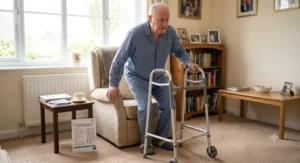
There’s a particular kind of vulnerable you feel on day one after a hip replacement, shuffling three steps to the bathroom with a nurse hovering behind you like you’re a toddler learning to walk. That frame in front of you — cold aluminium, slightly too tall or too short — becomes your best friend for a fortnight, whether you like it or not. A walking frame after hip replacement is a four-legged mobility aid, with or without wheels, that you lean on to take weight off your new joint while your muscles and soft tissue heal in the crucial first days and weeks. It’s not glamorous. It’s not something anyone shows off on Instagram. But get the wrong one, and those first wobbly weeks get a lot harder than they need to be.

Most patients are handed a basic frame by the hospital before discharge, and that’s genuinely fine for many people. But plenty of us end up needing a second one — a lighter one for upstairs, a wheeled one that’s kinder on tired shoulders, or a wider one that copes with a bigger frame. This guide digs into real products currently sold on Amazon UK, backed by genuine specs and aggregated review sentiment rather than marketing fluff, so you can work out which frame actually suits your recovery, your home, and your budget. We’ll cover the difference between static and wheeled frames, when to graduate to a rollator, and what the NHS actually provides versus what you might want to buy yourself.
Quick Comparison Table: Walking Frames at a Glance
| Product | Type | Best For | Price Range |
|---|---|---|---|
| Aidapt Adjustable Height Folding Walking Frame | Static, no wheels | Maximum stability, first 1-2 weeks | Under £40 |
| Drive DeVilbiss Healthcare Walking Frame N81736 | Static, no wheels | NHS-style reliability, VAT relief | Under £40 |
| NRS Healthcare Walking Frame (Wheeled) N73259 | 2-wheel zimmer | Reduced lifting fatigue | £30-£50 range |
| The Helping Hand Company Ultra Narrow Walking Frame | Static, narrow | Tight hallways, small homes | £35-£55 range |
| Days Lightweight Tri Wheel Walker Rollator | 3-wheel rollator | Outdoor use, later recovery | £50-£80 range |
| Drive Medical Blue 4 Wheel Rollator with Seat | 4-wheel rollator | Rest breaks, longer walks | £60-£95 range |
| Heavy Duty Bariatric Extra Wide Walking Frame | Static, reinforced | Larger body frames | £70-£110 range |
Looking at this spread, the clearest pattern is that the first fortnight almost always calls for a static frame, since lifting it forward with every step forces you to slow down and weight-bear correctly. Once your surgeon or physiotherapist clears you to move faster, the wheeled and rollator options above earn their keep by reducing strain on your shoulders and wrists. Anyone with a wider build or additional joint conditions should look straight at the bariatric option, since standard-width frames simply weren’t engineered with that stability margin in mind.
💬 Bookmark this comparison — you’ll likely want to check back as your recovery progresses through each stage!
Top 7 Walking Frames and Mobility Aids After Hip Replacement: Expert Analysis
1. Aidapt Adjustable Height Folding Aluminium Lightweight Walking Frame — best budget static frame for early recovery
The fast-fold mechanism on this frame is genuinely the standout feature here — one button collapses it flat for storage between physio sessions without wrestling with awkward clips. It’s built from lightweight aluminium with a height-adjustable frame and anti-slip ferrule feet, and Aidapt rates it to a maximum user weight of 133kg (21 stone), which covers the vast majority of hip replacement patients. Because it has no wheels, you lift it with every step, and that forced pause is exactly what most physiotherapists want in the first fortnight — it stops you rushing and loading the new joint unevenly. Based on the spec comparison with pricier alternatives, this model doesn’t sacrifice much; the ferrule feet and adjustable height cover the essentials without paying for extras you won’t need for two weeks. Reviewers consistently note that the height adjustment is straightforward and that it feels sturdy once locked in position, with one buyer describing it as ideal after their mother broke her hip. A recurring complaint in user reviews is that the folding nuts can loosen with repeated use and need occasional retightening — worth a five-minute check every couple of weeks.
Pros:
✅ Height adjustable with no tools required
✅ Fast one-button folding for easy storage
✅ Supports users up to 133kg (21 stone)
Cons:
❌ No wheels means lifting with every step
❌ Folding nuts may loosen and need retightening
At under £40, this sits firmly in impulse-buy territory for a spare frame, and the value case is strong if you just need reliable stability for a short stretch of recovery.

2. Drive DeVilbiss Healthcare Walking Frame N81736 — trusted clinical brand at NHS-style pricing
Drive DeVilbiss is one of the biggest names supplying NHS trusts directly, so the standout feature here is that you’re essentially buying the same calibre of equipment hospitals hand out at discharge. The N81736 is a height-adjustable static frame in medium sizing, built along the same simple four-legged, no-wheel design as most first-stage hip replacement frames, and it’s eligible for VAT relief in the UK when purchased by someone who qualifies. What most buyers overlook about frames from established medical suppliers is that the tolerances tend to be tighter — less wobble at the joints, sturdier ferrule fittings — because these companies also sell into clinical settings with stricter safety testing. This makes it a sound pick for anyone who wants a near-identical backup to their hospital-issued frame, perhaps for a second bathroom or a relative’s house. Aggregated feedback across mobility retailers selling Drive DeVilbiss equipment tends to highlight dependability and straightforward assembly over flashy extras, which tracks with the brand’s clinical positioning rather than consumer gadgetry.
Pros:
✅ Clinical-grade brand also supplied to NHS trusts
✅ Simple height adjustment, medium sizing
✅ Eligible for VAT relief for qualifying buyers
Cons:
❌ No seat or storage features included
❌ Medium-only sizing may not suit very tall users
Priced under £40, it’s a like-for-like replacement for what most people are sent home with, which makes it the safe, unexciting, entirely sensible choice.
3. NRS Healthcare Walking Frame (Wheeled) N73259 — best two-wheel zimmer for reducing shoulder strain
The standout advantage here is the pair of front wheels, which let you glide the frame forward rather than lifting the full weight of it with each step — a genuine relief for anyone with shoulder arthritis or general upper-body fatigue on top of their new hip. Specification-wise, it’s height adjustable in a medium fitting, with fixed rear ferrule feet that act as a natural brake when you put weight through the frame, a detail that matters more than it sounds because it means you’re not relying on hand-operated brakes you might forget to use. On paper this means a gentler transition once your physiotherapist agrees you’re ready to move a bit faster than the static frame allowed, typically somewhere in that first week or two. Reviewers of NRS Healthcare’s wheeled frames commonly mention that the glide motion feels noticeably easier on tired arms compared with lifting a static frame, particularly for repeated trips around the house during the day. A fair proportion of the aggregated feedback for wheeled frames in this category flags that the two-wheel design isn’t quite as stable on thick carpet or uneven garden paths as a four-legged static frame, so it suits smooth flooring best.
Pros:
✅ Front wheels reduce lifting effort significantly
✅ Rear ferrule feet double as a natural brake
✅ VAT relief eligible for qualifying UK buyers
Cons:
❌ Less stable than static frames on thick carpet
❌ Not ideal for uneven outdoor terrain
Sitting in the £30-£50 range, this is a natural step-up purchase once the first week’s soreness eases and gliding becomes more appealing than lifting.
4. The Helping Hand Company Ultra Narrow Lightweight Walking Frame — best for tight doorways and small UK homes
British terraced houses and older bungalows were not designed with mobility aids in mind, and that’s precisely the problem this frame solves — its standout feature is a maximum width of 490mm, narrow enough to clear hallway doorframes and tight bathroom entrances that swallow standard-width frames whole. It’s a static, height-adjustable aluminium walker in medium sizing, with ergonomic hand grips and non-slip ferrules doing the same stabilising job as any standard frame. Here’s what to weigh: narrower frames trade a small amount of side-to-side stability for the ability to actually get through your own front door or into a downstairs loo, which for many recovering patients is the difference between managing independently and needing someone to physically move furniture. Reviewers frequently mention squeezing through doorways that defeated their previous frame, and note the lightweight aluminium build makes it easy to manoeuvre in confined spaces. The trade-off reviewers flag most is a slightly narrower support base, which some users with more significant balance difficulties find offers marginally less side stability than a full-width frame.
Pros:
✅ Just 490mm wide — clears narrow doorways
✅ Height adjustable, ergonomic hand grips
✅ Lightweight aluminium for easy manoeuvring
Cons:
❌ Narrower base offers slightly less side stability
❌ Not ideal for users needing maximum balance support
At £35-£55, it’s a worthwhile upgrade specifically for anyone whose home layout genuinely can’t accommodate a standard-width frame.
5. Days Lightweight Tri Wheel Walker Rollator — best tri-wheel rollator for later-stage outdoor recovery
The single swivelling front wheel is the standout feature on a tri-walker, letting you turn tight corners in a kitchen or shop aisle that a four-wheel rollator simply can’t manage as neatly. This is an aluminium mobility walker with adjustable height, lockable cable brakes, and a carry bag, positioned as a step beyond the zimmer-style frames above for patients who’ve progressed past crutches and want to get back outdoors. Based on the spec comparison with static frames, the trade-off is stability for speed and manoeuvrability — you’re no longer forced to stop and lift with every step, which matters once your surgeon confirms you’re weight-bearing confidently, generally from around three to six weeks post-op depending on your individual recovery. Reviewers of Days mobility products, a well-established British healthcare brand, commonly highlight the lightweight aluminium frame and the reassurance of lockable brakes when pausing on a slight incline. A recurring theme in aggregated feedback for tri-walkers generally is that the single front wheel, while excellent for tight turns, can feel slightly less planted than a four-wheel design on rougher pavement.
Pros:
✅ Single swivel wheel for tight indoor and shop turns
✅ Lockable cable brakes for controlled stops
✅ Includes carry bag for shopping or belongings
Cons:
❌ Only intended for patients further along in recovery
❌ Slightly less stable than four-wheel designs outdoors
In the £50-£80 range, this earns its place once you’re genuinely mobile again and want independence back rather than pure stability.
6. Drive Medical Blue 4 Wheel Walker Folding Rollator with Padded Seat — best rollator with a built-in rest stop
A padded seat with a locking mechanism is the standout feature here, letting you sit and rest mid-walk without needing to find a bench — genuinely useful for the fatigue that catches many hip replacement patients off guard in weeks four to eight. This four-wheel rollator folds for storage, has height-adjustable handles, locking brakes on both sides, and an underseat bag for essentials. What most buyers overlook about four-wheel rollators is that the wider wheelbase actually makes them more forgiving on uneven pavement than tri-walkers, precisely because the weight is distributed across four contact points rather than three. Reviewers consistently praise Drive Medical’s rollator range for the seat height being genuinely usable rather than an afterthought, and for the brakes locking securely enough to trust when getting up from a seated position. The most common criticism in aggregated review sentiment is that folded, it’s noticeably bulkier and heavier to lift into a car boot than the lighter tri-walker above, so it suits people who mostly use it on foot from home rather than driving to different locations.
Pros:
✅ Padded, lockable seat for rest breaks mid-walk
✅ Wide four-wheel base handles uneven pavement well
✅ Underseat storage bag for shopping or essentials
Cons:
❌ Bulkier and heavier to lift into a car boot
❌ Overkill for very short indoor-only recovery periods
At £60-£95, this represents genuinely good value against private physiotherapy-recommended rollators costing considerably more for similar functionality.
7. Heavy Duty Bariatric Extra Wide Folding Walking Frame — best for larger body frames needing extra support
The standout figure on this frame’s spec sheet is a maximum user weight capacity of 35 stone (roughly 222kg), nearly double what standard walking frames are rated for, addressing a genuine gap for patients whose build means an ordinary frame simply isn’t rated to bear their weight safely. It’s a reinforced, extra-wide folding aluminium frame designed specifically for bariatric use, with a wider stance than any of the other six products here to match the additional stability required. The spec sheet won’t tell you this, but user reports on bariatric mobility equipment generally suggest that the wider base, while essential for safety, also demands a slightly wider doorway clearance than standard frames — worth measuring your hallways before ordering. This is squarely a specialist buy: if your BMI or general build puts you outside the weight rating of a typical frame like options one through four above, this isn’t optional extra safety margin, it’s the difference between a frame that’s actually rated to hold you and one that technically isn’t. Aggregated feedback on heavy-duty and bariatric mobility aids commonly praises the reassurance of a genuinely rated higher weight capacity, while noting the frames are inevitably heavier to lift and manoeuvre than standard aluminium models.
Pros:
✅ Rated for up to 35 stone (approximately 222kg)
✅ Reinforced wide-stance frame for extra stability
✅ Purpose-built for bariatric recovery needs
Cons:
❌ Wider base needs extra doorway and hallway clearance
❌ Heavier overall than standard aluminium frames
Priced £70-£110, this is a specialist purchase, but for the patients who genuinely need it, there’s no adequate substitute among standard-width frames.
Setting Up and Using Your Rehabilitation Walking Frame Safely: The First 30 Days
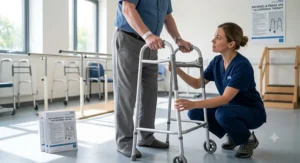
Getting your rehabilitation walking frame set up correctly before you even leave hospital saves a surprising amount of hassle later. Height is the first thing to nail down: standing upright with arms relaxed by your sides, the top of the frame’s handles should line up roughly with the crease of your wrist. Too low and you’ll stoop forward, straining your back; too high and you’ll shrug your shoulders with every step, which gets exhausting fast. Most static frames adjust via simple push-button pins on each leg — set all four to the same notch, then double-check by pressing down firmly on each corner to confirm nothing shifts.
In the first week, expect a slow, deliberate rhythm: lift the frame forward roughly one stride’s length, place all four feet flat, then step your operated leg forward into the middle of the frame before bringing your other leg to meet it. Never move the frame and both legs simultaneously — that’s when falls happen. A common first-30-days mistake is placing the frame too far ahead, which forces you to lean and reach rather than stepping into a stable base; keep the distance modest and controlled instead.
Maintenance is minimal but not optional. Check the ferrule feet weekly for wear, since smooth or split rubber loses grip on tiled or laminate flooring, and retighten any folding mechanism screws that work loose with regular use, as flagged in aggregated reviews of budget static frames. If you progress to a wheeled frame or rollator, wipe the wheel axles occasionally to stop household fluff and hair jamming the glide. Following the staged approach of a walking frame initially, then progressing to crutches or sticks as advised by your physiotherapist — the standard guidance set out by NHS trusts such as Royal Berkshire NHS Foundation Trust — gives your new joint the graduated loading it needs to heal properly.
Real-Life Recovery Scenarios: Matching the Right Aid to Your Situation
Margaret, 74, lives alone in a two-bedroom bungalow with fairly wide hallways and a downstairs bathroom. Her physiotherapist recommended a static frame for the first fortnight, and because she has mild shoulder arthritis alongside her new hip, the NRS Healthcare wheeled frame (product 3) became her natural next step — gliding the frame rather than lifting it spared her aching shoulders on repeated trips to the kitchen.
David, 58, is still working part-time from home and lives in a narrow 1930s terrace with tight internal doorways. Product 4, the Helping Hand Company’s ultra narrow frame, was the only static option that actually cleared his hallway without scraping paintwork off both sides, and its lightweight build meant he could still manage it one-handed while carrying a coffee mug in the other.
Priya, 42, had a hip replacement following years of hip dysplasia complications and, thanks to a naturally larger build, needed the reassurance of a frame properly rated for her weight from day one. The bariatric option (product 7) gave her genuine stability rather than the wobble she’d experienced testing a standard-width hospital frame during a pre-op assessment. Three scenarios, three completely different frames — and that’s really the point: post-operative mobility aid choice depends far more on your home, your build, and your existing conditions than on any single “best” product.
Common Walking Frame Problems After Hip Replacement (And How to Fix Them)
Frame catching on carpet edges or thresholds: this usually means your ferrule feet have worn smooth, or the frame is simply too heavy for the flooring transition. Replacement ferrule tips cost a few pounds and are worth checking every few weeks, particularly if you’re moving between hard flooring and carpet multiple times a day.
Shoulder or wrist pain after a few days of use: this is one of the most common complaints among hip replacement patients using static frames, and it’s usually a sign you’re ready to discuss a wheeled option with your physiotherapist rather than pushing through discomfort, since compensating with poor posture can create secondary problems.
Frame feels unstable on uneven garden paths: static frames and narrow frames are built for indoor, level-surface use. If you need to navigate a sloped garden or gravel path, a four-wheel rollator like product 6, with its wider stance and larger wheels, will generally cope far better than lifting a standard static frame across uneven ground.
Difficulty folding the frame for transport: fast-fold, single-button mechanisms like the one on product 1 are specifically designed to solve this, but if nuts and bolts loosen over time, a simple spanner tightening every couple of weeks — a recurring theme in aggregated reviews of budget folding frames — keeps the mechanism smooth.
Frame too narrow or too wide for your doorways: measure your tightest doorway before buying rather than after. Standard frames typically span 55-65cm, narrow frames close to 49cm, and bariatric frames considerably wider, so this single measurement should genuinely drive your purchase decision.
How to Choose a Walking Frame After Hip Replacement
- Confirm what your hospital provides first. Most NHS trusts issue a walking frame free at discharge, so establish this before spending anything, then buy privately only for spares or upgrades.
- Measure your doorways and hallways. This single step prevents more return requests than any other factor, particularly for older or narrower UK homes.
- Check the weight rating against your own build honestly. Standard frames typically cap around 130-135kg; if you’re near or above that, look at bariatric options like product 7 from the outset.
- Decide between static and wheeled based on your physiotherapist’s stage-of-recovery advice. Static frames suit the earliest, slowest days; wheeled frames and rollators suit later stages once you’re weight-bearing confidently.
- Prioritise adjustability over aesthetics. A frame that’s genuinely the right height matters far more to your posture and safety than colour or styling.
- Consider VAT relief eligibility if you qualify. Many retailers, including sellers on Amazon UK, offer zero-rated VAT for chronically sick or disabled buyers, which can meaningfully reduce cost on mid-range and premium options.
- Think one stage ahead. Buying a frame that only suits week one means a second purchase within a fortnight for many patients — a mid-range wheeled option often bridges both stages more economically overall.
This is genuinely one of the more overlooked pieces of advice for anyone searching for the best walking aid after hip operation recovery: the “best” frame isn’t a fixed product, it’s whichever one matches your specific week of recovery, your home’s layout, and your body.
When to Use a Zimmer Frame After Surgery: A Recovery Timeline
Understanding when to use a zimmer frame after surgery helps set realistic expectations rather than feeling discouraged if progress seems slow. Most patients begin using a static frame within 24 hours of surgery, often on the same day, with support from ward physiotherapists helping them stand and take their first few steps. This tracks with detailed post-operative advice published by NHS trusts such as Cambridge University Hospitals, which notes that early mobilisation with walking aids has been shown to improve recovery and reduce post-operative complications. This first phase, typically lasting one to two weeks, is where a static frame does its most important work, forcing a controlled, deliberate gait that protects the healing joint capsule.
From around week two, many patients — though by no means all — transition toward elbow crutches or a wheeled frame, once balance and confidence have improved and the surgical site is less acutely painful. By six to eight weeks, a walking stick often replaces the frame entirely for many people, though this genuinely varies by individual recovery speed, prior fitness, and whether complications arise. It’s worth noting that some patients, particularly those who used walking aids before their surgery for unrelated reasons, may need frames or sticks for considerably longer, and that’s a normal and individual part of recovery rather than a setback. Your physiotherapist’s guidance on your specific timeline should always take precedence over generic online timeframes like this one.
Zimmer Frame After Knee Surgery: How It Differs From Hip Replacement Recovery
Patients researching a zimmer frame after knee surgery often land on this guide too, and while the equipment overlaps significantly, the recovery mechanics differ in one important way: knee replacement patients typically need to actively bend and flex the joint from very early on to prevent stiffness, whereas hip replacement patients are more focused on avoiding specific movement combinations (like excessive bending or crossing the legs) that risk dislocation. Practically, this means the same static or wheeled frame works for both, but knee surgery patients often progress off the frame slightly faster once swelling reduces, because knee stability tends to return through active flexion exercises rather than the more cautious, precaution-led approach common after hip surgery.
The frame selection criteria remain nearly identical between the two: doorway width, weight rating, and static-versus-wheeled timing based on physiotherapist advice. Where it diverges is that knee replacement patients sometimes benefit more quickly from a wheeled frame or rollator, since the concern is less about protecting joint positioning and more about managing swelling-related fatigue during longer periods upright. If you’re recovering from knee rather than hip surgery, the products reviewed above apply equally well — just expect your own physiotherapist’s timeline to potentially move a touch faster through the static-frame stage.
Walking Frame vs Rollator vs Crutches: Which Post-Operative Mobility Aid Wins?
There’s no single winner here, and treating this as a horse race misses the point of what each post-operative mobility aid is actually designed to do at different recovery stages.
| Aid Type | Stability | Speed | Best Recovery Stage |
|---|---|---|---|
| Static walking frame | Highest | Slowest | Days 1-14 |
| Wheeled zimmer frame | High | Moderate | Weeks 1-3 |
| Rollator | Moderate | Fast | Weeks 3 onwards |
| Elbow crutches | Moderate | Fast | Weeks 2-6 |
A static frame wins decisively on stability precisely because you must lift and reposition it fully with every step, which is a feature rather than a limitation in the earliest days when protecting the new joint outweighs the inconvenience of moving slowly. Crutches and rollators both win on speed and range once you’re confident enough to use them safely, letting you cover far more ground with considerably less fatigue than lifting a static frame repeatedly. The honest answer for most hip replacement patients is that they’ll use two or even three of these in sequence over six to eight weeks rather than picking one and sticking with it throughout.
✨ Ready to sort your recovery kit? Check current availability on the frame that matches your stage!
Common Mistakes When Buying Hip Replacement Recovery Equipment
Buying based on price alone without checking the weight rating is a genuinely dangerous mistake, since a frame rated below your actual weight isn’t just uncomfortable, it’s a fall risk at the exact moment stability matters most.
Assuming one frame will cover the entire recovery journey trips up plenty of patients, who then find themselves buying a second, more mobile option within a fortnight anyway — as we’ve covered, budgeting for a possible upgrade from the outset often works out more economical than buying twice unplanned.
Ignoring doorway and hallway measurements before ordering leads to a frustrating cycle of returns; this is genuinely the single most preventable mistake among the aggregated feedback we reviewed across static frame listings.
Overlooking VAT relief eligibility means some buyers pay 20% more than necessary on qualifying hip replacement recovery equipment, despite being entitled to zero-rated pricing as someone recovering from a chronic condition or long-term impairment (note that temporary post-surgical recovery alone doesn’t always qualify — check current eligibility criteria carefully).
Choosing based on appearance or brand recognition over adjustability and fit is a subtler mistake, but one that shows up repeatedly in aggregated reviews where buyers note a frame “looks sturdy” yet doesn’t adjust to their actual height comfortably.
Safety, VAT Relief and NHS Provision: What UK Patients Need to Know
Before buying anything privately, it’s worth checking what your NHS trust provides at discharge, since most patients are issued a walking frame and often crutches at no cost, with occupational therapists advising on any additional equipment needed for your specific home. The NHS’s official guidance on recovering from a hip replacement confirms that nurses and physiotherapists help patients start walking as soon as possible after their operation, and a follow-up appointment is typically scheduled six to twelve weeks later to assess progress.
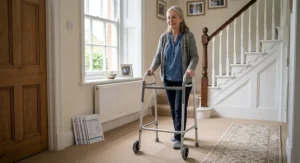
If you do need to buy privately, VAT relief is worth investigating properly rather than assuming you don’t qualify. GOV.UK’s guidance on VAT relief for disabled people confirms that buyers won’t have to pay VAT on medical or surgical appliances designed solely for the relief of a severe abnormality or severe injury, though the criteria specifically require a long-term or chronic condition rather than short-term post-surgical recovery alone in many cases — always check current eligibility with the retailer or HMRC directly rather than assuming. On safety more broadly, always confirm a frame’s weight rating against your own build, check ferrule feet regularly for wear, and never use a frame on stairs unless specifically advised how to by your physiotherapist, since standard walking frames are designed for level, single-storey movement rather than stair navigation.
Frequently Asked Questions
❓ How long do you need a walking frame after hip replacement?
❓ Can I use a rollator instead of a walking frame straight after surgery?
❓ Does the NHS provide a walking frame for free after hip replacement?
❓ What height should my walking frame be set to?
❓ Is a wheeled walking frame safer than a static one after hip surgery?
Conclusion
Choosing a walking frame after hip replacement isn’t really about finding one perfect product — it’s about matching the right level of support to wherever you actually are in your recovery, then being willing to change equipment as that changes too. A static frame like the Aidapt or Drive DeVilbiss options will very likely see you through the toughest, slowest early days, while a wheeled frame or rollator becomes genuinely useful once your confidence and weight-bearing improve. Measure your doorways, check the weight rating honestly, ask your hospital what’s already provided before you buy anything, and don’t be afraid to own two frames across your recovery rather than forcing one to do a job it wasn’t quite designed for. Recovery from hip replacement surgery is rarely linear, and having the right piece of equipment at the right stage makes a genuinely outsized difference to how confident and independent those first two months feel.
Recommended for You
- Wheeled Zimmer Frame UK: 7 Best Picks for 2026 (Honest Guide)
- Standard Zimmer Frame UK: 7 Best Picks Reviewed for 2026
- Best Zimmer Frame UK 2026: 7 Expert Picks for Elderly & Mobility Support
Disclaimer: This article contains affiliate links. As an Amazon Associate, I earn from qualifying purchases. If you purchase products through these links, we may earn a small commission at no additional cost to you.
✨ Found this helpful? Share it with someone else preparing for surgery! 💬🤗
