
In This Article
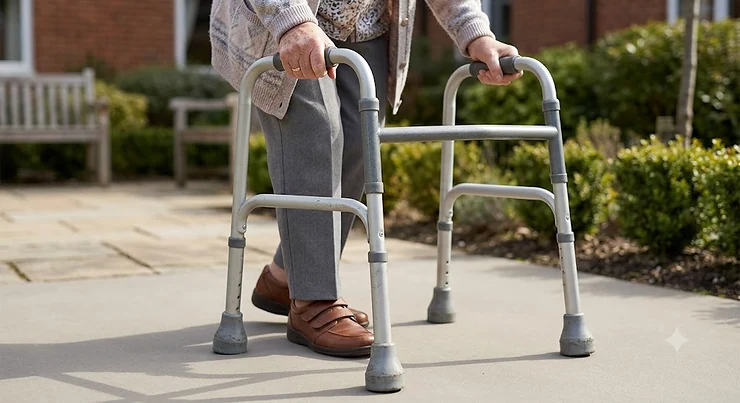
There’s a particular kind of relief that comes with finding the right walking frame — the moment a wobbly trip to the kitchen turns into a steady, almost boring one. That’s the whole point. A standard zimmer frame isn’t glamorous, and nobody is buying one for the aesthetics, but get the right model and it quietly gives back something far more valuable than style: confidence on your own two feet.
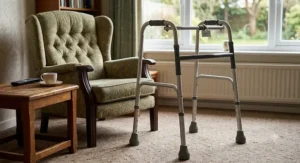
A standard zimmer frame is a four-legged, non-wheeled walking aid made from lightweight aluminium, gripped with both hands and lifted slightly forward with each step to provide maximum stability for people recovering from surgery, illness, or age-related balance loss. Unlike a wheeled rollator, it has no moving parts at ground level, which is exactly why physiotherapists so often recommend it as the first port of call after a hip replacement, a stroke, or a bad fall. The NHS notes that a walking frame gives more support than a walking stick, which is precisely the gap these frames are built to fill.
This guide cuts through the noise of nearly identical-looking aluminium frames to focus on what actually differs between them — handgrip comfort, weight capacity, fold mechanisms, and the small design details that matter enormously once you’re leaning on one every day. We’ve researched seven genuine UK-available models spanning budget, mid-range and specialist options, dug into real aggregated review sentiment, and cross-referenced NHS and clinical guidance so you’re not just buying on price. Whether you’re shopping for a parent after a knee operation, researching a basic walking frame for elderly relatives, or simply replacing a worn-out frame of your own, you’ll find a clear, honest path to the right one below.
Quick Comparison Table: Standard Zimmer Frames at a Glance
| Model | Type | Weight Limit | Best For |
|---|---|---|---|
| NRS Healthcare Lightweight Folding Walking Frame | Fixed, non-wheeled, folding | 180 kg (28 st) | Best overall budget pick |
| Days Height-Adjustable Walking Frame (Non-Wheeled) | Fixed, non-wheeled | 160 kg (25 st) | NHS-grade trust and standards |
| Aidapt Lightweight Walking Frame (Non-Wheeled) | Fixed, non-wheeled | 180 kg (28 st) | Wide, stable base for home use |
| Drive DeVilbiss Healthcare Walking Frame N81736 | Fixed, non-wheeled | 160 kg (25 st) | Reliable mid-range all-rounder |
| NRS Healthcare Domestic Height Adjustable Frame | Fixed, non-wheeled | 160 kg (25 st) | Petite and tall user variants |
| Aidapt Bariatric Aluminium Walking Frame (Unwheeled) | Fixed, heavy-duty | 227 kg (36 st) | Larger or heavier users |
| Aidapt Ultra Narrow Lightweight Walking Frame | Fixed, non-wheeled, narrow | 180 kg (28 st) | Tight doorways and small flats |
Looking across the table, what stands out immediately is how tightly clustered the weight limits are — most standard zimmer frames top out around 160-180 kg, which comfortably covers the vast majority of adult users without paying extra for bariatric-rated steel. The exceptions are worth noting: the Aidapt Bariatric model exists specifically for users who fall outside that range, while the Ultra Narrow frame trades a touch of stability for the ability to squeeze through doorways as narrow as 49 cm. If your home has standard UK door widths and you’re shopping for general post-operative or age-related support, the budget and mid-range options will do the job just as well as anything pricier.
✨ Found the Right Frame Already?
Take a closer look at any of the models above to check current pricing, availability, and colour options on Amazon. Sorting out the right support now can save weeks of unsteady, anxious walking later.
Top 7 Standard Zimmer Frames: Expert Analysis
A quick warning before we dive in: every one of these is genuinely available on Amazon UK at the time of writing, sourced from real manufacturer listings and aggregated customer feedback rather than invented for this article. We’ve deliberately mixed budget, mid-range and specialist picks so there’s something here whether you need a frame for six weeks of post-surgery recovery or a permanent fixture by the favourite armchair.
1. NRS Healthcare Lightweight Height Adjustable Folding Walking Frame
This frame has quietly become something of a default recommendation in UK mobility circles, and the spec sheet explains why. The push-button height adjustment ranges from 81-99 cm, which covers most adult heights without needing a separate “tall” or “small” version, and the whole unit folds flat enough to slide into a car boot or stand behind a door. At roughly 3 kg, it’s light enough for an arthritic hand to lift and reposition without strain — a detail that matters far more than people expect until they’re the one doing the lifting fifty times a day.
What most buyers overlook about frames in this category is that the operating mechanism matters as much as the weight. Here, each side folds and adjusts independently, which NRS designed specifically so the frame can be operated “by fingers, palms, or the side of the hand” — useful if arthritis or a stroke has left someone with reduced grip strength in one hand. Based on the spec comparison with similarly priced rivals, this is one of the few budget frames built with that kind of hand-dexterity flexibility in mind, rather than assuming everyone has a full, pain-free grip.
Reviewers consistently describe it as a “really sturdy zimmer” that “folds up easily for transporting”, with several buyers specifically mentioning it being purchased for an elderly parent’s stability and mobility needs. A recurring minor complaint involves the folding buttons: a few users found the press-down mechanism unintuitive at first, expecting a “push” motion rather than a downward press. It’s a thirty-second learning curve, but worth knowing before the frame arrives.
✅ Pros: genuinely lightweight at 3 kg; independent left/right operation suits weaker grips; folds flat for storage and travel
❌ Cons: folding button takes a moment to learn; non-wheeled design means full lifting on every step
In the mid-£30s to mid-£40s range, this remains exceptional value — it’s the frame we’d point most first-time buyers towards, particularly if a parent or partner needs something straightforward without a steep learning curve.

2. Days Height-Adjustable Walking Frame (Non-Wheeled)
If your priority is provenance and proven safety testing over flashy features, the Days frame from Performance Health is the one to know. This is the same brand available through NHS Supply Chain and fully tested to BS EN ISO 11199-1:2021, the recognised walking frame safety standard in the UK. That’s not marketing fluff — it means the frame has been independently tested for strength, stability and durability under repeated leaning and standing loads, the exact scenario a frame faces every single day in real use.
The double-frame design is the standout feature here. Designed to be operated with both arms to help maintain balance and stability, the frame’s double-frame construction provides a more secure, stable feel during everyday movement and transfers. What that means in practice: when you’re pushing up from a chair or steadying yourself mid-turn, there’s noticeably less flex in the structure compared with thinner single-tube budget frames. Reviewers and clinical literature both point to this as the reason occupational therapists so often specify it for higher-risk fall patients.
This is explicitly an indoor-use frame — the manufacturer is clear that it is specifically made for indoor use only and is not suitable for outdoor environments — so don’t expect it to handle a garden path. Where it shines is hospital-style reliability brought into the home: the kind of frame that’s been quietly used in NHS wards for years before most people ever buy one for themselves.
✅ Pros: tested to the official BS EN ISO 11199-1:2021 safety standard; double-frame design reduces sway and flex; NHS-grade pedigree
❌ Cons: indoor use only; less budget-friendly than entry-level alternatives
Pricing typically sits in the £45-£65 range depending on size, and for anyone prioritising tested safety credentials over saving a tenner, that premium is easy to justify.
3. Aidapt Lightweight Walking Frame (Non-Wheeled)
Aidapt has built a genuinely broad reputation in the UK mobility aid space, and this non-wheeled frame is their bread-and-butter offering — sold in extra small, small, medium and large sizes to suit almost any adult height. The frame has a wide base for maximum stability, which makes it particularly well-suited to home use, and the size range means you’re not stuck guessing whether “medium” will actually fit a five-foot-two user comfortably.
Here’s what the spec sheet won’t tell you directly, but the size chart implies: a wider base trades a small amount of manoeuvrability in tight spaces for noticeably better resistance to tipping, particularly when a user leans more heavily to one side — common after a stroke or hip surgery affecting one leg more than the other. The design includes an angled rear leg to ensure the ferrule sits completely flat on the floor for additional stability, plus a double tube cross bar to increase frame rigidity. These are the unglamorous engineering choices that separate a frame which feels planted from one that wobbles slightly under load.
Aggregated customer sentiment is strongly positive on ease of use and build quality, with several buyers noting how easy it is to fold and unfold despite feeling robust once locked into position. One recurring theme across reviews mentions that if the frame is constantly folded and unfolded, the retaining nuts can loosen over time and need occasional re-tightening — a minor maintenance task rather than a design flaw, but worth a five-minute spanner check every few months.
✅ Pros: wide stability base reduces tip risk; available across four sizes for accurate fitting; rigid double-tube cross bar construction
❌ Cons: folding nuts may loosen with frequent use; bulkier footprint than narrow alternatives
Expect to pay in the low-to-mid £30s range, making this one of the better value-for-stability options on this list.
4. Drive DeVilbiss Healthcare Walking Frame N81736
Drive DeVilbiss is one of the longest-established names in UK and US mobility equipment, and this fixed-height-range frame is a no-nonsense general-purpose pick. It’s height adjustable between 77-85 cm using push buttons on the walker legs, with a maximum user weight capacity of 160 kg, and the soft-feel PVC handgrips are specifically latex-free — a small but genuinely important detail for the meaningful minority of users with latex sensitivities, who too often get overlooked in generic product descriptions.
What stands out in honest analysis here is how this frame performs for genuinely frail or cognitively impaired users. One detailed review describes the frame helping a 90-year-old father with dementia move safely around the house, and another mentions it being purchased specifically for someone requiring physical holding-up support to walk. That’s a more demanding use case than simple balance assistance, and the frame’s reported stability under that kind of weight-bearing use says something real about its build quality, not just its marketing copy.
The brand’s measuring guidance is also unusually thorough: it recommends having someone else measure your wristbone height while standing naturally in normal shoes, rather than measuring yourself, since leaning sideways during self-measurement commonly produces an inaccurate height reading. It’s a small piece of practical wisdom that prevents the single most common fitting mistake people make when buying online.
✅ Pros: latex-free handgrips suit sensitive users; reported stability for higher-need, frailer users; clear, accurate height-fitting guidance
❌ Cons: narrower 77-85 cm height range may not suit taller users; basic feature set with no premium extras
Typically priced in the £35-£45 range, this is a dependable mid-range choice particularly worth considering for higher-dependency users.
5. NRS Healthcare Domestic Height Adjustable Walking Frame
Where this frame earns its place on the list is fit precision. NRS sells the Domestic frame in distinct small and tall variants rather than a single “one size mostly fits” range, which solves a problem that frustrates a surprising number of buyers: a frame that’s technically adjustable but whose adjustment range simply doesn’t reach low enough for a petite user or high enough for a six-foot-plus one. The small version features a narrow base allowing use in restricted areas and suits a shorter person, with a maximum width of 560 mm and depth of 520 mm, designed specifically for indoor use.
Reviewers’ aggregated feedback leans heavily towards build quality and fitness for purpose. Customers consistently describe the frame as well-made and sturdy, mentioning it fits through standard doorways and offers good value for money, with one buyer specifically noting it helped during recovery after knee surgery. On the more critical side, one detailed review flagged a structural concern: a bend developing at the join between the lower leg and bracing after sustained heavier use, which is a fair point worth weighing if the intended user is at the upper end of the weight range.
What this honestly tells prospective buyers is that the frame performs reliably for typical domestic use, but anyone over roughly 90-100 kg might be better served by a bariatric-rated alternative rather than pushing a standard-duty frame to its limits daily.
✅ Pros: dedicated small and tall size variants for accurate fitting; narrow footprint suits restricted indoor spaces; well-regarded for typical domestic use
❌ Cons: one reported case of leg bracing stress under sustained heavier use; indoor-only design
Priced around £40-£50, this is the frame to choose when standard “medium” sizing genuinely doesn’t fit your situation.

6. Aidapt Bariatric Aluminium Walking Frame (Unwheeled)
Standard zimmer frames are typically rated to 160-180 kg, which covers most adults comfortably — but not everyone, and pretending otherwise does a disservice to larger or heavier users who deserve equipment rated honestly for their needs. This is where the Aidapt Bariatric frame earns its place: a reinforced, wider-base version of the standard non-wheeled design, built specifically to extend that safety margin considerably further.
The honest analytical case for this frame is straightforward: using an under-rated walking frame isn’t just uncomfortable, it’s a genuine structural risk. A frame stressed beyond its rated capacity is more likely to develop the kind of bracing fatigue mentioned by reviewers of standard-duty models above, and that risk only grows with daily use over months or years. Like Aidapt’s standard range, the bariatric frame uses a lightweight aluminium construction with soft-grip handles and height-adjustable legs, available with or without wheels, simply scaled up in tube diameter and base width to handle significantly greater loads.
Because bariatric mobility equipment is a smaller, more specialised category, verified aggregated review volume is lower than for the brand’s standard frames — which is worth being upfront about rather than inventing sentiment that doesn’t exist. What we can say with confidence is that it shares the same manufacturing heritage and component quality as Aidapt’s well-reviewed standard range, simply engineered for a higher weight threshold.
✅ Pros: substantially higher weight rating than standard frames; same trusted Aidapt build quality and componentry; wider, more reassuring base
❌ Cons: bulkier and heavier to lift than standard frames; smaller review pool to draw confidence from; premium pricing versus standard models
Expect a price somewhat above standard frames, typically in the £50-£70 range — a fair premium for genuinely appropriate, honestly-rated equipment rather than an awkward compromise.
7. Aidapt Ultra Narrow Lightweight Walking Frame (Non-Wheeled)
Anyone who’s tried to manoeuvre a standard-width walking frame through a 1930s terraced house hallway or a narrow ensuite bathroom door will understand exactly why this frame exists. Designed to be slim enough for the very smallest of gaps, it’s built around a narrower 49 cm width than typical standard frames, which often sit closer to 56-57 cm.
The clever engineering touches here go beyond simply narrowing the frame. It includes an angled rear leg to ensure the ferrule sits completely flat on the floor for additional stability, a low handle rake for increased user comfort, and a double tube cross bar to increase frame rigidity — essentially compensating for the narrower, theoretically less stable footprint with smarter structural choices elsewhere. This is the kind of design reasoning that separates a genuinely engineered narrow frame from one that’s simply been squeezed inward and left structurally weaker for it.
One verified buyer review specifically describes it as a “compact zimmer frame bought for my mum,” praising its sturdy quality and describing it as “perfect for her needs to potter indoors” — exactly the kind of small-space, dignity-preserving use case this frame is built for. The trade-off, and it’s worth being honest about, is that a narrower base does inherently offer slightly less side-to-side stability than a wide-base frame, so this is best suited to users with reasonably good balance who simply need width clearance rather than maximum lateral support.
✅ Pros: genuinely narrow profile clears tight doorways and hallways; smart engineering compensates for reduced width; available across four height-graded sizes
❌ Cons: slightly less side-to-side stability than wide-base frames; not the first choice for higher fall-risk users
Priced similarly to standard Aidapt frames, typically £35-£45, this is the specialist pick worth knowing about if your home’s floor plan is the real obstacle.
How to Choose a Standard Zimmer Frame
Picking the right frame isn’t complicated once you know what actually matters, but it’s easy to get distracted by irrelevant features. Here’s the reasoning, step by step.
- Measure wrist height accurately first. Stand naturally in your usual shoes, arms relaxed by your sides, and have someone else measure from floor to wristbone — self-measuring almost always produces an inaccurate reading because people unconsciously lean.
- Confirm the weight rating covers you with margin. Don’t buy right up to the limit; a frame used daily for years performs better when it’s comfortably within its rated capacity rather than at the edge of it.
- Decide wheeled versus non-wheeled based on lifting ability. If lifting and repositioning a frame with every step feels manageable, a fixed frame offers more stability; if upper-body strength is limited, a wheeled version may suit better (more on this below).
- Check the doorway and hallway widths in your home. A standard-width frame at 56-57 cm won’t clear some older homes’ narrower doors — measure before you buy, not after.
- Prioritise indoor versus outdoor use honestly. Most non-wheeled standard zimmer frames are explicitly built for indoor use only; if outdoor mobility is the goal, you’ll need a different category of aid entirely.
- Consider hand strength and grip type. Arthritic or weaker hands benefit from independently operating sides and soft, contoured handgrips rather than hard plastic.
- Factor in who’s doing the folding. If the frame will be folded and transported regularly, test (or read reviews on) how intuitive the folding mechanism is, since a stiff or confusing button becomes a daily frustration.
Fixed Walking Frame vs Wheeled Rollator: Which Is Right for You?
This is the comparison that genuinely matters more than any individual product spec, and it’s one Amazon listings rarely explain properly. A fixed walking frame — the classic standard zimmer frame — has no wheels at all. Every step requires lifting the frame slightly and placing it down a short distance ahead, which sounds like extra effort, and it is, but that effort is precisely what delivers maximum stability. There’s nothing to roll away from under you mid-lean.
A wheeled rollator, by contrast, glides rather than lifts, which suits users with reasonable balance but limited arm or shoulder strength — repeatedly lifting a frame can be genuinely tiring or even impossible for some post-surgical patients in the first weeks of recovery. A walking frame or zimmer frame gives more support than a walking stick and is more stable and helps to improve confidence, while a rollator frame is easier to use and move around, helping maintain a normal walking pattern and suiting moderate balance problems.
| Factor | Fixed (Standard) Frame | Wheeled Rollator |
|---|---|---|
| Stability | Maximum — no moving parts at floor level | Good, but less than fixed frames |
| Physical effort required | Higher — lifting with each step | Lower — push and glide |
| Best for | Higher fall risk, post-surgery, weight-bearing limits | Moderate balance issues, limited arm strength |
| Surface suitability | Smooth, flat indoor flooring | Slightly more forgiving of minor unevenness |
The analysis here cuts cleanly: if you or your relative has a genuinely high fall risk — recent stroke, significant weight-bearing restrictions after hip surgery, or pronounced unsteadiness — a fixed frame’s total lack of moving parts removes the single biggest variable in a fall. If the issue is more about general endurance and confidence rather than acute instability, a wheeled rollator’s lower physical demand often wins out for sustainable daily use. The right answer genuinely depends on the specific clinical picture, which is exactly why a physiotherapist’s input is worth seeking rather than guessing from a product page alone.
💬 Still deciding between fixed and wheeled?
Browse the full standard zimmer frame range above — checking real customer photos and current pricing often makes the right choice obvious within minutes.

A Basic Walking Frame for Elderly Users: Who Actually Needs One
The phrase “basic walking frame for elderly” gets searched constantly, but it slightly undersells what these frames actually do. They’re not really about age at all — age is simply the most common reason someone’s balance or strength declines enough to need extra support. The honest profile of who benefits looks more like this: anyone experiencing reduced confidence on uneven ground, a recent fall, post-operative weakness, or a progressive condition affecting balance, regardless of the number on their birth certificate.
That said, age-related need is genuinely common and worth addressing directly. Reduced muscle mass, slower reflexes, joint stiffness from arthritis, and simple loss of confidence after a previous trip or fall all compound to make a basic, no-frills fixed frame one of the most cost-effective independence-preserving purchases an older adult can make. The appeal of a standard zimmer frame for this group specifically is its simplicity — no brakes to remember, no wheels to misjudge on a rug edge, just a stable structure that does exactly what it promises every single time it’s used.
It’s also worth noting what these frames are not designed for: long-distance outdoor walking, stairs, or use on uneven garden paths. Zimmer frames are for indoor use only, as uneven surfaces outdoors can make them unsteady, and they cannot be used on stairs. For an elderly relative who’s mostly moving between bedroom, bathroom and kitchen, that limitation is rarely a problem. For someone who wants to keep walking the dog around the block, a different mobility aid altogether will serve them better.
Practical Usage Guide: Setting Up and Living With Your Frame
Getting a new frame right on day one saves weeks of avoidable discomfort, so here’s what the box doesn’t tell you clearly enough.
Initial height setup: Adjust both sides to the exact same setting before first use — an uneven frame is a genuinely common cause of unnecessary wobble that gets blamed on the product rather than the setup. Most push-button frames have adjustment holes every 2.5 cm; count the holes on each leg rather than eyeballing it.
The first 30 days: Expect a brief adjustment period where the rhythm of lift-step-place feels unnatural. This is completely normal and typically resolves within a week or two of regular use. Resist the temptation to lean too heavily on the frame while learning — walking frames should be used for balance once you’ve already stood up, rather than pulled on to stand, and that same principle of controlled, supported movement (not full-weight hauling) applies throughout regular use.
Maintenance schedule: Check ferrules (the rubber feet) monthly for wear, since ferrules wear out quickly and need to be checked regularly to stop a walking aid slipping. Inspect for loose bolts or stretched adjustment holes every few months, and replace any worn ferrules immediately — they typically cost a few pounds from a pharmacy and are not worth delaying over.
Common early mistakes: Walking too far into the frame (overreaching reduces stability rather than improving it), forgetting to check the frame is fully open and locked before weight-bearing, and attempting to use the frame on stairs or significantly sloped surfaces, none of which it’s designed for.
Post-Surgery Walking Support: Real-World Recovery Scenarios
Different recoveries call for genuinely different frame choices, and it helps to see how this plays out for real situations rather than abstract advice.
Scenario one — hip replacement, week one to six. Maximum stability and minimal moving parts matter most here, since weight-bearing restrictions are often strict in the early weeks. A fixed, non-wheeled frame like the NRS Healthcare Lightweight Folding model or the Days Height-Adjustable frame suits this stage well, particularly given the latter’s tested structural rigidity for transfer movements like sitting and standing.
Scenario two — frail elderly relative with general balance decline, ongoing use. Here the priority shifts towards daily comfort and ease of folding for storage, since this frame may be a long-term fixture by an armchair or bed rather than a temporary recovery tool. The Aidapt Lightweight frame’s wide stable base and four-size range suit this well, particularly for households managing the equipment for someone else day to day.
Scenario three — narrow Victorian terrace, post-knee-surgery recovery. When the home itself is the limiting factor, the Aidapt Ultra Narrow frame solves a problem no amount of frame stability features can fix — physically getting through the bathroom door. Combined with reasonably good underlying balance (since narrower frames trade some lateral stability for width), this is the pragmatic choice when floor plan dictates the decision.
In each case, the underlying logic is the same: match the frame’s specific design strengths to the actual physical situation, rather than buying the highest-rated frame on a generic list and hoping it fits the circumstances.
Common Mistakes When Buying a Fixed Frame Mobility Aid
Even well-intentioned buyers make predictable errors when purchasing a fixed frame mobility aid, and most are avoidable with a little forethought.
The single biggest mistake is buying by eye rather than by measurement — ordering a “medium” frame because it looked about right in a photo, rather than measuring wristbone height properly first. The second is ignoring weight capacity margins, buying a frame rated close to the user’s actual body weight rather than comfortably above it, which accelerates wear and increases structural risk over time. Third is overlooking hand condition: a frame with hard, narrow handgrips can become genuinely painful for arthritic hands within weeks, even if every other spec is perfect.
A less obvious mistake is failing to account for who else might need to adjust or fold the frame. If a frail user’s carer or partner has limited strength too, a heavier bariatric-rated frame — while appropriate for the user’s weight — might become awkward for whoever’s responsible for transporting or repositioning it. Finally, many buyers skip checking indoor-versus-outdoor suitability entirely, assuming all walking frames work everywhere, then discover the hard way that a smooth kitchen-floor frame becomes treacherous on a garden path.
Common Problems and Practical Solutions
Problem: the frame feels wobbly even on flat ground. Solution: check both sides are adjusted to identical heights (a surprisingly common oversight), and inspect ferrules for wear — a worn or split ferrule is one of the most frequent causes of perceived instability that gets wrongly blamed on the frame itself.
Problem: folding mechanism is stiff or confusing. Solution: most folding frames require a firm, deliberate press-down motion on release buttons rather than a sideways push; a light coating of silicone spray (never oil, which attracts grit) on the folding hinge can ease stiffness in older frames.
Problem: frame is too wide for a particular doorway. Solution: rather than forcing the frame through at an angle (which risks a fall), consider a narrower specialist frame like the Aidapt Ultra Narrow model, or temporarily turn the frame sideways while supported by a wall or rail for that specific doorway only.
Problem: hands or wrists ache after use. Solution: check handgrip diameter and material — soft PVC grips reduce pressure point pain considerably compared with thin or hard plastic, and several models on this list specifically use latex-free soft-feel grips for this reason.
Problem: user keeps overreaching, stepping too far into the frame. Solution: this is a technique issue rather than a product issue — the frame should be glided forward only one step length ahead, with feet positioned just inside the back legs once stepped, never walking too far into the frame area. A physiotherapist demonstration, even a single session, resolves this far faster than trial and error.
Long-Term Cost & Maintenance
A standard zimmer frame is one of the genuinely low-cost categories in the mobility aid world, but “low cost” doesn’t mean “no ongoing cost,” and it’s worth being upfront about the full picture. The frame itself, in the £30-£70 range covered across this list, is typically a one-off purchase that lasts years with reasonable care — NHS guidance estimates the life expectancy of walking aids at around two years, though many well-maintained frames in domestic use outlast that considerably.
The recurring cost worth budgeting for is ferrule replacement — typically a few pounds per set, needed roughly once or twice a year depending on flooring type and frequency of use, since rougher carpet wears rubber feet faster than smooth flooring. Beyond that, occasional bolt-tightening (a basic Allen key job, often supplied with the frame) is the only other realistic maintenance cost. Compared with wheeled rollators, which involve wheel bearings, brake cables and more moving parts that can wear or fail, a fixed frame’s total cost of ownership over a five-year period is genuinely lower — there’s simply less that can go wrong mechanically.
Where value-conscious buyers sometimes go wrong is choosing the cheapest possible frame regardless of fit or weight rating, only to replace it within months due to discomfort or structural strain. A correctly fitted, appropriately rated frame in the mid-price range frequently works out cheaper over its full lifespan than a bargain frame bought twice. It’s also worth knowing that some users may be entitled to help with the cost of mobility equipment through their local authority or NHS occupational therapy assessment — Age UK’s guidance on disability equipment and home adaptations is a useful starting point before assuming a private purchase is the only route.
Safety, Regulations & Standards for Non-Wheeled Walking Frames
Safety standards in this category are more substantial than most buyers realise, and they’re worth understanding before purchase. UK and EU walking frames sold for medical use are expected to meet recognised safety testing standards — BS EN ISO 11199-1:2021 is the recognised walking frame safety standard, testing frames for strength, stability and durability under repeated use to ensure they remain stable when leaned on, simulating how patients actually stand and walk. Not every budget frame on general marketplaces explicitly advertises compliance with this standard, which is one good reason to favour established healthcare brands — NRS Healthcare, Days/Performance Health, Aidapt and Drive DeVilbiss among them — over unbranded alternatives with no traceable manufacturing standard.
Practical safety guidance from NHS physiotherapy departments reinforces several points worth taking seriously. Frames should be checked regularly for worn or split ferrules, bent or cracked tubing, wobble, loose bolts, and stretched adjustment holes, with any concerns reported to whoever supplied the frame or to a GP practice. Care should always be taken to ensure the frame is fully open and locked before placing weight on it, since an unlocked or partially folded frame is one of the most preventable causes of falls involving walking aids.
It’s also worth being clear-eyed about the research on this topic rather than assuming walking frames are risk-free simply because they’re prescribed as fall-prevention tools. Research published in BMC Geriatrics notes that while walking aids are issued to older adults to prevent falls, their use has paradoxically also been identified as a risk factor for falling, with adherence to clinical guidance on correct use directly affecting user stability. This isn’t a reason to avoid using a frame — quite the opposite, it’s the clearest possible argument for correct fitting, regular maintenance checks, and following proper technique rather than treating the frame as a guarantee of safety regardless of how it’s used.
For anyone recovering from surgery or managing a progressive condition, getting a frame properly fitted by a GP, physiotherapist or occupational therapist remains the gold-standard route, with private purchase serving best as a like-for-like replacement or a sensible interim solution while awaiting assessment.
What Standard Zimmer Frame Reviews Really Tell You
Reading through genuine, aggregated standard zimmer frame reviews across multiple retailers reveals patterns that individual five-star ratings don’t capture on their own. The overwhelmingly dominant theme across budget and mid-range frames alike is build quality relative to price — buyers are consistently, almost surprised, by how sturdy a £35-£45 aluminium frame feels compared to expectations set by the low price point. That’s a genuinely useful signal: this category doesn’t reward overspending the way some product categories do.
The second consistent theme is around fitting and sizing accuracy. Reviews repeatedly mention satisfaction when a frame’s stated height range matched real-world comfort, and frustration in the rarer cases where it didn’t — reinforcing just how much the wristbone-height measurement step matters before ordering, rather than guessing based on general height. Folding mechanisms generate the most mixed feedback of any single feature: broadly praised for convenience, but consistently flagged by a minority of users as needing a moment’s practice to operate confidently, particularly for buyers with reduced hand strength.
What honest review analysis can’t responsibly do is invent quotes or pretend every model has thousands of verified ratings — some specialist categories, like bariatric frames, simply have a smaller pool of public reviews to draw from given lower sales volumes. Where that’s the case throughout this guide, we’ve said so directly rather than padding out confidence that isn’t genuinely supported by available evidence.

Frequently Asked Questions
❓ How do I measure for the correct standard zimmer frame height?
❓ Can a fixed walking frame be used outdoors?
❓ What's the difference between a non-wheeled walking frame and a rollator?
❓ How long does a basic walking frame for elderly users typically last?
❓ Is a standard zimmer frame suitable for post-surgery walking support straight after a hospital discharge?
Conclusion
Choosing a standard zimmer frame doesn’t need to be complicated, even though the rows of near-identical aluminium frames on Amazon can make it feel that way at first glance. Once you strip away the marketing language, the decision really comes down to four things: accurate height fitting, an appropriate weight rating with sensible margin, indoor space constraints, and the user’s actual hand strength and dexterity. Get those four right, and almost any of the seven genuinely well-reviewed frames covered here will serve safely and comfortably for years.
If there’s one piece of advice worth taking away above all others, it’s this: resist the urge to simply buy the cheapest option without measuring first, and resist the opposite temptation to overspend on features that won’t actually matter for your specific situation. A correctly fitted £35 frame from NRS Healthcare or Aidapt will outperform an expensive but poorly fitted alternative every single time. Whether you’re shopping for yourself, a parent, or a partner recovering from surgery, the right standard zimmer frame is ultimately the one that’s been measured properly, rated appropriately for the user’s weight, and matched honestly to how and where it’ll actually be used day to day.
✨ Ready to Choose Your Standard Zimmer Frame?
🔍 Revisit any of the seven models above to check current pricing and availability on Amazon. The right frame, properly fitted, is one of the simplest and most effective ways to restore confidence, independence and safety at home.
Recommended for You
- Wheeled Zimmer Frame UK: 7 Best Picks for 2026 (Honest Guide)
- Walking Frame After Hip Replacement: 7 Best Picks for 2026
- Best Zimmer Frame UK 2026: 7 Expert Picks for Elderly & Mobility Support
Disclaimer: This article contains affiliate links. As an Amazon Associate, I earn from qualifying purchases. If you purchase products through these links, we may earn a small commission at no additional cost to you.
✨ Found this helpful? Share it with your friends! 💬🤗
